Clean-Air-Technologies's logo

How Often Should You Change Your Air Filter? A Complete Guide For New Jersey Homes

As someone who lives in New Jersey, you know how essential your HVAC system is for staying comfortable through hot summers and cold winters.

But here’s the catch: Your air filter plays a big role in keeping your air clean and your HVAC running smoothly. And you need to change it regularly to maintain good air quality and avoid higher energy bills or system damage.

But how often should you change your air filter? 

This is one question I am often asked as an HVAC cleaning professional

Now, although the exact frequency depends on things like the season, pets, and air quality in your area, you should change filters at-lease every 60-90 days. 

In this blog, I will help you figure out exactly when and how often to change your filter based on your home’s needs. 

So, let’s get started. 

Key takeaways 

  • Check your air filter every month.
  • Change the filter every 60-90 days on an average.
  • Replace sooner (every 20-45 days) if you have pets, allergies, asthma, or heavy HVAC use.
  • If you use higher-efficiency filters (MERV 11-13), check more frequently, as they clog faster.
  • During dusty seasons, construction nearby, or heavy pollen (spring/fall), you might need to change it more often.
  • If your air feels dusty, your HVAC is running longer than usual, or energy bills spike, replace the filter immediately.

How often should you change your air filter exactly? 

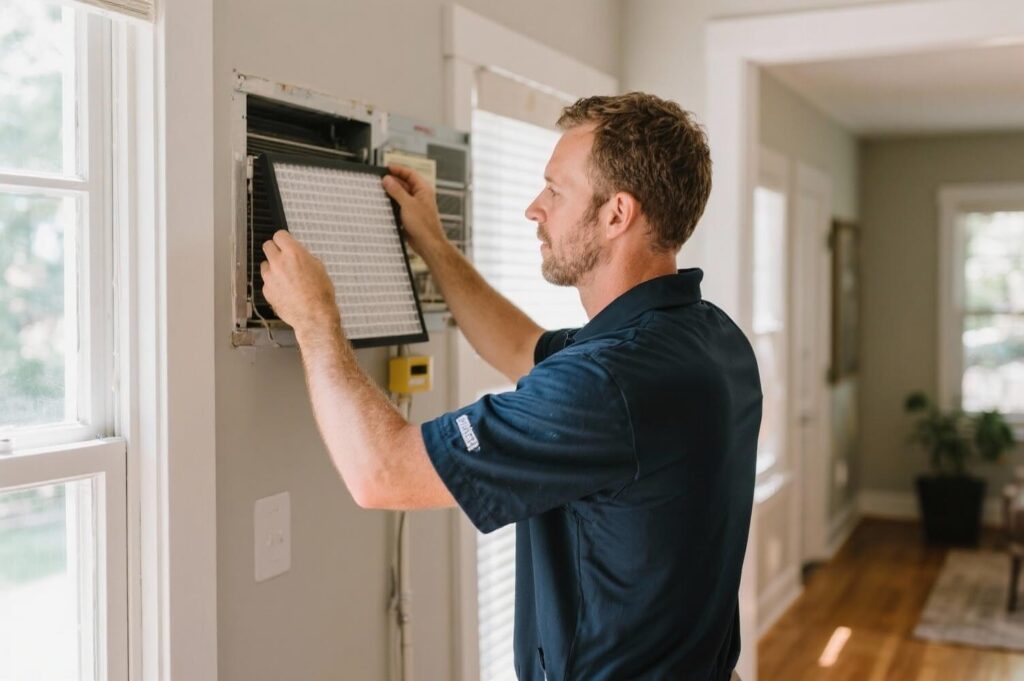
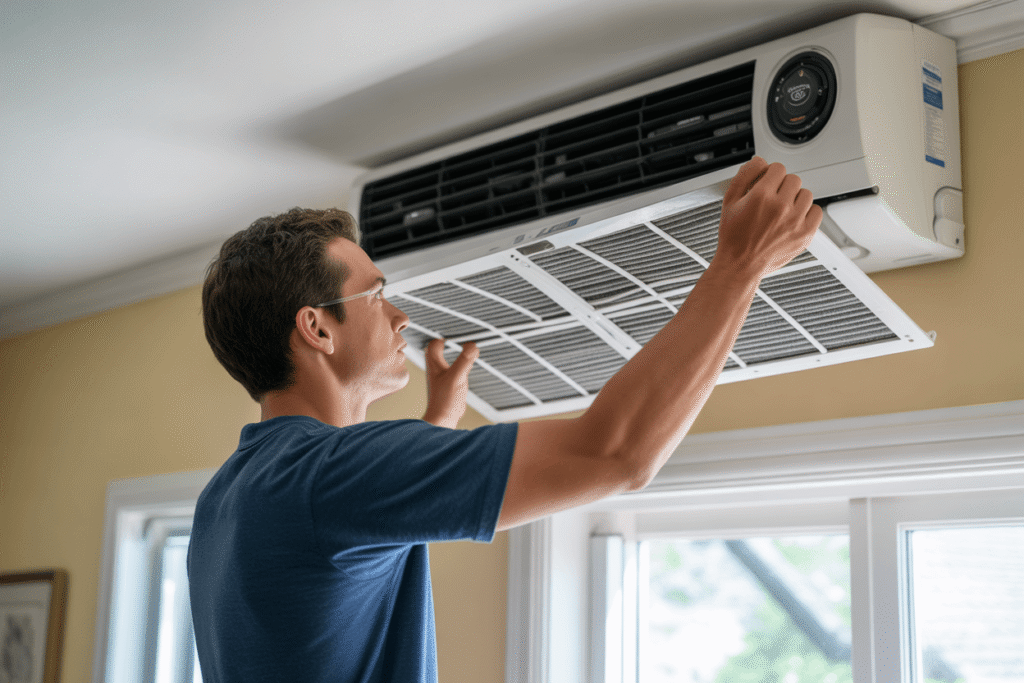
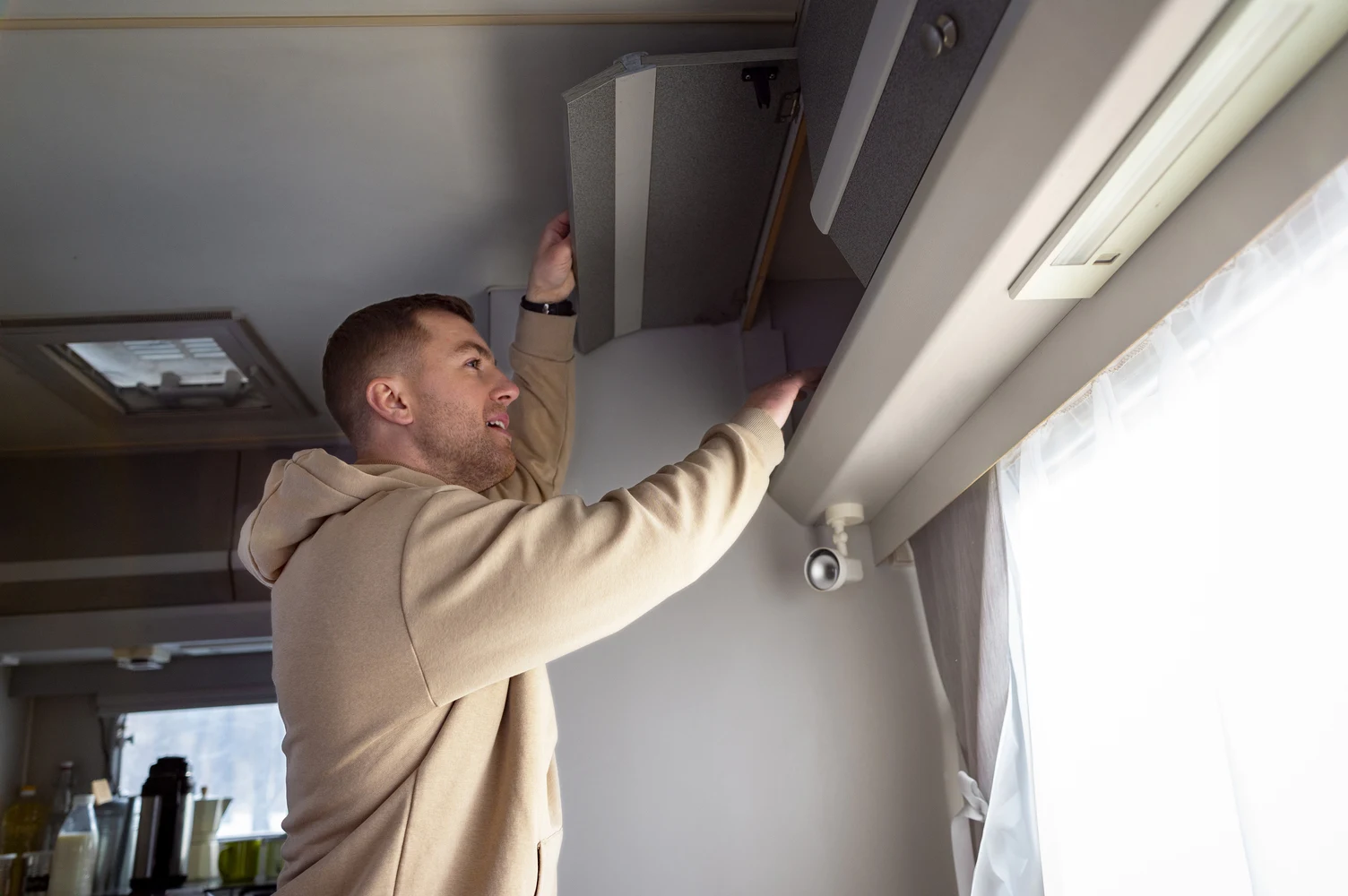
Man inspecting a pleated HVAC air filter before replacing it at home.

For starters, most experts, including us at Clean Air Technologies, suggest changing your filter every 30 to 90 days.

But the exact AC air filter replacement frequency depends on a few things like the type of filter you use, how often your HVAC runs, and your home itself.

Here’s a quick breakdown:

1. Replace filter every 30-60 days if you use basic fiberglass or disposable filters

Fiberglass or disposable filters are the most affordable filters. But they also fill up with dust quickly. 

So, you’ll likely need to replace them every 30-60 days, especially if you have pets, dust, or if your HVAC runs a lot. 

Also, if you start to notice weak airflow or more dust in the air, it’s time to swap it out.

2. Replace filter every 60-90 days if you use pleated or mid-grade filters (MERV 8-11)

Pleated or mid-grade filters with MERV 8-11 rating last a bit longer and trap more particles like dust, pollen, and pet hair. 

You can usually go 60-90 days between changes, but keep an eye on them. 

But, if you notice your home getting dustier or the air feels stuffy, it might be time to replace it.

3. Replace filter every 45-60 days if you use high-efficiency filters (MERV 12-16 or HEPA)

MERV 12-16 or HEPA filters are great for homes with allergies, asthma, or lots of pollution. They trap tiny particles like mold spores and smoke.

But they also clog up faster. So, if you have one of these filters, plan to replace it every 45-60 days, or more often if you have heavy dust or pet dander.

Pro tip: Check your filter every month

No matter which type of filter you have, it’s a good idea to check it every month. 

To do this, simply remove it and hold it up to the light. If you can’t see light through it, it’s time for a change. 

Even if it looks okay, if your HVAC system is running longer than usual or the air feels stuffy, it might be worth replacing the filter early.

In short: 

Filter TypeWhat It MeansReplacement Frequency
Fiberglass / DisposableBasic, cheap filters that catch large dustEvery 30-60 days
Pleated / Mid-Grade (MERV 8-11)Better at catching dust, pollen, and pet hairEvery 60-90 days
High-Efficiency (MERV 12-16 / HEPA)Best for allergies, asthma, tiny particlesEvery 45-60 days (sometimes sooner)
Any Filter TypeCheck monthly using the light test
Clean-Air-Technologies's Logo
Angies Super Service
Accredited Business
Aeroseal

Schedule Your Free Estimate Today

Contact us to improve your indoor air
quality with our expert cleaning services in NJ.

What factors decide how often to replace AC filter in New Jersey? 
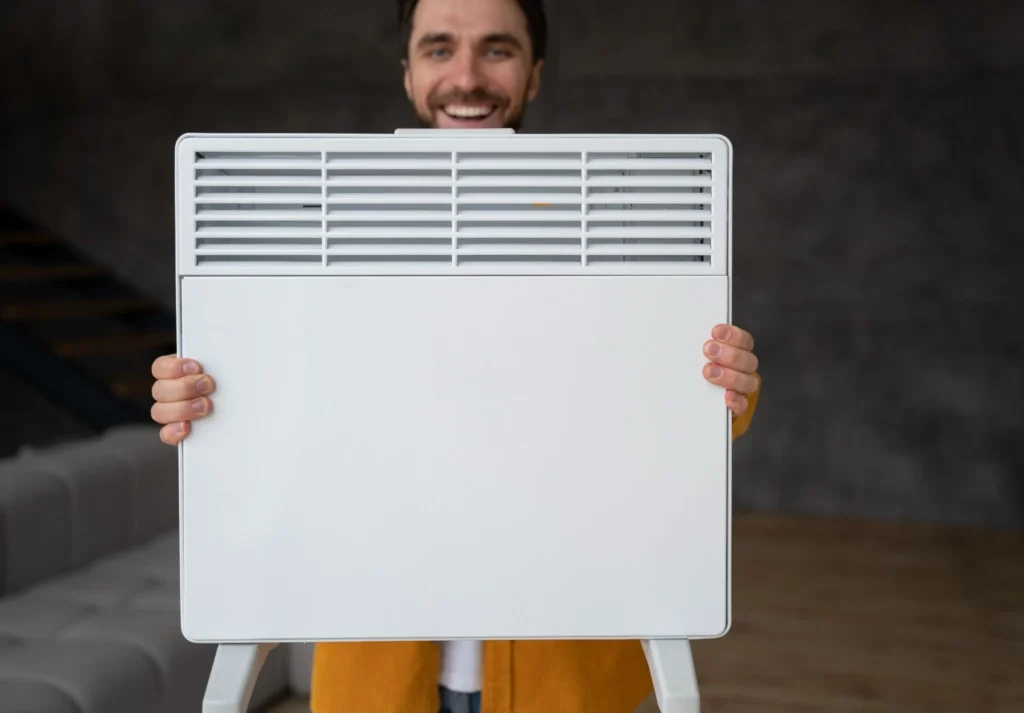
Person holding a clean HVAC air filter unit, showing the front panel before installation.

There are several factors that speed up the process of your air filter clogging. Meaning you’ll need to replace it more often than the standard 60-90 days. 

Let’s have a look at these key factors that determine how quickly your filter gets dirty:

1. Pets hair and dander

If you’re a pet owner, your filter is working overtime. 

How? 

Pets shed fur and dander, and they bring in dirt and dust from outside, all of which get trapped in your air filter. 

This means the filter can clog up much faster. 

So, for pet owners, it’s generally recommended to change the filter every 45-60 days. Also, in some cases, you might need to replace it as often as every 30-45 days to keep things clean and allergy-free. 

2. Household size and activity

The more people in your home, the more dust, skin flakes, and other airborne particles your HVAC system has to deal with. 

For instance, larger households, or homes with active kids and lots of cooking or movement, tend to accumulate more dirt. 

So, if you have a busy household, you might want to plan on changing your filter more frequently, likely every 45-60 days. 

Also, if you’ve got a household full of kids or frequent gatherings, you might need a quicker change to maintain clean air.

3. Air quality and outdoor conditions

New Jersey’s air can be challenging, especially during certain seasons. Plus, construction dust, pollen, and pollution can all impact your filter’s life. 

Now, if your home is near a construction zone or major roads, or you’re dealing with pollen-heavy seasons, your filter may get clogged quicker than usual. 

In these cases, you’ll likely need to change your filter more often, around every 30-60 days. 

Also, if you live in a particularly polluted or dusty area, it’s a good idea to check the filter more regularly, especially in the spring and fall.

4. Allergies, asthma, or health sensitivities 

If anyone in your household has allergies, asthma, or other respiratory conditions, maintaining clean air becomes even more important. 

Why? 

A clogged filter won’t be able to trap allergens. Meaning dust, pollen, and other irritants will recirculate through your home. 

In these cases, changing your air filter every 20-45 days is a good practice to help reduce the buildup of allergens and maintain better air quality.

5. Heavy HVAC use 

In New Jersey, your HVAC system likely gets a lot of use during both the summer and winter months. 

In fact, whether you’re running the AC in the heat or cranking up the heat during a cold spell, your system is working harder. 

The more your HVAC system is running, the more air it cycles, and the quicker the filter can get clogged with dust and particles. 

So, during high-use seasons, you might need to change your filter more frequently, around every 30-45 days, or at least check it monthly.

6. Filter type, material and thickness

A basic 1-inch fiberglass filter tends to get clogged much faster than pleated filters, which have more surface area and last longer. 

However, even pleated filters need regular checks. 

For instance, if you’re using higher-efficiency filters (MERV 11-13), they trap even more particles. But they clog faster and reduce airflow if your HVAC system isn’t designed for them. 

So, if you have a higher-MERV filter, be prepared to change it more often to keep the airflow strong and your HVAC system running smoothly.

In short:

FactorWhy It MattersHow Often to Replace
PetsPets shed hair and dander that clog filters fastEvery 30-60 days
Large or active householdMore people = more dust, movement, and cooking particlesEvery 45-60 days
Air quality outdoorsNJ pollen, road traffic, construction dust clog filtersEvery 30-60 days
Allergies/AsthmaNeed cleaner air and fewer allergensEvery 20-45 days
Heavy HVAC useMore heating/cooling cycles = faster cloggingEvery 30-45 days
Filter type (MERV rating)Higher-MERV filters trap more particlesCheck monthly; replace sooner as needed

Still not sure when to change air filter? Here’s an air filter replacement schedule you can use:

Household / ConditionsFilter Type / NotesSuggested Frequency
Single person, no pets, light use1″ basic or pleatedCheck monthly, replace every 90 days
Small family (2-4 people), no pets, moderate usePleated or mid-gradeReplace every 60-90 days
Household with 1-2 pets, moderate usePleated or MERV 8-11Replace every 45-60 days
Household with pets and people with allergies/asthma Pleated or MERV 11-13Replace every 30-45 days
Large, active household / heavy HVAC usePleated or high-eff filtersCheck monthly, replace every 30-45 days
Periods of heavy use (summer heat, winter cold, wildfire smoke)Inspect monthly, expect 30-day replacements

Pro tip: Mark the date on your filter when you install it. This makes tracking replacements much easier.

Bonus: You can check your air filter through a light test

Want to know if it’s time for a change? 

Skip guessing and use the light test. 

Here’s how it works:

  1. Remove the filter from your HVAC system.
  2. Hold it up to a bright light or sunlight.
  3. If you can’t see light coming through, it’s time to replace the filter. 

You might also want to read: How To Clean Out Your Dryer Vent?

Clean-Air-Technologies's Logo
Angies Super Service
Accredited Business
Aeroseal

Schedule Your Free Estimate Today

Contact us to improve your indoor air
quality with our expert cleaning services in NJ.

Final thoughts

By now, I am sure you know how often should you change your air filter in New Jersey. Also, you know what factors decide the intensity of filter change in your home.

You see, changing your air filter is one of the simplest, most cost-effective ways to improve both your home’s air quality and the efficiency of your HVAC system.

And for New Jersey homeowners dealing with humidity, dust, pets, and extreme seasonal temperatures, it’s even more important.

After all, not only will this ensure cleaner air, but it will also save you money on energy bills and extend the life of your HVAC system.

Got more questions or want a peace of mind with an affordable air filter replacement plan?

You can get in touch with us!

At Clean Air Technologies, we can help you choose the right filter for your home along with recurrent replacement plans. 

Simply put, we’ve got your air filter maintenance and upkeep needs covered on a budget. 

FAQs about how often to replace AC filter

Is replacing my filter every 90 days enough?

It could be, especially if your home is small, you have few people living there, and no pets.

However, it’s always a good idea to check your filter monthly. If you notice weak airflow, more dust around the house, or your HVAC system is running longer than usual, it’s time to change it sooner.

I have pets. How often should I change the filter?

Pets are wonderful, but they can really fill up your air filter with hair and dander. 

If you have pets, aim to replace your filter every 45–60 days. 

If you have multiple pets, heavy shedding, or allergy concerns, consider changing it more often, every 30-45 days. It helps keep the air cleaner and your HVAC system working efficiently.

Are high-efficiency (MERV 13+) filters better?

High-efficiency filters rated MERV 13 or more are great for catching tiny particles like dust, pollen, and even bacteria, making them excellent for allergy sufferers. 

But, they do clog up faster and can restrict airflow if your HVAC system isn’t built to handle them. 

So, while they offer better air quality, you might need to change them more often, like every 45-60 days, depending on your home’s air quality and HVAC usage.

How can I tell when my air filter is really clogged?

If your filter looks dirty and you can’t see light through it when you hold it up to the sun, it’s probably time to change it. 

Also, if you notice your HVAC system is running longer than usual or your vents are blowing weak air, those are signs that the filter may be clogged. 

Always check it monthly to avoid any surprises!

What happens if I don’t change my air filter?

Neglecting to change your air filter can lead to a few problems. 

First, it reduces airflow, making your HVAC system work harder and use more energy, which can drive up your bills. 

Over time, it can even cause the system to overheat or break down. 

Plus, dirty filters mean dust, allergens, and other particles stay in your air, which can make your indoor air quality worse.

Can I clean and reuse my disposable filter?

It’s best not to clean disposable filters as they’re not designed to be reused. Cleaning them can damage the filter material and reduce its effectiveness. 

It’s always better to replace them with a fresh one to ensure your system is working efficiently and your air stays clean.
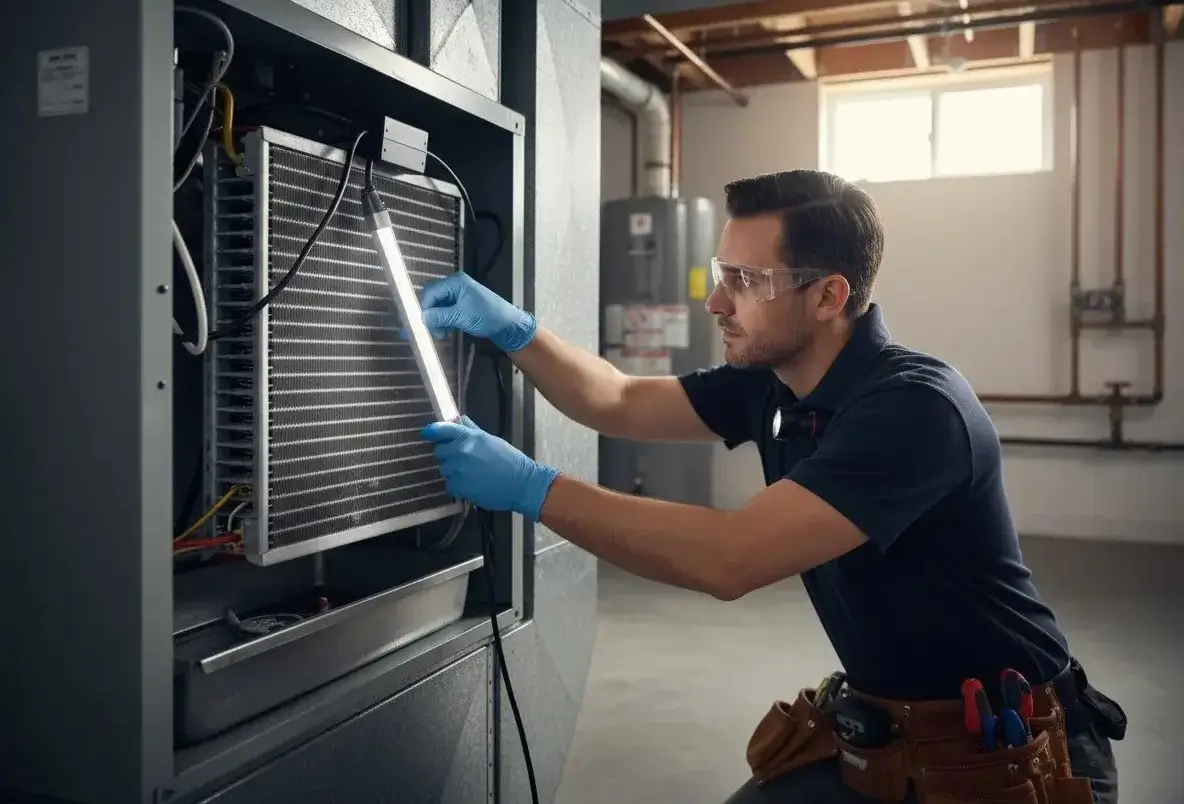
How Much Does HVAC UV Light Installation Cost In New Jersey? (2026)

If you’re among the many New Jersey homeowners who face indoor air quality and health issues, someone might have recommended installing a UV light in your HVAC system. 

More so if you’ve been dealing with musty smells, recurring mold on the AC coil, or seasonal allergies. 

And naturally, your very first question would be: How much does HVAC UV light installation cost? 

Now, the quick answer is, most UV light installations in New Jersey cost anywhere from $250 to $1,000 (or more). 

However, the exact cost will depend on the type of UV light you choose and how difficult the installation is. 

In this blog, I will break it all down. You’ll Know:

  • What’s the exact cost of HVAC UV light installation
  • Why does the price vary so much
  • Which kind of UV system is worth the money
  • What quote is fair and what’s overpriced?

So, let’s get started. 

Key takeaways 

  • Most HVAC UV light installations in New Jersey cost between $250 and $1,000.
  • Coil UV lights are usually cheaper; in-duct UV lights cost more to install.
  • Your final price depends on the UV system type, brand, wiring requirements, installer labor rates, and warranty.
  • Bulb replacements cost $30-$100 once a year.
  • Scroll down for the full NJ cost breakdown, itemized pricing, and real homeowner examples.

What is an HVAC UV light and how does it work? 

Before we get into HVAC UV light cost, let’s first understand what these lights actually do inside the furnace or air handler. 

For starters, UV lights used in HVAC systems produce UV-C light, a short-wave ultraviolet wavelength that can break down the DNA of mold, bacteria, and other microbes.

Think of these lights as a microscopic disinfectant that works 24/7 inside your HVAC system, but without chemicals, sprays, or filters.

Clean-Air-Technologies's Logo
Angies Super Service
Accredited Business
Aeroseal

Schedule Your Free Estimate Today

Contact us to improve your indoor air
quality with our expert cleaning services in NJ.

Where are UV lights installed? 

Depending on your HVAC setup, an HVAC system professional will place UV lights in one of two locations:

  • Over the evaporator coil (this is common in HVACs across New Jersey)
  • Inside the supply duct or plenum

Both these spots are high-risk areas for microbial growth. That’s because coils stay wet from AC condensation, making them the perfect spot for mold and slime to grow.

What do UV lights do? 

At their basic, UV lights keep the inside of your HVAC system clean. This ensures your indoor air stays clean too and your system runs more efficiently.

And to do so, these lights eliminate the following: 

  • Mold growing on evaporator coils
  • Biofilm and slime in the drain pan
  • Bacteria and microbes on damp surfaces
  • Some airborne pathogens (if you’re using in-duct UV systems)

How much does HVAC UV light installation cost exactly? 

As someone who’s been shopping around for a UV light system in New Jersey, you’ve probably noticed that the prices are  drastically different all over the place. 

One company quotes you $300 while another quotes $900. And suddenly you’re wondering who’s being honest and who’s trying to buy themselves a vacation.

Now, here’s the good part: The pricing actually makes sense once you understand what you’re paying for.

Here’s the average cost of uv lights for HVAC system in New Jersey: 

The UV light installation costs generally fall into two ranges for homes across North, Central, and South Jersey. This includes: 

  • Coil (on-coil) UV lights: $250-$650 
  • In-duct (air-sanitizing) UV lights: $350-$1,000 (or more) 

You see, coil UV lights are usually the cheaper option because they mount in one specific spot, that is right over the AC coil. 

On the other hand, in-duct UV systems disinfect moving air and need more wiring, more positioning, and more labor, which makes them pricier. 

In short: 

Type of UV LightPrice Range
Coil (on-coil) UV Lights$250-$650
In-duct (air-sanitizing) UV Lights$350-$1,000+

But why do the quotes vary so much from contractor to contractor even for the same kind of installation?

Let’s understand why and how NJ’s labor cost plays a role. 

How does New Jersey’s labor cost determine HVAC UV light cost? 

New Jersey has some of the highest HVAC labor rates in the country, ranging between $125-$180 per hour. This is especially true for the dense North Jersey counties like Bergen, Essex, and Hudson.

And here’s how it impacts your UV light installation cost: 

  • HVAC labor costs $125–$180 per hour
  • Typical installation time is 1-3 hours depending on system type and access

Now, a quick coil UV light install in a utility closet might take an hour. But a tight attic or crawlspace job in an older home can easily become a 3-hour project.

So, you can expect to pay anywhere between $125-$540 for installation labor. 

Plus, add in travel time, dense traffic, parking issues in urban areas, and higher overhead for licensed/insured HVAC companies, and you can see why pricing changes so much. 

HVAC UV light installation cost: What are you actually paying for? 

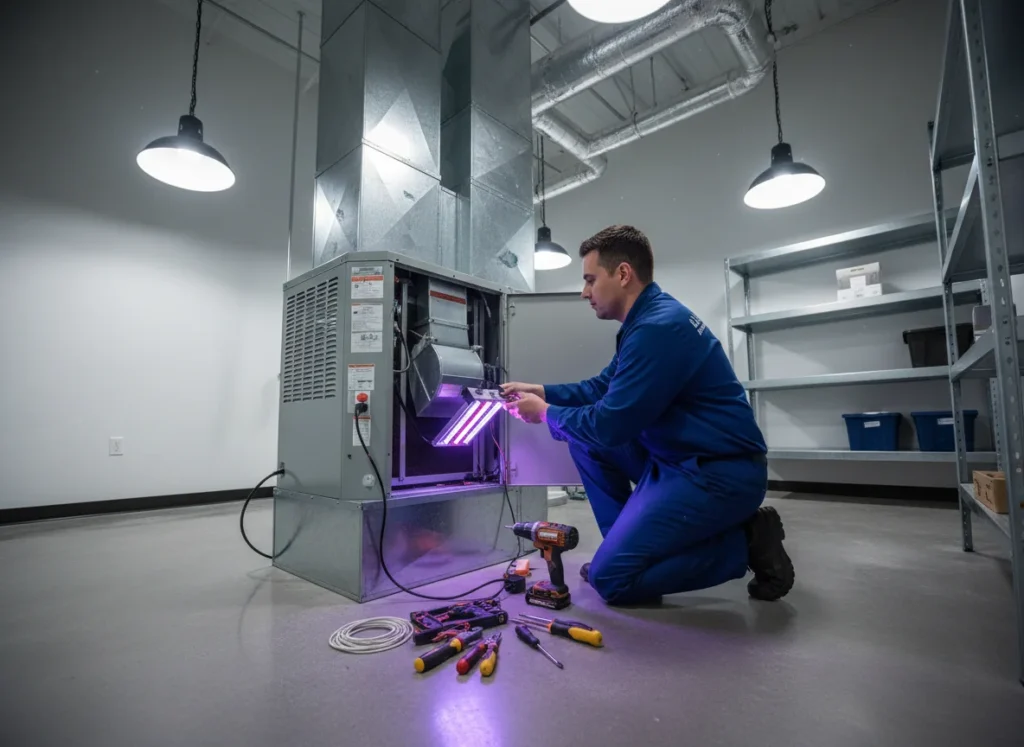
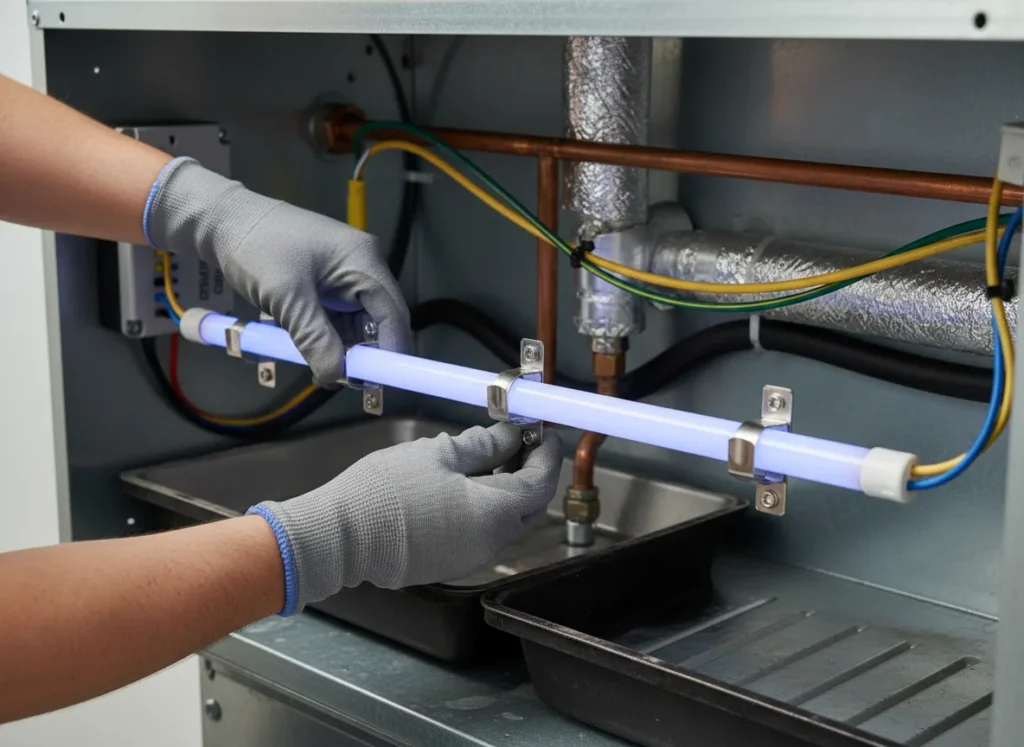
Close-up view of a technician installing a UV light inside an HVAC system to prevent mold growth and improve air quality.

Most homeowners think UV lights are expensive because the equipment itself costs a lot.

But here’s the surprise: the equipment is usually the cheapest part of the whole job.

So what are you really paying for? 

Here’s a breakdown of each line item that goes into your final quote: 

1. UV lamp cost: $30-$200

  • Basic replacement bulbs: $30-$80
  • Branded lamp assemblies or high-output lamps: $100-$200

Better UV lamps have stronger output, last longer, and come with longer UV-unit warranty-coverage, so the price increases.

2. Mounting hardware: $10-$75

Depending on your furnace or air handler, the installer might need:

  • Simple clamps
  • A mounting bracket
  • A small sheet-metal adapter (common in older NJ homes)

3. Wiring, transformer, and electrical parts: $30-$250

The exact cost will depend on whether:

  • The system needs a new low-voltage transformer
  • The installer needs to create a new junction box
  • The wiring has to be run through an attic or crawlspace

4. Electrical work: $60-$300

You need an electrician or highly trained HVAC technician to handle this step.

Here, the price can go up if your UV system needs to be: 

  • Tied into your HVAC control board
  • Hard-wired 
  • Switched
  • Or connected to a new power source

5. Labor: $125-$180 per hour 

As we saw earlier, labor cost makes up for the largest part of your final cost. They charge an hourly fee and can take up-to three hours depending on the job. 

For instance: 

  • Easily accessible coil installations take 1-1.5 hours
  • In-duct systems take 2 hours or more
  • Tight attic or crawlspace can take up-to 3 hours or more 

6. Travel or service call fee: $0-$100 

Some contractors roll this into labor. But others might add a service fee, especially for far or off-hour appointments.

7. Brand / warranty markup: $0-$200

Premium UV lights offer:

  • Stronger UV output
  • UV-resistant housings
  • Better warranties
  • Verified safety ratings

This quality comes at a small premium, but it’s usually worth it.

In short: 

ItemCost Range
UV Lamp$30-$200
Mounting Hardware$10-$75
Wiring & Electrical Parts$30-$250
Electrical Work$60-$300
Labor$125-$180 per hour
Travel/Service Fee$0-$100
Brand/Warranty Premium$0-$200

UV light installation cost examples for New Jersey homes

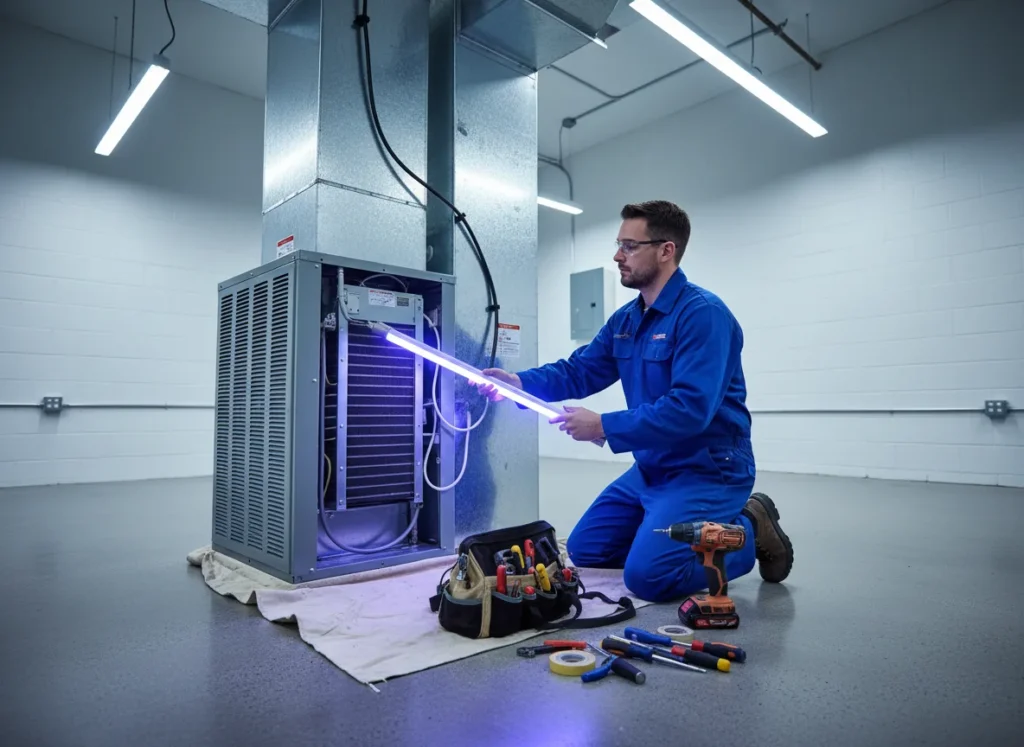
HVAC technician installing a long UV light inside a commercial air handler system, surrounded by tools during maintenance.

Now that you’ve seen the line-by-line breakdown of HVAC UV light installation cost in New Jersey, let me give you examples of how much it might actually cost you.

These examples are based on the kind of installations my team does almost every day. 

And once you look at how the parts and labor stack up, the prices start to make a lot more sense.

1. Simple coil UV installation

This is the kind of job every HVAC technician hopes for. Here, the air handler is easy to reach, the electrical panel is right there, and the UV light mounts cleanly without any surprises.

In a setup like this, you’re typically paying for:

  • UV lamp: $60
  • Basic mounting hardware: $20
  • Minimal wiring or transformer needs: $40
  • Labor (1.5 hours × $150/hr): $225
  • Travel/dispatch: $30

Everything goes smoothly, so the final price lands around $375. 

2. Standard in-duct UV installation 

This scenario is very common in suburban homes with basements or mechanical rooms. Here, the ductwork is accessible, but placing the UV light in the right spot (where it actually hits the moving air) takes a bit more time and wiring.

In this case, the bill usually includes:

  • Higher-output UV lamp/unit: $120
  • Mounting hardware: $40
  • Wiring/transformer parts: $80
  • Labor (2 hours × $150/hr): $300
  • Travel: $50
  • Brand/warranty upgrade: $75

Put it all together, and you’re looking to pay roughly $665.

3. Older home with difficult access 

And then, there’s the reality of many New Jersey homes, especially older ones in towns like Montclair, Bloomfield, Rahway, or parts of Bergen County

Here, the system is tucked in an attic, or the wiring is outdated, or everything is just harder to reach.

When this happens, the price climbs, not because of the UV lamp, but because the installer’s job suddenly gets a whole lot tougher.

A scenario like this might include:

  • UV lamp: $120
  • Custom brackets or sheet-metal work: $75
  • Extensive wiring, new transformer, or additional safety components: $200
  • Labor (3 hours × $160/hr): $480
  • Travel/time premium: $75
  • Warranty/markup: $100

By the time everything is installed safely and up to code, your total lands around $1,050 or more. 

In short: 

ScenarioUV LampMounting HardwareWiring & ElectricalLaborTravelTotal
Simple Coil Installation$60$20$40$225 (1.5 hrs)$30$375
Standard In-Duct Installation$120$40$80$300 (2 hrs)$50$665
Older Home with Difficult Access$120$75$200$480 (3 hrs)$75$1,050

Bonus: Here are the annual running costs of HVAC UV lights

Cost TypeTypical New Jersey RangeNotes
Bulb Replacement$30-$100/yearReplace every 12 months
Professional Bulb Replacement$60-$150If done during a tune-up
Electricity (coil UV)$12-$30/yearAlways running
Electricity (in-duct UV)$8-$20/yearOnly runs with blower

You might also want to read: How To Clean HVAC Ducts Yourself (DIY Guide)?

Clean-Air-Technologies's Logo
Angies Super Service
Accredited Business
Aeroseal

Schedule Your Free Estimate Today

Contact us to improve your indoor air
quality with our expert cleaning services in NJ.

Conclusion

By now, I am sure you know how much does HVAC UV light installation cost exactly. 

You see, UV light is one of the most cost-effective upgrades you can make for your home.

While the price can vary widely, for an investment of $250-$1,000, the long-term benefits are hard to ignore:

And if you’re in New Jersey, Clean Air Technologies can help you choose the right system, install it safely, and keep it running at peak performance.

Whether you’re a homeowner looking to improve indoor air quality or you’re comparing quotes across different contractors, we’re here to make the process simple, transparent, and stress-free.

FAQs about HVAC UV light installation? 

HVAC technician installing a UV light system inside a commercial air handler unit to improve air purification and prevent mold.

Is installing a UV light in HVAC worth it?

For most New Jersey homeowners, yes; especially if you’re dealing with musty odors, coil mold, or persistent indoor air quality issues.

UV lights are worth it when:

  • Your HVAC coil has a history of mold growth
  • You live in a humid area 
  • You or someone in the home has asthma/allergies
  • You want cleaner coils and better airflow
  • You want to reduce biofilm and bacteria inside the system

However, here’s what UV lights don’t do:

  • Remove dust
  • Capture allergens
  • Filter VOCs
  • Replace a real air purifier

So, if you expect a UV light to do everything, it’ll disappoint you.

But if you want cleaner coils and reduced microbial growth, they’re one of the most cost-effective solutions you can install.

How long do HVAC UV bulbs last?

Most HVAC UV-C bulbs last about 9,000 hours, which equals about:

  • 1 year for coil lights (they run 24/7)
  • 12-18 months for in-duct lights (they run only when blower is on)

Even if the bulb still glows after a year, the UV intensity drops, meaning it stops sanitizing effectively.

Does a UV light reduce mold in New Jersey homes?

Yes, UV lights are one of the most effective ways to stop mold growth inside your HVAC system, especially in NJ’s humid climate.

They help by:

  • Killing mold spores on the evaporator coil
  • Preventing the slimy biofilm that restricts airflow
  • Reducing musty odors coming from vents
  • Keeping the drain pan cleaner

However, UV lights do not remove mold inside ducts, drywall, or basements. They’re strictly for sanitizing the inside of your HVAC equipment.

Which is better, coil or in-duct UV?

Both are useful, but they serve different purposes:

For instance, coil UV: 

  • Prevents mold directly on the coil
  • Keeps HVAC efficiency high
  • Reduces musty odors
  • Lowest operating cost

Similarly, in-duct UV: 

  • Sanitizes moving air
  • Helps reduce airborne bacteria and viruses
  • Is better for households with respiratory issues

Many NJ homeowners eventually install both for full coverage, but if you’re picking just one, coil UV is usually the best place to start.

Do UV lights kill viruses?

Yes, UV-C light can deactivate viruses, including many respiratory viruses, by damaging their DNA/RNA.

But here’s the realistic picture:

  • UV works best when microbes pass directly through the light
  • Airflow speed can limit exposure time
  • It reduces viral load, but does not eliminate all viruses
  • It is not a substitute for filtration or ventilation

Think of it as a helpful layer of protection but not a miracle solution.

Can UV lights damage HVAC components?

UV lights are safe when installed correctly.

However, incorrect placement or cheap lamps can cause problems like:

  • Plastic parts fading or becoming brittle
  • Wire insulation degradation
  • Damage to non-UV-rated materials

Professional installers use:

  • UV-resistant mounting equipment
  • Shielding for wiring
  • Correct placement away from sensitive plastics

When installed properly, the UV light only affects microbes but not your equipment.

How much does it cost to replace a UV bulb in NJ?

In New Jersey, the typical replacement cost is:

  • DIY bulb: $30-$100
  • Bulb and professional replacement: $60-$150

If done during a seasonal AC tune-up, many homeowners only pay for the bulb itself.

Higher-end models (dual-lamp systems or premium brands) might cost up to $120-$160 per bulb.

Do I need a professional to install a UV light?

Technically, you can install certain UV light models yourself.

But for most New Jersey homeowners, professional installation is strongly recommended.

Here’s why:

  • Most installations require tapping into HVAC electrical
  • Proper placement affects performance
  • Incorrect mounting can damage coils or plastics
  • An improper seal can cause UV leakage
  • DIY installs can void manufacturer warranty

Professional installation also ensures the UV light is UL-approved, properly wired, and safely shielded.

9 HVAC Tips for Summer Every New Jersey Homeowner Should Know

If you’ve been in New Jersey for a while, you’ve probably experienced the state’s summer. .

From that heavy, sticky air that hits you the second you step outside to the intense heatwaves that make the pavement look like it’s melting, this season is no joke.

And as the temperatures skyrocket, your air conditioner goes from a nice-to-have to a must-have. 

But here’s the catch: No matter how good your air con is, it can struggle in a heatwave or worse break down. This is the last thing you want when the mercury’s hitting its peak.

So, how do you keep your home cool, comfortable, and energy-efficient all summer long? 

It’s easier than you might think. Follow my simple HVAC tips for summer and you can save on expensive repairs, lower your energy bills, and make sure your home stays cozy throughout the season. 

I’ve detailed each of these home HVAC maintenance tips below, so let’s get started. 

Key Takeaways

  • Schedule a pre-summer AC tune-up to catch problems early.
  • Change your air filter every month during the hot months.
  • Set your thermostat to 78°F for comfort and savings.
  • Keep your outdoor AC unit clear of debris and plants.
  • Use ceiling fans to stay cool without turning down the thermostat.
  • Seal any drafts and make sure your insulation is in good shape.
  • Reduce indoor humidity to feel cooler and reduce strain on your AC.
  • Upgrade to a smart or programmable thermostat for better control.
  • Take advantage of NJ rebates for energy-efficient upgrades.

The best HVAC tips for summer in NJ

1. Get a pre-summer HVAC maintenance

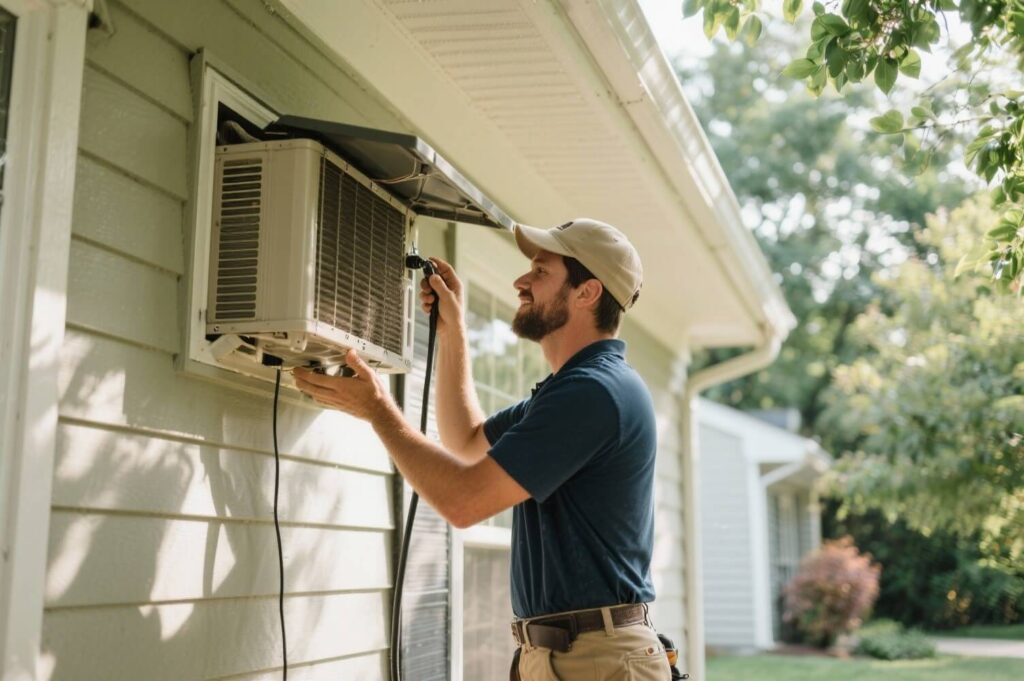
HVAC technician servicing an outdoor air conditioning unit to ensure optimal performance during the summer months.

Before the first heatwave hits, getting a professional HVAC tune-up should be at the top of your to-do list. 

Why? 

Your AC has been sitting unused for months, and a quick check-up makes sure it’s in good shape for the New Jersey summer heat. 

A seasonal maintenance ensures your system runs safely and efficiently,  keeping you cool throughout the hot months.

Talking about service itself, a professional HVAC duct cleaner should do the following:

  • Check refrigerant levels and look for leaks.
  • Clean the evaporator and condenser coils to help your air con run better.
  • Make sure your thermostat is working correctly.
  • Check the electrical components to detect any hidden issues.
  • Clear the drain line to prevent water damage or breakdowns.
  • Test the entire system to make sure everything’s working properly.

Pro tip: Book your tune-up in the spring before the summer rush. This way, not only will you get an appointment at your convenience, but you might also grab some discounts. 

Clean-Air-Technologies's Logo
Angies Super Service
Accredited Business
Aeroseal

Schedule Your Free Estimate Today

Contact us to improve your indoor air
quality with our expert cleaning services in NJ.

2. Change the air filter regularly

HVAC technician replacing the air filter of an indoor air conditioning unit to ensure efficient airflow and proper cooling.

Changing your air filter is one of the simplest and most effective ways to keep your HVAC system running efficiently. 

You see, a dirty or clogged air filter makes it harder for air to flow, forcing your AC to work much harder than it should. This, in turn, reduces airflow, causes poor cooling, and even increases your energy bills.

What’s worse?

In some cases, dirty filters can even cause your system to freeze up, leading to even more troubles down the line.

Pro tip: Check your filter once every month and swap it out if it looks dirty or clogged. For most 1-inch HVAC filters, a replacement every 1-3 months is fine, but keep an eye on it during summers and change it more often if needed. 

3. Be smart with your thermostat and save money

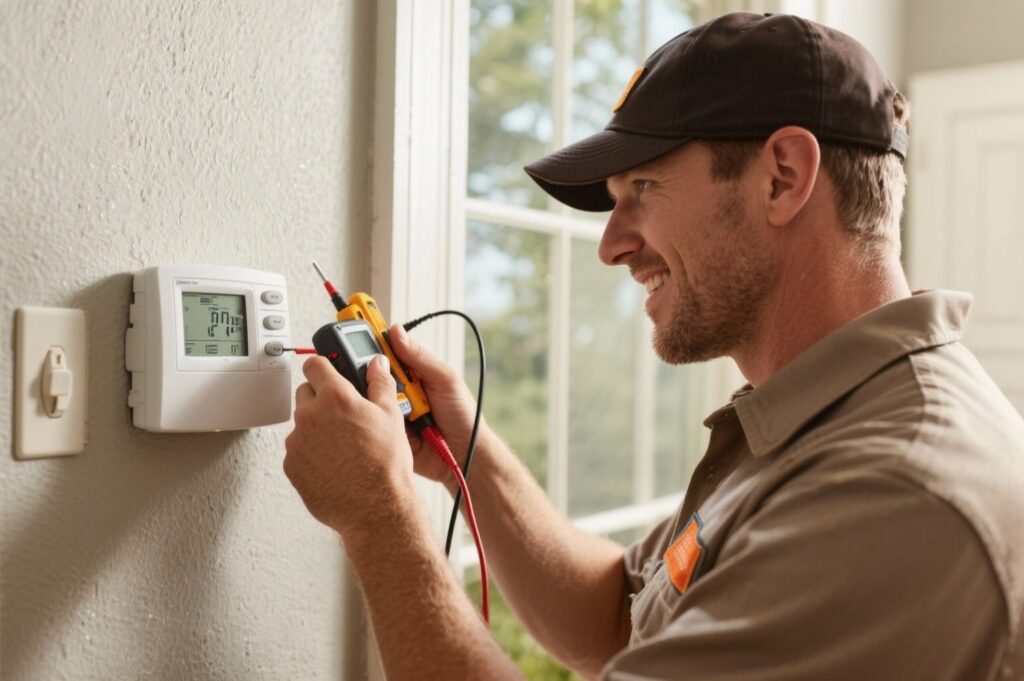
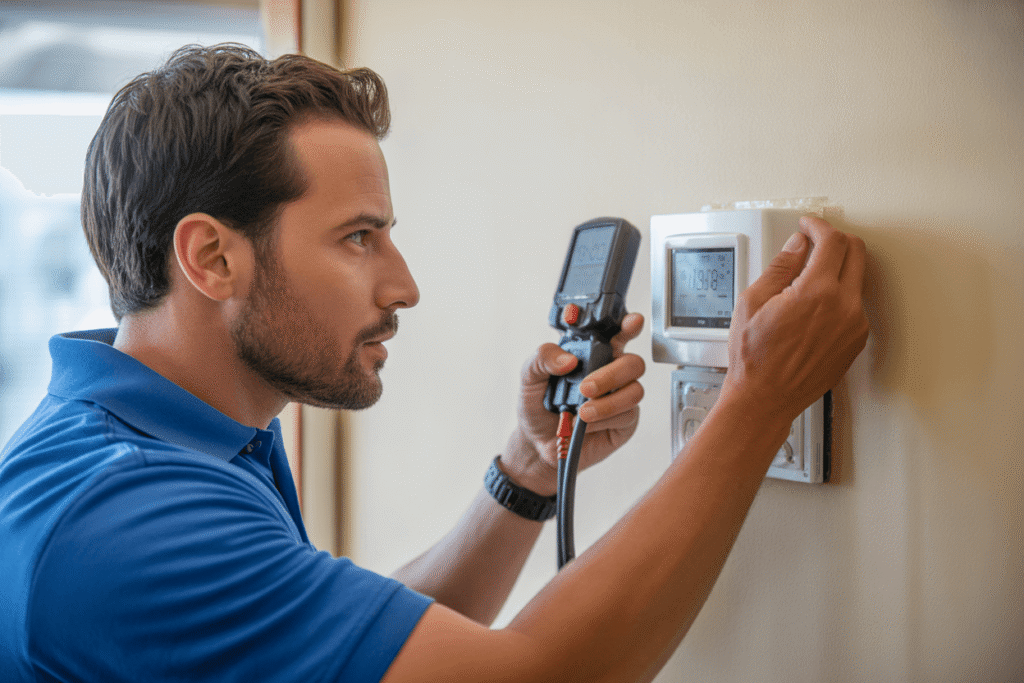
HVAC technician performing a pre-summer inspection on a thermostat to ensure optimal air conditioning performance for hot weather.

Cranking your AC down to 72°F feels awesome. But your energy bill will remind you that it’s not the best idea.

Instead, try setting your thermostat to 78°F when you’re home and awake. This is the sweet spot for staying cool without wasting energy. 

Also, it is the Department of Energy’s recommended setting for the best balance of comfort and efficiency.

Bonus: When you’re sleeping or out, raise the temperature by 7-10 degrees. This simple change can save you up to 10% on your cooling costs each year. 

Awesome, isn’t it?

4. Maintain your outdoor HVAC unit

HVAC technician cleaning the outdoor air conditioning unit to ensure optimal performance during the hot summer months.

That metal box outside your home is your AC’s condenser unit, and it’s super important for optimal HVAC function. 

Now, this unit needs plenty of space to push out hot air without running any danger of damage. 

So, here’s what I suggest you do: 

  • Clear the area: Make sure there’s at least 2-3 feet of space around it. Trim back any plants, weeds, or bushes that are crowding it.
  • Clean the unit: Turn off the power and gently spray the fins with a garden hose to get rid of dirt and pollen. Avoid a pressure washer as it can damage the delicate parts.

Pro tip: Keep grass clippings and falling leaves away. They can clog the coils and mess with your AC’s efficiency.

5. Use ceiling fans to stay cool

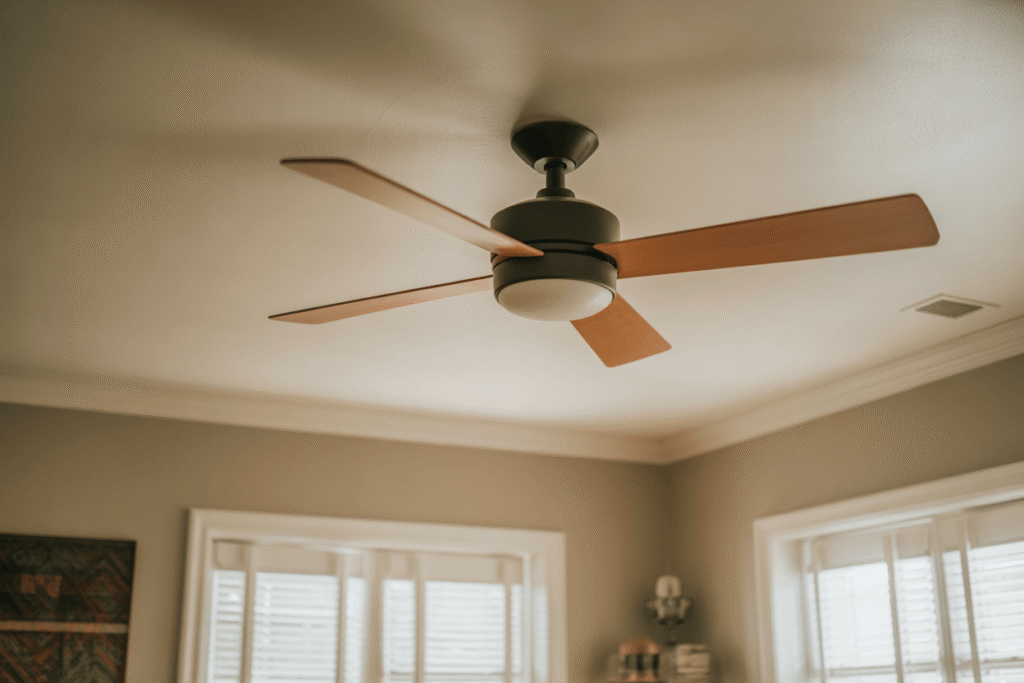
Ceiling fan circulating air in a room, helping to stay cool and reduce the need for excessive air conditioning during the summer.

Ceiling fans don’t actually cool the air. But they do create a breeze that makes you feel cooler. 

This lets you set your thermostat about 4°F higher and still feel just as comfortable.

Sounds awesome, doesn’t it?

Pro tip: Make sure your fan is spinning counterclockwise in the summer. This pushes cool air down, giving you that nice, refreshing breeze. (In the winter, flip it clockwise to push warm air back down.)

6. Seal the drafts and insulate your home

Man performing HVAC maintenance by cleaning and replacing the air filter in an air conditioning unit for summer readiness.

Your AC can be working perfectly, but if all that cool air is escaping, you’re basically cooling the outside world. 

And to get the most out of your system, you need to keep the cool air inside where it belongs.

Here’s what I suggest you do: 

  • Seal windows and doors: Use weatherstripping and caulk to seal any drafts. On a sunny day, go around your windows and doors, and feel for any cold air leaking through. You might be surprised where it’s escaping. 
  • Check your insulation: Proper attic insulation (R-30 to R-60 is ideal for NJ) helps prevent heat from pouring in. This helps prevent your home from becoming a hot box. A good insulation makes a big difference in keeping things cool without overworking your AC.

7. Prevent humidity build-up 

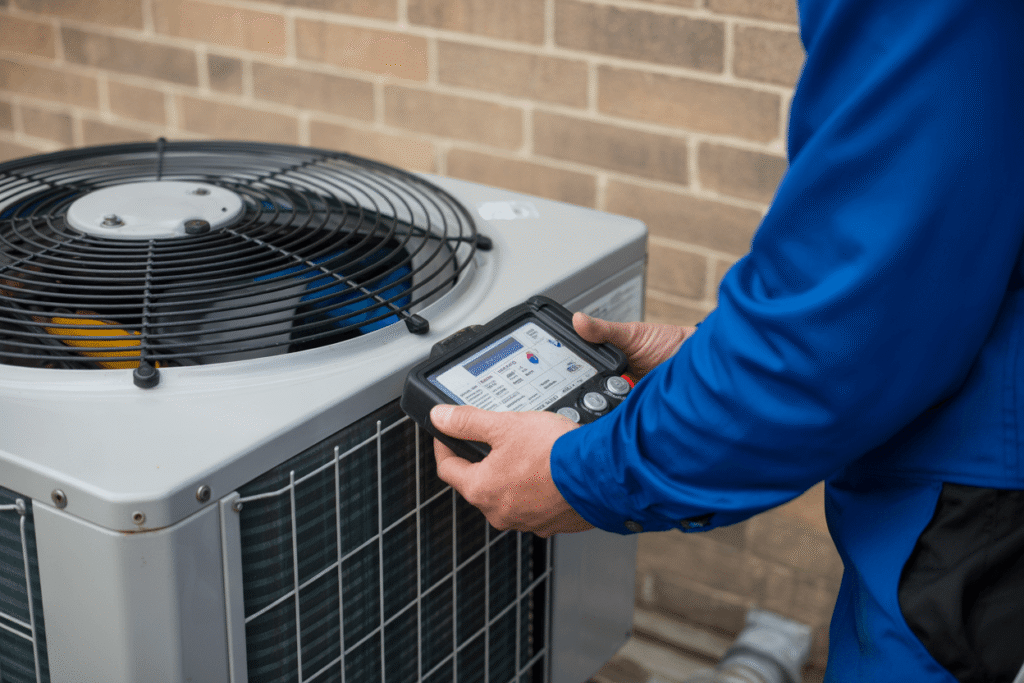
HVAC technician using a diagnostic tool to inspect and troubleshoot an outdoor air conditioning unit for optimal performance.

New Jersey summers are famously humid. And that sticky, muggy air can make even the most comfortable temperature feel uncomfortable. 

Plus, humidity makes your AC work even harder to remove moisture from the air.

So, what can you do?

  • If you’re feeling sticky, add a dehumidifier to areas like the basement or laundry room. A well-functioning AC does dehumidify, but sometimes it’s just not enough for those extra humid spots.
  • Also, keep your indoor humidity levels between 30 and 50 percent for the best comfort and efficiency.

8. Upgrade to a smart thermostat

HVAC technician calibrating or diagnosing a thermostat to ensure proper temperature regulation for energy efficiency.

Still rocking that old manual thermostat? 

You could be missing out on some serious energy savings. 

A smart thermostat learns your schedule and automatically adjusts the temperature when you’re away or asleep.

How?

You can control it right from your phone, and it gives you detailed energy usage reports, so you know exactly where your money’s going.

On top of that, many NJ utility companies offer rebates for upgrading to a smart thermostat, which can lower the upfront cost.

9. Take advantage of NJ’s energy efficiency rebates

A family celebrating summer in New Jersey with an HVAC system in top condition, following expert tips to keep their home cool and energy-efficient.

If you’re thinking about upgrading your AC to a more energy-efficient model, New Jersey has some great programs to help you save money.

For instance, the NJ Clean Energy Program offers rebates for installing energy-efficient HVAC equipment and smart thermostats. 

These upgrades not only make your home more comfortable but can also significantly lower your cooling bills in the long run.

Clean-Air-Technologies's Logo
Angies Super Service
Accredited Business
Aeroseal

Schedule Your Free Estimate Today

Contact us to improve your indoor air
quality with our expert cleaning services in NJ.

In short, here are all the HVAC tips for summer in New Jersey:

TipWhat to DoWhy it HelpsQuick Tip
1Get a Pre-Summer Tune-UpMakes sure your AC is ready for the heat.Book early to avoid the summer rush!
2Change Air Filter RegularlyKeeps your AC running smoothly and saves energy.Change it monthly, especially in summer.
3Set Thermostat to 78°FSaves energy and keeps you cool.Raise it 7-10°F when you’re not home to save more.
4Clean and Clear Outdoor UnitHelps your AC run better and cooler.Keep 2-3 feet of space around it, no pressure washers!
5Use Ceiling FansHelps you feel cooler without cranking the AC.Make sure fans spin counterclockwise in summer.
6Seal Drafts & InsulateKeeps cool air inside and saves energy.Seal windows/doors and check attic insulation.
7Use a DehumidifierReduces sticky, uncomfortable humidity.Keep humidity between 30-50% for the best comfort.
8Upgrade to a Smart ThermostatSaves energy by adjusting automatically.Check for NJ rebates to save on the upgrade.
9Use NJ Energy RebatesGet money back for upgrading your AC and thermostat.Save money on energy-efficient upgrades.

You might also want to read: 7 Expert-backed HVAC Tips For Winter In New Jersey.

Final thoughts

By now, you know all the essential HVAC tips for summer in New Jersey.

You see,  NJ summers demand a lot from your home’s cooling system. But with the above summer HVAC tips, you can enjoy a season of reliable, efficient, and comfortable cooling.

Be it a simple filter change or a professional tune-up, each of these tips will help you stay cool, save money, and avoid the distress of a mid-summer breakdown.

Need a hand getting your system summer-ready?

We’re here to help!

At Clean Air Technologies, we’ve been helping NJ homeowners stay comfortable for nearly 30 years. 

Reach out to us today for a pre-summer tune-up, and we’ll make sure your HVAC system is all set to beat the heat.

FAQs about hvac maintenance tips for summer

How often should I run my AC to keep my home cool?

I suggest you run it consistently rather than turning it completely off and on. 

Also, set your thermostat at a consistent but slightly higher temperature when you’re out. For instance, 85°F is more efficient than turning it off and forcing the system to work extra hard to cool down a hot house when you return.

My AC is running but not cooling well. What’s wrong?

This could be a few things: a dirty air filter, low refrigerant, a dirty condenser coil, or a failing component. 

Start by checking and replacing the filter. If that doesn’t solve it, it’s time to call a professional for a diagnosis.

Is it worth closing vents in unused rooms?

Generally, no. 

Modern central AC systems are designed to balance airflow throughout the entire duct system. Closing vents can increase pressure in the ducts, forcing your system to work harder and potentially leading to leaks or other damage.

What should I do if my AC completely stops working during a heatwave?

First, check your circuit breaker to see if it has tripped. If it has, reset it. If it trips again, call a professional. 

Also, ensure your thermostat has batteries and is set to cool. If these simple steps don’t work, shut the system off and call for emergency service to prevent further damage.

What Are The Different Types Of Air Vents In New Jersey Homes?

For most people, air vents are just those openings that blow warm or cool air into your rooms, and that’s fair. 

But what if I told you that there are different types of air vents, and all do completely different jobs.

For instance, some vents are there to pull stale air out and send it back to your HVAC system. At the same time, others push unwanted air and moisture outside your home.

Now, you might not have given much thought to this. But knowing the different air vent types, where they are, and how they work can actually help you:

  • Keep your air vents clean and home more comfortable year-round.
  • Improve your indoor air quality.
  • Avoid common airflow problems (like that one room that’s always too hot or too cold).
  • Even save a little money on your energy bill.

In this blog, I will break it all down. You’ll know: 

  • The three main types of vents in your home.
  • The difference between a supply vent and a return vent.
  • The different vent styles and which ones you have.
  • What vent types are common in New Jersey homes. 

So, let’s get started. 

Key takeaways

  • There are 3 main types of air vents: supply, return, and exhaust.
  • Supply vents blow heated or cooled air into rooms.
  • Return vents pull stale air back to your HVAC system.
  • Exhaust vents remove moisture, odors, and heat from your home.
  • Common NJ homes often use ceiling vents upstairs and floor vents downstairs.
  • Older NJ homes may only have a few central vents due to retrofitting.
  • Ductless systems are common where installing vents isn’t feasible.
  • Clean and balanced vents improve airflow and lower energy costs.
  • Mini-split units are an alternative to vents in tight spaces.
  • The right vents depend on room type, airflow, and home design.

What are the different types of air vents? 

There are three main air vents types, supply, return, and exhaust. For starters, supply vents blow air into your rooms, return vents pull it back to the system, and exhaust vents push unwanted air outside. 

Here are the vent types and their function: 

Vent TypeFunctionCommon LocationsConnected To HVAC?Example
SupplyPush warm/cool air into roomsFloors, walls, ceilingsYesFloor register, ceiling diffuser
ReturnPull air back to systemWalls, ceilings, central hallwaysYesReturn grille, filter grille
ExhaustRemove stale/moist air from homeBathrooms, kitchens, attic, laundryNo (leads outside)Bath fan, dryer vent

Let’s take a closer look at how each one works.

1. Supply vents 

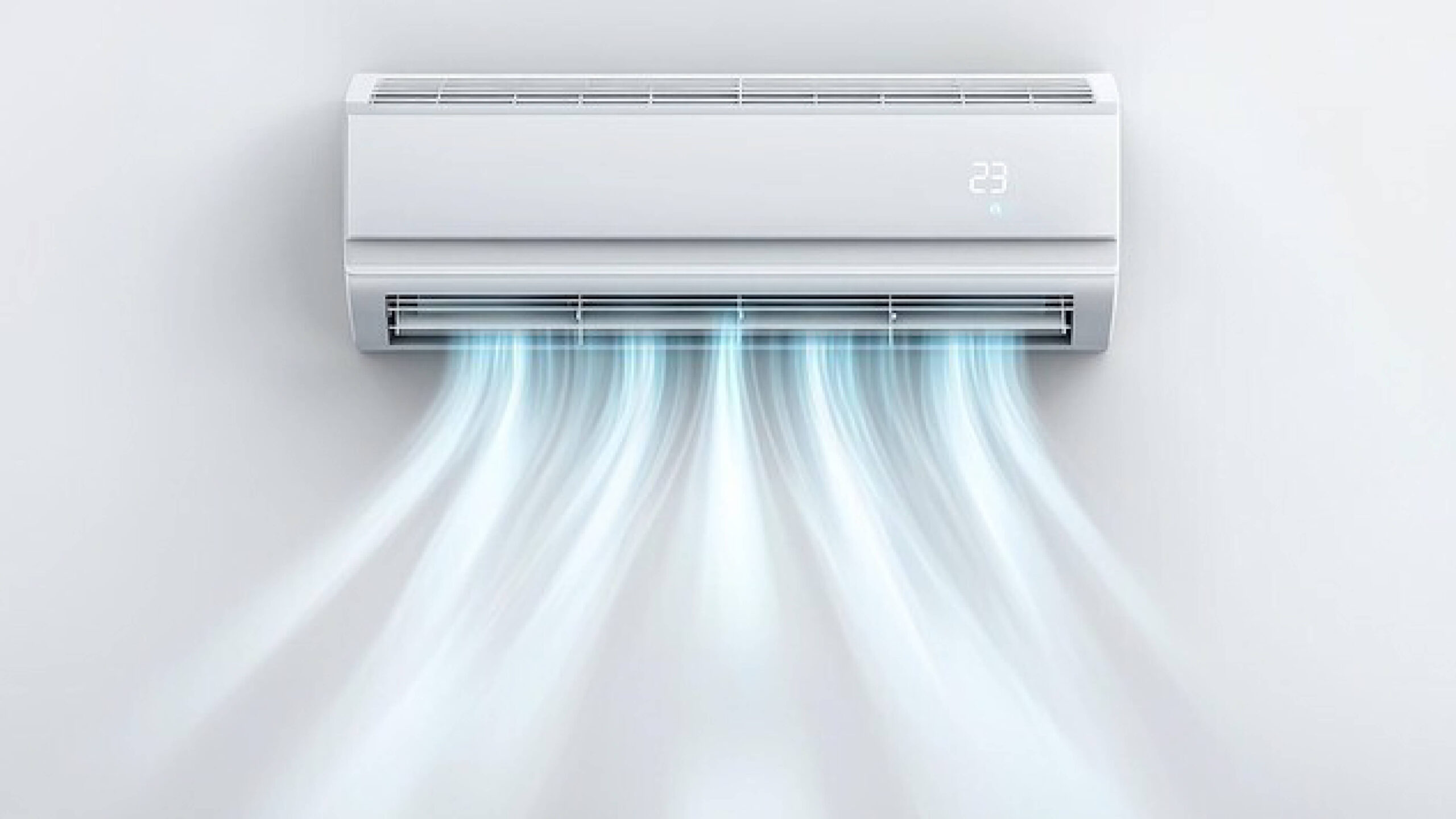
Wall-mounted split AC unit blowing cool air indoors for home cooling in New Jersey.

Supply vents bring warm or cool air into your rooms. You can think of them as the delivery guys of your HVAC system. 

So, when you turn your furnace or air conditioner on, the air comes out of these vents and keeps your home cozy. 

What are the different types of supply vents? 

While supply vents are one of the three air vent types, they are also of different kinds, including:

  • Floor Registers: Push warm air up from the floor.
  • Low/High Wall Registers: Blow air from walls. 
  • Ceiling Diffusers: Spread cool air from the ceiling evenly.
  • Round Ceiling Diffusers: Circular vents that mix air well in open rooms.
  • Linear Slot Diffusers: Long and sleek vents that spread air across wide spaces.
  • Baseboard Registers: Sit low on the wall to push air out quietly.
  • Toe-Kick Registers: Hidden under cabinets to warm floors in small areas.
  • Smart Registers: Motorized vents that direct air where it’s needed most.
Here’s how different supply vent types are used
Vent StyleBest ForLocation
Floor RegisterHeating first floorsFloor near windows
Ceiling DiffuserCooling upper floorsCeiling
Wall RegisterGeneral HVAC useHigh or low wall
Baseboard RegisterQuiet heat in older homesAlong baseboards
Toe-Kick RegisterSmall spaces/kitchensUnder cabinets
Smart RegisterZoned airflow controlAny room

Where will you find supply vents? 

You’ll usually find supply vents in spots where they can spread air evenly through the room. This includes:

  • On the floor near windows or exterior walls (especially in older homes)
  • High up on the wall (popular in modern homes)
  • In the ceiling (often in multi-story houses or homes with ducts above)

Not sure if you’re looking at a supply vent? 

Here’s a super simple test: Take a tissue or a small piece of paper, and hold it in front of the vent when your system is running. If the paper blows away from the vent, you’ve found a supply vent. 

Clean-Air-Technologies's Logo
Angies Super Service
Accredited Business
Aeroseal

Schedule Your Free Estimate Today

Contact us to improve your indoor air
quality with our expert cleaning services in NJ.

2. Return vents 

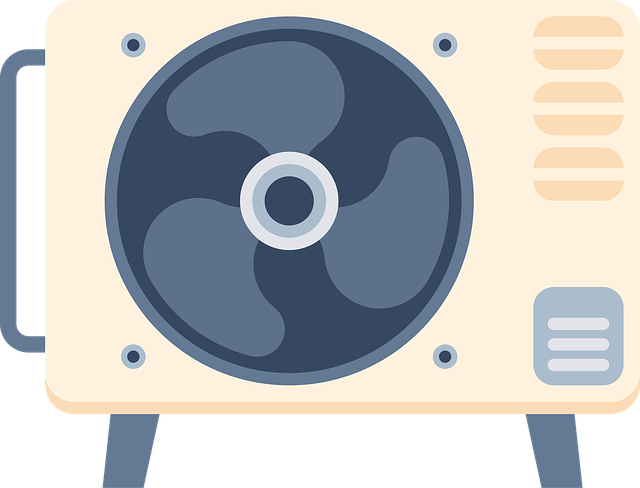
Outdoor AC condenser unit illustration for home cooling

Unlike supply vents that bring air in, return vents pull air out of the room and send it back to your HVAC system to be heated or cooled again. 

These help your HVAC system have enough air to supply, circulate air properly, and keep your indoor air fresh by cycling it through your filters.

What are the different types of return vents? 

Just like supply vents, return vents are also of different kinds, which include: 

  • Standard Return Grilles: Pull used air back from walls or ceilings.
  • Filter Grilles: Return vents with built-in filters for easy cleaning.
  • High/Low Return Pairs: Let you switch air pickup for summer or winter.
  • Central Hallway Return: One big return vent serving the whole house.
  • Transfer Grilles / Jump Ducts:  Help air move between rooms when doors are closed.
Here’s how different return vent types are used
TypeFeatureWhere It’s Used
Standard Return GrilleBasic air returnWalls/ceilings
Filter GrilleHas built-in air filterNear HVAC unit or central hallway
High/Low Return PairSeasonal air pickup switchingHomes with two-level return setup
Central Hallway ReturnOne vent serving large areaHallways in smaller homes
Transfer Grille / Jump DuctAllows airflow between closed roomsBedrooms, offices without return vents

Where will you find return ducts? 

Return vents are usually larger than supply vents, and placed in the following areas of your home:

  • Central areas like hallways or big rooms
  • High on walls or low near the floor, depending on your system’s design

Curious how to spot one?

Try the same tissue test. But this time, if the paper gets sucked toward the vent, it’s a return vent.

Also, most return vents don’t have a lever or damper. And that’s intentional because you don’t want to block or close return vents, as that can reduce air pressure, system efficiency, and even cause damage to your system.

3. Exhaust vents 

Exhaust vents have a different job altogether, which is kicking unwanted air out of your house completely. This includes:

  • Moisture from hot showers
  • Cooking smells and smoke
  • Lint and heat from your dryer
  • Hot attic air that builds up in summer

Also, unlike supply and return vents, which are part of your heating/cooling loop, exhaust vents connect to the outside. They send air through ducts that exit your home and help prevent moisture damage, odor buildup, and air quality issues.

What are the different types of exhaust vents? 

Different exhaust vents that you’ll find in your home include: 

  • Bathroom Exhaust Fan: Removes steam and moisture after showers.
  • Kitchen Range Hood: Vents cooking smells, grease, and heat.
  • Dryer Vent: Sends hot and damp air and lint outside.
  • Attic Vents (Ridge/Soffit): Let heat and moisture escape your attic.

Where will you find exhaust vents? 

You’ll find exhaust vents in very specific locations, such as:

  • Bathroom ceilings (part of the bath fan system)
  • Above the stove (your range hood)
  • Behind the dryer
  • In the attic (attic fans or passive exhaust vents)

Here’s how you can spot one: 

Look for vents that seem to connect to something with a motor or fan, especially if they’re:

  • Mounted on the ceiling or high on a wall
  • Near appliances or moisture-heavy areas

Pro tip: If they don’t blow air in or suck air back into your HVAC system, they’re exhaust vents.

Bonus: Exhaust vents are more important than you might think 

Exhaust vents are your first line of defense against mold, mildew, and musty odors. 

How?

You see, bathrooms without working exhaust fans can develop peeling paint, damp walls, or worse, hidden mold inside walls. The same thing goes for kitchens and laundry rooms.

Now, exhaust vents remove moisture early on and help keep the space dry, preventing all of these problems down the road. 

Wondering how much you’ll likely pay to get these vents cleaned? 

Go through my blog on air vent cleaning cost in New Jersey and know the latest price average. 

What are the types of air vents common in New Jersey homes?

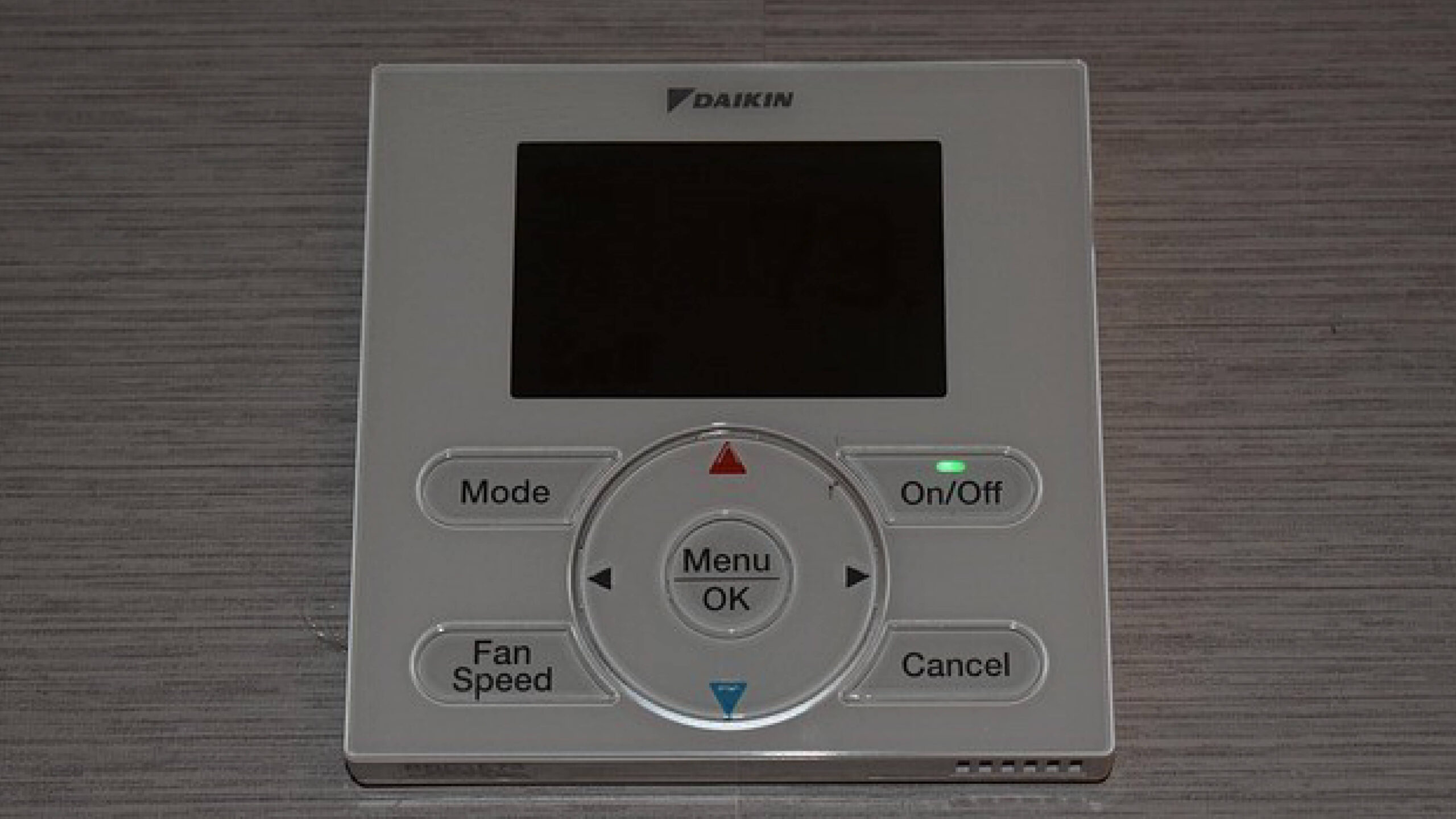
HVAC thermostat control panel for heating and cooling in New Jersey homes

Although all vents work the same way, i.e., blow air in, pull it back, or push it outside, the way they are installed can vary a lot. And this depends largely on where you live. 

Take New Jersey, for example, where age of the home, type of heating system, and available duct space all play a big role in where vents are placed.

Let’s take a look at what air vent types are common in the state.

1. Two-story homes 

In most two-story homes across New Jersey, the supply vents upstairs are often in the ceilings. That’s because it’s easier to run ductwork through the attic than behind finished walls.
At the same time, the supply vents downstairs are usually on the floor or low on the wall. This is mainly because the ducts run either through the basement or crawlspace.
Talking about return vents, most two-storied NJ homes don’t have return vents in every single room. Instead, there’s usually one large return grille per floor, usually in a hallway or open area.

2. Older NJ homes 

A lot of homes in New Jersey were originally built with boilers and baseboard heat, and not central air systems. Here, air vents were added later, often during renovations or when central AC was retrofitted. 

Now, when centralized HVAC was added to older homes, it was much easier to run ducts through the attic to reach upstairs rooms. That’s why you’ll often see ceiling vents or diffusers in second-floor bedrooms.

However, you might only see a few wall or floor vents downstairs, often in main rooms like the living room or dining room. 

Also, older homes might only have one big return vent, and it’s usually somewhere on the first floor.

3, Homes with limited duct space

Not every home in New Jersey has the space to run full-size ductwork to every room. And In these homes, HVAC installers got a bit creative.

How? 

You might notice some rooms have no vents whatsoever, but instead have a sleek wall-mounted unit. 

That’s a mini-split system or a ductless system which provides both heating and cooling without needing air vents at all. They are popular in older homes, bonus rooms, and renovations where adding ductwork would be too invasive or expensive.

Also, some homeowners install transfer grilles or jump ducts to help with air movement in homes with limited return vents. 

In short, here are the common vent setups in NJ homes

Home TypeSupply Vent LocationReturn Vent SetupNotes
Two-Story HomeCeiling (upstairs), floor (downstairs)One large return per floorDuctwork routed through attic/basement
Older NJ HomeLimited vents, retrofitted laterOne central return on first floorOften upgraded from boiler/baseboard systems
Homes w/ Limited Duct SpaceMini-splits or ductless unitsJump ducts or transfer grillesGreat for renovations or tight spaces

How to choose the right air vent for your NJ home? 

More than look, picking the right air vent is about comfort, airflow, and making sure every room feels just right. And to that end, here’s how you can choose the right air vents for your home: 

1. They should be compatible with the room 

For starters, different rooms need different vents. Here are a few examples: 

  • Bedrooms: Smaller vents work best so you don’t wake up freezing from a blast of cold air.
  • Living rooms: Bigger spaces need bigger vents (or more of them) to stay comfy.
  • Bathrooms: Always need an exhaust vent to get rid of steam and smells.

So, you should make sure that the vents are made for the specific room. 

2. They should complement the airflow

Air behaves in predictable ways, ie., cool air sinks and warm air rises. 

This means, if you’re cooling a second-floor room, ceiling vents work best. Similarly, if you’re heating a space on the first floor, floor vents are ideal. 

3. They should keep the airflow balanced

Great airflow is all about balance. So, you should try to balance comfort and efficiency.

For instance, if you’ve got too many supply vents and not enough returns, you’ll get weak airflow and uneven temperatures. 

Also, get too many returns without enough supply vents, and your room might never feel warm or cool enough. 

5. They should go well with your home’s aesthetics

Vents aren’t just functional, they’re also a part of your interior space. 

And to that end, I suggest you get sleek flush-mount vents or covers that you can paint to match your walls, ceilings, and floor. 

Not sure what kind of vents are right for your home? 

Reach out to our team and know the ideal vent type for your space. 

Clean-Air-Technologies's Logo
Angies Super Service
Accredited Business
Aeroseal

Schedule Your Free Estimate Today

Contact us to improve your indoor air
quality with our expert cleaning services in NJ.

Wrapping it up

At first look, the vents around your home might seem like small forgettable details. But by now, you know they’re actually a huge part of what keeps your space comfortable, your air clean, and your energy bills in check.

And the best part is that once you know what’s what, it’s much easier to:

  • Spot problems early
  • Keep air flowing freely
  • Work with your HVAC technician when something needs fixing

Got more questions or need a complete air vent cleaning for your NJ home?

You can get in touch with us!

At Clean Air Technologies, we are New Jersey’s most seasoned HVAC cleaning and maintenance professionals with about three decades of expertise. And we’ve got all your HVAC upkeep needs covered on a budget. 

FAQs about types of air vents

What’s the difference between a vent, a register, and a grille?

Although they look similar, vents, registers, and grilles, all serve different purposes. Here’s how: 

  • Vent is the general term for the opening where air comes in or goes out.
  • Register is a vent with an adjustable damper (you can open or close it).
  • Grille is a vent cover without a damper. It’s fixed in place.

How do I know if a vent is supply or return?

Here’s how you can tell the difference between supply and return vents: 

  • Supply vents blow air out (you’ll feel airflow when the system is running).
  • Return vents pull air in (you won’t feel air blowing out).

A quick hand test while the system is on can tell you which is which.

Should I close vents in unused rooms to save money?

Nope, closing vents can actually raise air pressure in your ducts, cause leaks, and make your HVAC system work harder.

How often should I clean my vents?

I suggest you give vent covers a quick vacuum every couple of weeks and a deeper wash every few months. And if you see dust building up fast, your air filter may need changing more often.

Why is one of my vents blowing weak air?

This could be:

  • A closed damper.
  • A blocked duct.
  • Dirty air filter. 

If the issue affects multiple vents, it’s time to call an HVAC technician.

Are there special vent types for allergies or dust?

Yes, some vent covers have built-in filters designed to trap dust, pollen, and pet hair. These can help improve indoor air quality but should be cleaned or replaced regularly.

Do vents affect my energy bills?

Absolutely. 

Clean and unblocked vents help your HVAC run efficiently, which can reduce energy costs. Dirty or blocked vents, at the same time, force the system to work harder, wasting energy and money.