Clean-Air-Technologies's logo

A Complete Step-By-Step Mold Remediation Process In New Jersey

If you’ve just found mold in your home, you’re probably thinking two things right away:

How do I get rid of this the right way?

And even more importantly, how do I make sure it doesn’t come back?

Now, before we begin, let me first tell you this isn’t something you should panic about. 

A lot of homes in New Jersey run into this problem, and they get rid of it entirely. 

The problem is, when you search online, the advice usually goes one of two ways. It either makes mold sound like something you can fix with a spray bottle and paper towels, or it throws so much technical jargon that it feels overwhelming.

But, this blog is different.

Here, I am going to walk you through the mold remediation process step by step. This is the same process that the Environmental Protection Agency recommends professionals to follow. 

So, let’s get started with it. 

Key takeaways 

  • Mold grows because of moisture, not dirt.
  • Professionals always fix the water source first.
  • Mold spores can spread easily if not contained.
  • Deep cleaning and drying prevent mold from coming back.
  • DIY remediation is risky and often ineffective.
  • Mold prevention is cheaper than remediation. 

What is mold remediation?

For starters, mold remediation is the professional process of finding, removing, and preventing mold growth inside a home. And it isn’t just just about scrubbing a stain off the wall as remediation focuses on removing moisture, which is the root cause of mold.

You see, when mold appears, it usually means something has been wet for too long. So, remediation begins by identifying the moisture source, be it a leak, humidity, or water damage.

The affected area is then carefully contained so mold spores don’t spread through the air. Also, contaminated materials are removed, surfaces deeply cleaned, and everything is thoroughly dried.

This is similar to mold removal in air ducts, but it covers your entire home and not just HVAC components. 

Clean-Air-Technologies's Logo
Angies Super Service
Accredited Business
Aeroseal

Schedule Your Free Estimate Today

Contact us to improve your indoor air
quality with our expert cleaning services in NJ.

Here’s the complete mold remediation process followed by professionals in New Jersey
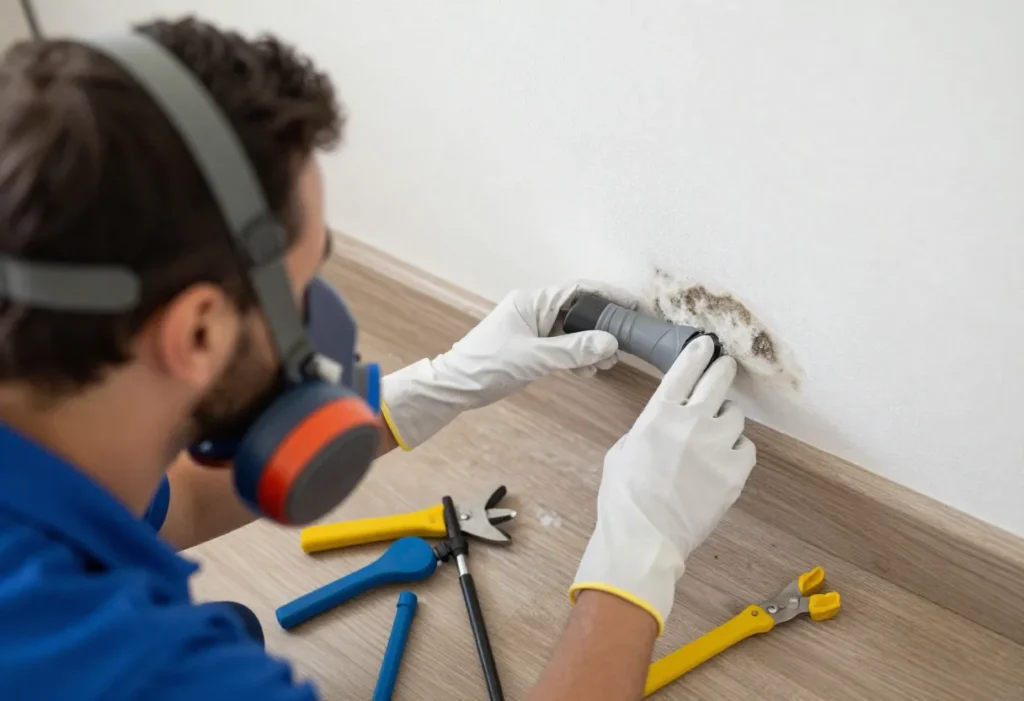
Professional mold inspection and damage assessment on indoor wall in New Jersey home

Step 1. Mold inspection and damage assessment

The first step of mold removal process involves professionals figuring out what extent of mold damage you’re dealing with.

That’s because when you spot mold, it’s usually just a small stain on a wall or ceiling. But what you see is often only part of the story. 

Mold has a way of spreading quietly behind drywall, under flooring, or inside insulation.

A proper inspection looks at where mold is visible and also where it might be hiding. Here, professionals check moisture levels, test the walls, and identify the source of the problem.

This step is important because it defines everything that comes next. If you don’t understand the full scope of the problem, you can’t fix it the right way.

Step 2. Fixing the moisture problem 

At its very basic mold is a moisture problem. It doesn’t grow because a home is dirty, but it grows because something is wet or has been wet for too long.

So, finding and fixing the moisture source is one of the essential mold removal steps. Here, professionals focus on fixing a plumbing leak, sealing foundation seepage, repairing a roof issue, improving ventilation, or lowering indoor humidity.

Now, since high indoor humidity is also a part of the problem, professionals might also suggest you get an HVAC system cleaning. The idea is to ensure your HVAC system works efficiently and humidity levels are under control. 

I suggest you don’t skip this step, as skipping might cause mold remediation to fail. That’s because even if you remove every visible trace of mold, if moisture is still present, mold will return.

Step 3. Containing mold spores from spreading

This is the step where the actual mold remediation process starts. 

You see, when mold is disturbed, it releases microscopic spores into the air. You can’t see them, but they travel easily. 

And without containment, those spores can spread to other parts of your home.

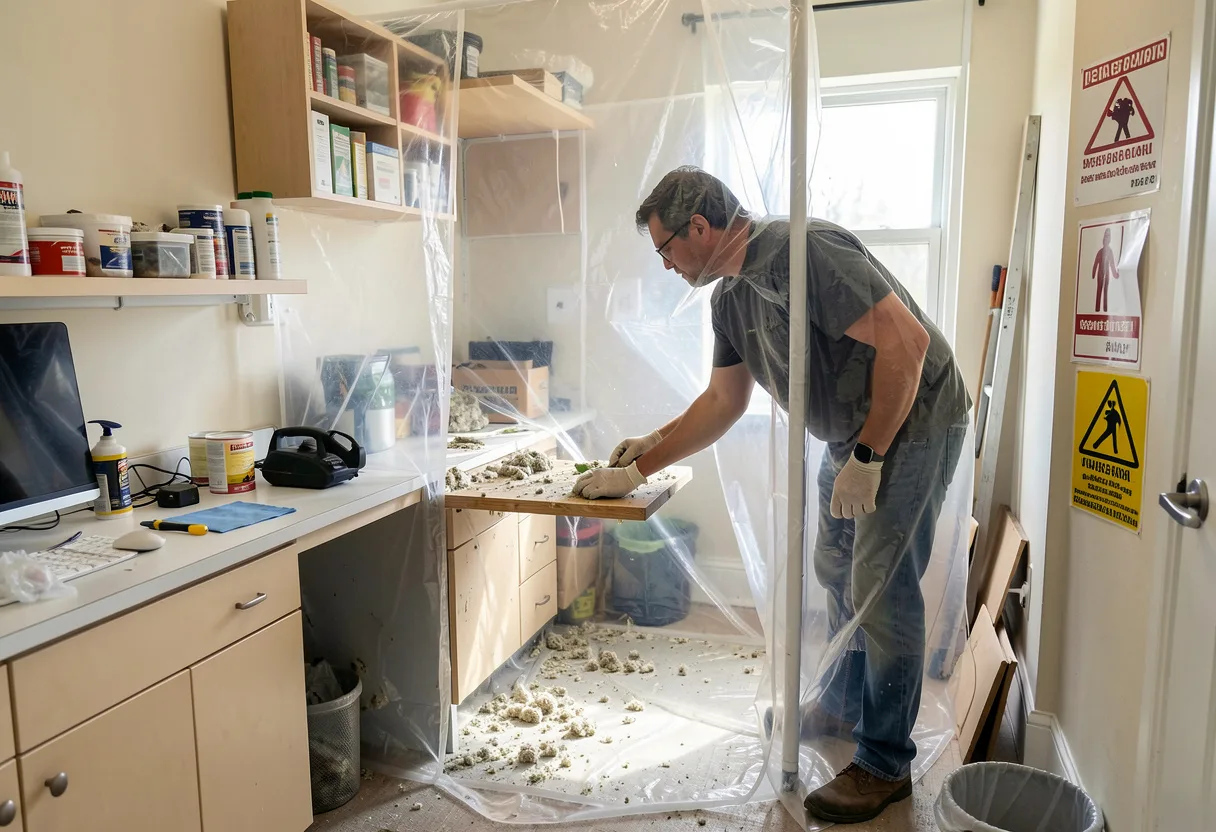
This is why professionals seal the affected area before mold removal begins. They use plastic barriers, sealed doorways, and controlled entry points to isolate the space. 

Here, the goal is to keep the mold spores contained and protect the rest of your home while the work is being done. 

It is a critical safety step that prevents a small issue from becoming a much larger one.

Step 4. Cleaning and controlling the air

After the affected area is sealed off, professionals clean the air inside that space.

And to do so, they use special air machines with strong filters (called HEPA filters) that capture these tiny particles. These machines pull air in one direction so spores don’t escape into the rest of your home.

Think of it like vacuuming the air while mold removal is underway. This step keeps mold from spreading to hallways, bedrooms, or your HVAC system. 

Step 5. Removing mold-contaminated materials

Not everything can be cleaned.

Materials like drywall, insulation, carpet padding, ceiling tiles, and some soft wood products are porous. This means mold doesn’t just sit on the surface, it grows into the material.

Once that happens, wiping the outside won’t fix it.

In these cases, professionals go about tearing off mold contaminated materials and carefully removing them. They are sealed in heavy bags and taken out of the home safely to prevent spreading spores.

This step might feel like a lot. But removing damaged materials is often the only way to solve the problem.

Step 6. Detailed cleaning of all remaining surfaces
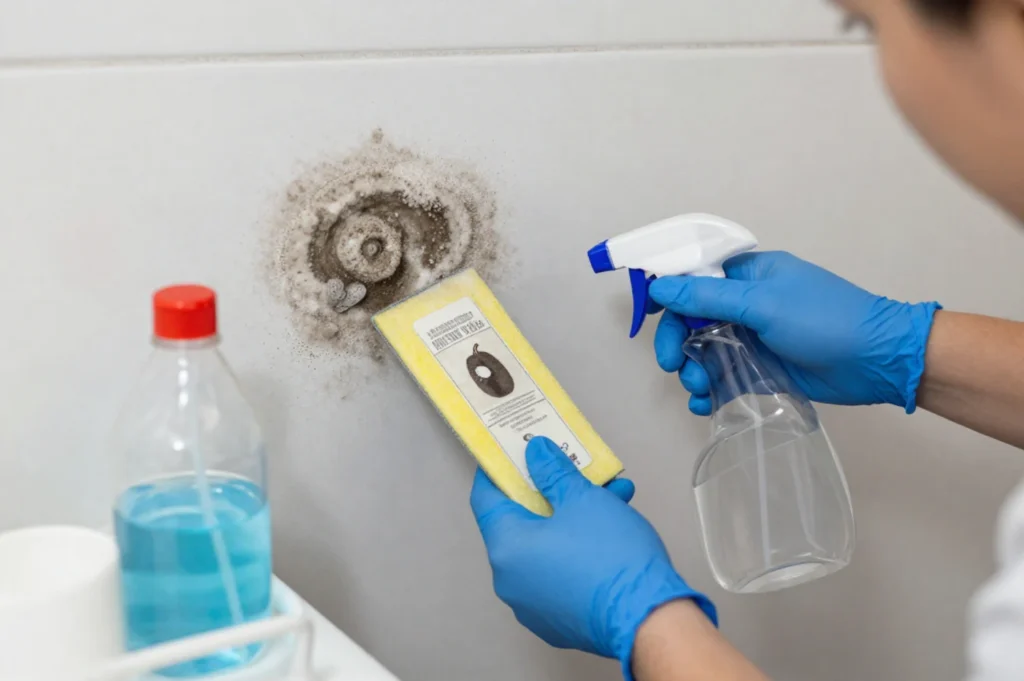
Cleaning mold from wall during mold remediation process in New Jersey home

Once damaged materials are removed, you shouldn’t assume that it’s all done. In fact, this is where the deep cleaning really begins.

Here, every exposed surface inside the contained space is carefully cleaned. This includes framing, subfloors, and any solid materials that remain.

Professionals use a HEPA vacuum cleaner to capture fine dust and mold particles. Then they physically wipe and scrub surfaces using specialized cleaning solutions. 

This isn’t just spraying something and walking away. Instead, it’s hands-on, detailed work.

But why is this process so thorough, you might wonder?

Well, that’s because even after removal, tiny spores and debris can still linger. And if they aren’t cleaned properly, they can settle and grow again if moisture returns.

Step 8. Drying and dehumidification

Now comes one of the most important part, which is drying everything completely.

You see, even if your household materials feel dry to the touch, moisture can still be trapped inside walls, framing, or concrete. And this hidden dampness is exactly what mold needs to grow back.

This is exactly why using commercial dehumidifiers and high-powered air movers is a part of any professional mold remediation process. It helps pull moisture out of the air and building materials. 

Also, moisture levels are monitored carefully during this stage. The goal here is to bring moisture levels back to normal and stable.

Step 9. Final cleaning and containment removal

Once everything is dry, the area goes through one more round of cleaning.

During this step, surfaces are wiped down again, floors are vacuumed, and any remaining dust or fine particles are removed.

Only after this does the containment come down.

And this is done very carefully.

By the end of this step, your space feels clean, dust-free, and fresh. 

This is where you’ll usually notice the difference. The musty smell should be gone by now and the air should feel lighter.

Step 10. Post-remediation verification 

Before you rebuild anything, the earlier mold removal steps need to be re-checked.

This step is all about confirmation.

Here, your home is carefully inspected to make sure:

  • No visible mold remains
  • Moisture levels are back to normal
  • The original water problem has been corrected

In some cases, additional air or surface testing is also done for peace of mind.

Step 11. Repair and rebuild

If drywall, insulation, or flooring was removed during the mold remediation process, this is the stage where you’ll rebuild them.

But here’s what’s important: Rebuilding only happens after the environment is confirmed safe and dry. Otherwise, you risk sealing moisture back inside the walls and starting the cycle all over again.

Here are all the mold removal steps in short: 

StepWhat HappensWhy It Matters
1. InspectionCheck where mold is and where moisture is coming fromUnderstand the full problem before fixing it
2. Fix MoistureRepair leaks, improve ventilation, reduce humidityMold will come back if moisture isn’t fixed
3. ContainmentSeal off the affected area with plastic and barriersKeeps spores from spreading to the rest of the home
4. Air ControlUse HEPA filters and negative air pressurePrevents spores from moving into clean areas
5. Protective GearWear masks, gloves, suits, and eye protectionKeeps workers safe and stops spreading spores
6. Remove MaterialsTake out moldy drywall, insulation, carpet paddingPorous materials can’t be cleaned; mold grows inside them
7. Deep CleaningScrub and HEPA-vacuum remaining surfacesRemoves leftover spores and dust
8. DryingUse dehumidifiers and air movers; monitor moisturePrevents mold from regrowing
9. Final CleaningWipe surfaces again and remove containmentLeaves the space clean, dust-free, and safe
10. VerificationInspect, check moisture, and sometimes testConfirms mold is gone before rebuilding
11. RebuildReplace drywall, insulation, floors, and finish workRestores the home safely after mold is removed

How long does the mold remediation process take in New Jersey?

The honest answer is: It depends on how big the problem is and how wet the materials are.

For a small, contained area, like a section of drywall in a bathroom or a small basement spot, remediation can be completed in 1 to 2 days.

But if you’re dealing with a larger basement section or a full room, it usually takes 2 to 4 days.

Also, bigger projects involving multiple rooms or heavy moisture can take 4 to 7 days or more.

A good remediation team focuses on doing it thoroughly and not quickly. So, if they take an extra day to dry properly, it is always better than doing the job twice.

Here’s how long mold remediation process typically takes in short:

Project sizeTypical time
Small localized area1-2 days
Medium basement or room2-4 days
Large or multi-area projects4-7+ days

Note: Drying and verification often determine the total duration.

How much does mold remediation cost in New Jersey?

The next big question is cost.

Mold remediation in New Jersey can vary quite a bit because every situation is different. The size of the affected area, how much material needs to be removed, and how long equipment must run all play a role.

For a small, contained area, you can expect the cost to range between $800 and $2,000.

But if a full room or a basement section is involved, you’re typically looking at $2,000 to $4,500.

Also, larger or multi-room projects can range from $4,500 to $10,000 or more, depending on complexity.

The biggest cost factors include:

  • How much drywall or insulation must be removed
  • How extensive containment needs to be
  • How long drying and air filtration equipment must run

Here’s how much mold remediation costs in short: 

Project typeTypical NJ cost range
Small contained area$800-$2,000
Single room or basement section$2,000-$4,500
Large or multi-room remediation$4,500-$10,000+

Note: You should never DIY the mold remediation process
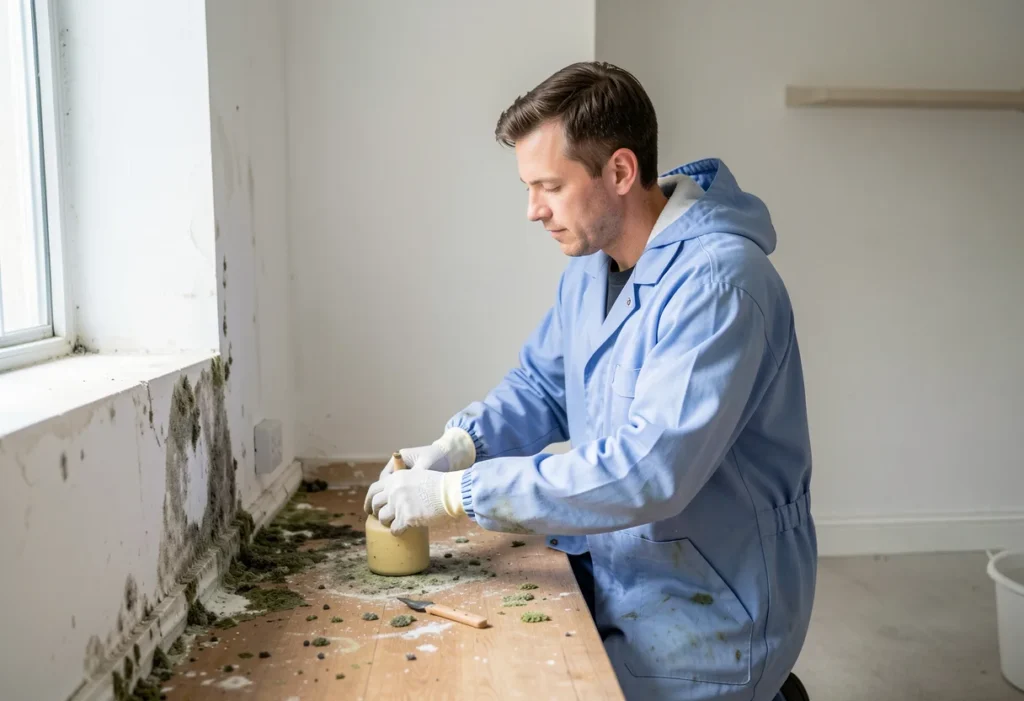
Professional mold remediation technician cleaning mold from wall surface

Some mold problems might look small, but the truth is that mold can be tricky and dangerous. That’s why you should never try to handle it yourself.

The mold might look like a tiny spot, but it might have spread inside walls, ceilings, or your HVAC system. Also, you don’t know where the moisture is coming from, which is the root cause of mold. 

Now, trying to clean mold yourself in these situations can make the problem worse, spread spores through your home, or even harm your health.

Bonus: Here’s how to prevent mold after remediation

  • Keep basement humidity below 50%
  • Use dehumidifiers during summer
  • Fix grading and drainage outside
  • Keep gutters clean
  • Ensure bathroom and kitchen exhaust fans work properly
  • Get HVAC systems properly cleaned every once in a while
Clean-Air-Technologies's Logo
Angies Super Service
Accredited Business
Aeroseal

Schedule Your Free Estimate Today

Contact us to improve your indoor air
quality with our expert cleaning services in NJ.

Final thoughts 

I am sure by now you know what a typical mold remediation process in New Jersey looks like. Also, you know the ideal timeline and cost of mold removal. 

You see, mold remediation might seem like something you could handle yourself. But the truth is that it’s not a DIY job. 

Mold can hide in walls, ceilings, HVAC systems, and other hard-to-reach places. And disturbing it without the right tools, protective gear, and experience can actually make the problem worse.

Got more questions or want an air duct cleaning in NJ to prevent mold in your HVAC system? 

You can get in touch with us!

At Clean Air Technologies, we are seasoned NADCA-certified air duct cleaning professionals with three decades of hands-on duct cleaning expertise. And we’ve got all your residential and commercial duct cleaning needs covered on a budget. 

FAQs about mold remediation process

How long does mold remediation usually take in New Jersey homes?

In most New Jersey homes, mold remediation takes anywhere from one to five days. 

Small, localized areas can often be finished in one or two days. 

Larger projects, such as basements or multiple rooms, usually take longer because proper drying and air filtration are required. 

The timeline also depends on how wet the materials are and whether repairs are needed.

Is mold remediation the same as mold removal or cleaning?

No, mold remediation is much more than simple cleaning. 

Mold removal usually includes wiping or spraying visible mold. 

At the same time, remediation focuses on stopping the entire problem. This includes fixing moisture issues, sealing off the area, removing contaminated materials, cleaning remaining surfaces, and drying everything properly. 

Can I safely do mold remediation myself?

You can safely handle very small surface mold, such as a small patch on bathroom tile or a sealed wall. 

However, if mold is inside walls, ceilings, insulation, or spreads over a larger area, DIY remediation is not recommended. 

Disturbing mold without containment can spread spores through your home.

Do I need mold testing before or after remediation?

Mold testing is not always required, but it can be helpful in some situations. 

The most important step is a detailed inspection to identify the moisture source and affected areas. 

After remediation, some homeowners also choose a clearance or verification check for peace of mind. 

Will mold come back after remediation?

Mold can return if the moisture problem is not fixed. 

Proper remediation removes contaminated materials and cleans the affected area, but moisture control is what keeps mold from growing again. 

Leaks, high indoor humidity, poor ventilation, or foundation seepage can cause repeat issues.

This is why you should monitor humidity, repair water problems quickly, and keep basements and bathrooms well ventilated.

Is it safe to stay in the house during mold remediation?

In many cases, yes, you can remain in the home while remediation is taking place. 

The affected area is sealed off using containment barriers and filtered air systems to prevent spores from spreading. 

However, if large areas are involved or someone in the home has asthma, allergies, or a weakened immune system, it may be safer to stay elsewhere temporarily. 
How Much Does Indoor Air Quality Testing Cost in New Jersey? (2026 Updated)

We spend most of our time indoors working, relaxing, or sleeping. But we rarely stop to think about what’s floating around in that air. 

As an indoor air quality testing expert, I’ve seen everything from dust to mold spores to radon gas and VOCs quietly build up indoors. 

And this is where IAQ testing comes in. It is a simple way to check what’s in your home’s air and identify pollutants or health risks.

A testing like this is particularly essential in New Jersey as its mix of humid summers and older properties makes us more prone to mold and radon issues. 

But how much does indoor air quality testing cost in New Jersey? 

That’s the first question you’d have as a homeowner. 

The reality is, although most people in NJ pay in the range of $300-$600, pricing can vary significantly. 

In this blog, I will break it all down clearly. You’ll Know: 

  • The indoor air quality testing cost you can expect for your home
  • The factors that affect total cost
  • How to get the best price for IAQ testing

So, let’s get started. 

Key takeaways

  • Indoor air quality testing in NJ costs $300-$600 on average.
  • Prices vary by test type (mold, radon, VOCs, etc.) and home size.
  • Full IAQ testing bundles can save money compared to individual tests.
  • Mold, radon, and VOCs are common air quality concerns in NJ homes.
  • Check if labs are accredited to ensure reliable results.
  • Off-season testing can save you 5-15% on costs.

How much does indoor air quality testing cost in NJ exactly?

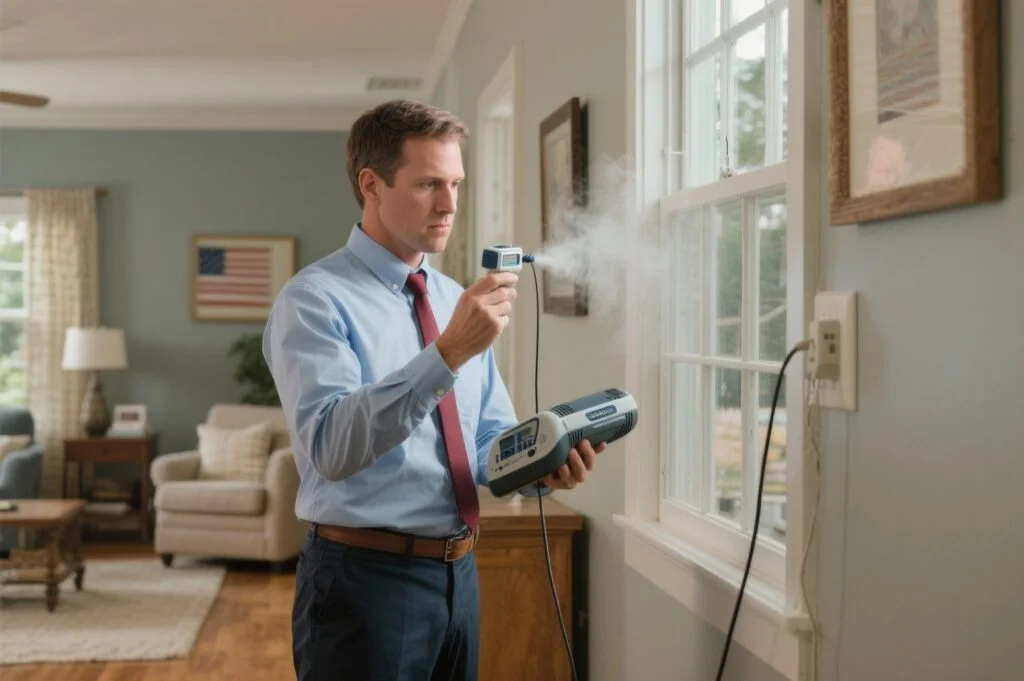
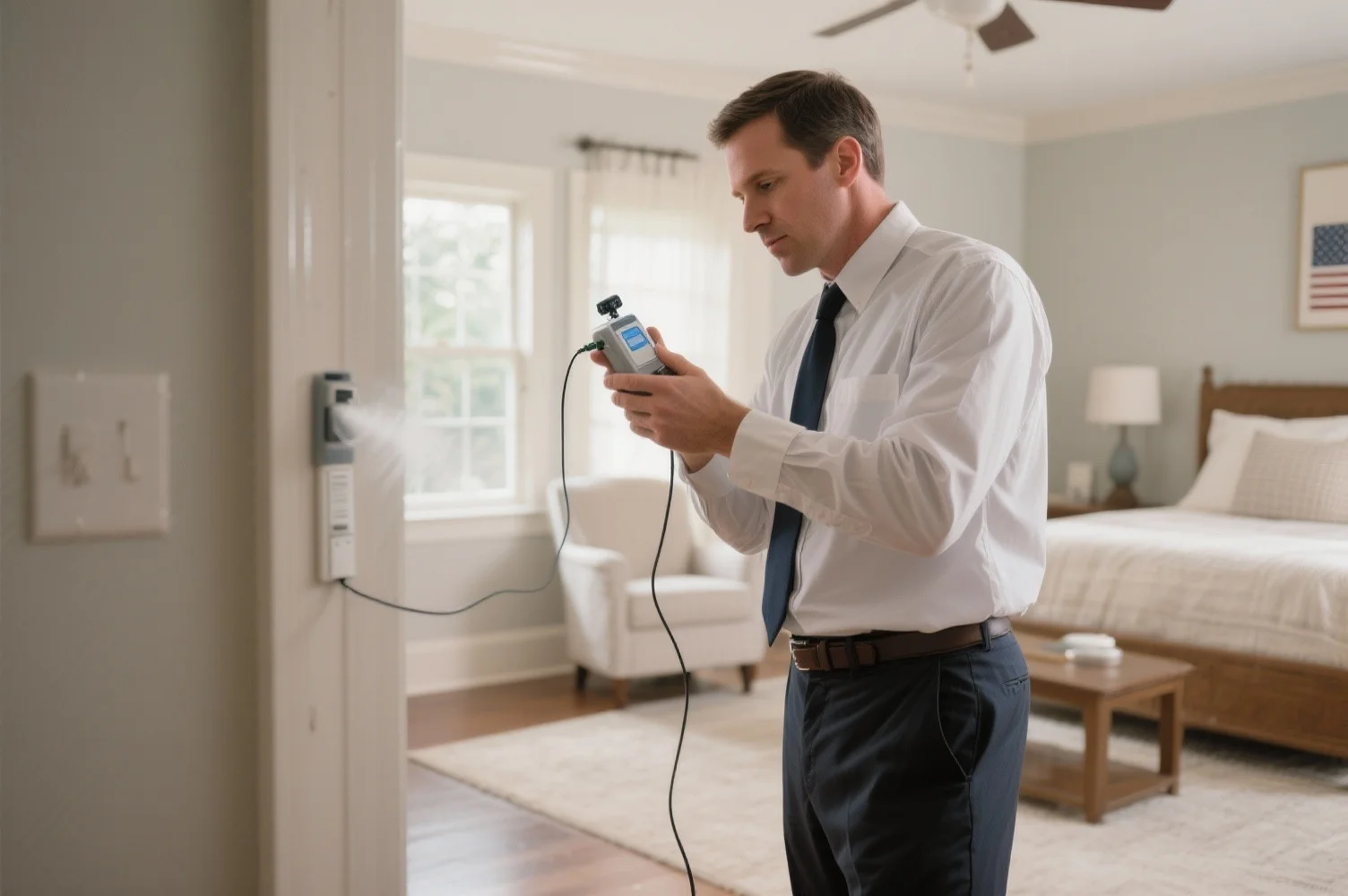
Indoor air quality inspector using a handheld device to test VOCs and airborne particles inside a living room.

You can expect to pay between $300-$600 for a standard professional indoor air quality testing in NJ. More so if you bundle the usual checks like mold testing, VOC screening, and radon spot-checks. 

However, individual tests can cost less or more depending on the scope of work. Here, the testing method and the number of samples taken determine how much you pay. 

Below is a breakdown of individual indoor air quality tests and their costs: 

Test TypeAverage Cost Range in NJTypical National AverageWhen to Choose It
Mold$300-$800$300-$1,000Visible mold, musty smell, water damage, post-flood
Radon$150-$600$150-$800Basements, older homes, high radon zones
VOCs (chemical panel)$150-$400$100-$400After renovation, new furniture, chemical odors
Allergens$100-$300$100-$300Allergy or asthma symptoms, pets, seasonal reactions
Asbestos$250-$800$250-$800Pre-1980 construction, renovation of old materials
Full Home IAQ Testing$400-$800$400-$1,000Complete home check, best for buyers or properties with major concerns

Let’s have a detailed look at how much each of these tests cost and why:

Mold testing 

What it tests: Mold testing looks for airborne mold spores and/or mold on surfaces. Lab reports detail species and spore counts so you can see whether levels are normal or elevated.

When to do it: If you see mold, smell a persistent musty odor, have had water damage, or notice allergy symptoms. Also, you can schedule it after a flood or water leakage.

Cost range in New Jersey: $300-$800. 

What affects price:

  • Number of samples (each extra room or area raises lab fees).
  • Type of sampling out of air samples, surface swabs, or tape lifts (combined air and surface test costs more).
  • Use of active pumps or spore traps (better equipment costs more).
  • Lab result time, including rush results.
  • Whether or not the inspector includes a written remediation plan. 

Radon Testing 

What it tests: Radon tests measure the level of radon gas (a radioactive gas that can enter via foundation cracks). These tests give a reading in picocuries per liter (pCi/L).

When to do it: Always test if you have a basement or you live in a known radon area. Also, go for it when you’re buying/selling a home, or after foundation work. Radon is especially important in NJ basements and crawlspaces.

Cost range in New Jersey: $150-$600.

What affects price:

  • Short-term vs long-term testing kits (short-term kits are cheaper but less reliable; long-term gives a better average).
  • Number of testing locations (multiple floors/areas will need more kits).
  • Professional monitors vs DIY test kits (professional devices and lab analysis cost more than a do-it-yourself kit but are more reliable).
  • Follow-up confirmatory testing if the first test is elevated.
Clean-Air-Technologies's Logo
Angies Super Service
Accredited Business
Aeroseal

Schedule Your Free Estimate Today

Contact us to improve your indoor air
quality with our expert cleaning services in NJ.

VOC (volatile organic compounds) testing 

What it tests: VOC testing checks for chemicals released by paints, adhesives, new furniture, cleaning products, and building materials. Labs might also run a general VOC panel or targeted chemical tests.

When to do it: After renovations, new carpeting or cabinetry, or when you notice strong chemical smells or headaches/dizziness in the home.

Cost range in New Jersey: $150-$400 (depending on number of compounds tested).

What affects price:

  • Which VOCs are included in your test. Basic panels cost less while extended panels test dozens of chemicals cost more.
  • Sampling method (canisters and active samplers are pricier than passive badges).
  • Number of sample locations and how long the sampling runs.
  • Lab testing complexity. For instance, GC-MS (gas chromatography–mass spectrometry) lab analysis costs more but is more precise.

Allergen testing 

What it tests: Allergen testing includes airborne allergen sampling for dust mite, pollen, and pet dander, as well as surface dust analysis. Here, test results help you link allergy symptoms to real exposure.

When to do it: If you or your family members have persistent allergy or asthma symptoms, especially when symptoms improve away from home.

Cost range in New Jersey: $100-$300.

What affects price:

  • Number of allergens included in the test.
  • Sample type (air samples vs. dust collection method).
  • Whether or not you request a healthcare-grade immunoassay or lab panel is requested.

Asbestos testing 

What it tests: Asbestos testing checks areas like ceiling tiles, pipe insulation, and floor tiles for asbestos fibers. Here. professions collect a small sample and send it over to a lab.

When to do it: If your home was built before 1980, before you undertake major renovations, or if you’re tearing out old building materials.

Cost range in New Jersey: $250-$800 (you’re often charged per sample).

What affects price:

  • Number of samples taken from different materials.
  • Whether or not the contractor uses EPA-approved collection and lab protocols.
  • Inspection plus lab testing vs. lab-only analysis.

Full home package

What it tests: This is a combined package that includes multiple sample types. For instance, a full home package will test for mold screen, VOC spot, radon, and general allergens. Also, you will get an indoor air quality test report prepared by experts. 

When to do it: A full home package is best if you’re buying or selling a home, or when you simply want to get a complete picture. 

Cost range in New Jersey: $400–$800 for a typical single-family home.

What affects price:

  • Number of samples and scope of testing (for instance, deeper testing increases cost).
  • Whether or not you want to include a detailed written report and remediation recommendations.
  • Travel fees for technicians if you’re outside major metro areas.

What affects your indoor air quality testing cost? 

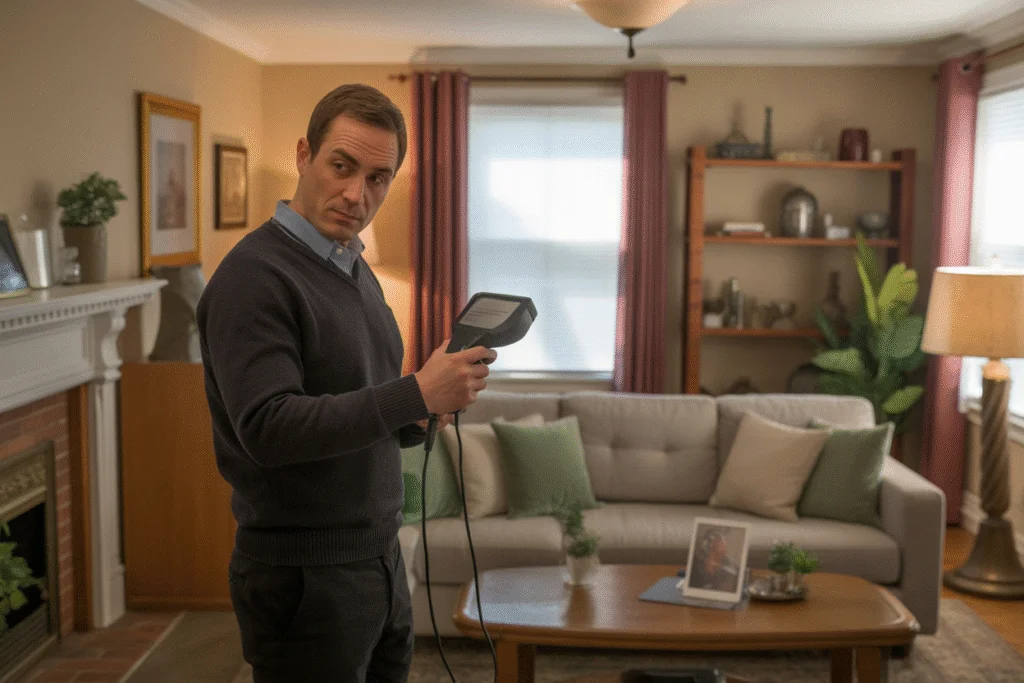
Indoor air quality testing specialist measuring airflow and airborne pollutants near a window in a New Jersey home.

If you’ve started calling around for quotes, you’ve probably noticed prices for indoor air quality testing in New Jersey can vary quite a bit. 

And that’s mainly because there are many factors that determine how much you’ll end up paying. This includes test type, your home’s size and location, testing equipment used, and much more. 

Let me break them all down for you. 

1. Type of test

This is the biggest factor that decides how much does indoor air quality testing cost.

You see, each kind of IAQ test looks for something different, and that means in different tools, lab methods, and costs. 

Here are different IAQ tests, for instance, and how they affect the final cost: 

  • Mold tests often require air and surface samples, plus lab analysis to identify the type of spores.
  • Radon testing uses either a short-term detector or a continuous digital monitor, which can change the price.
  • VOC (volatile organic compounds) testing involves sending samples to a certified lab, which can add to the cost.
  • Asbestos testing requires safety gear, sealed collection, and specialized labs, making it one of the pricier options.
  • Allergen testing (for dust mites, pet dander, pollen, etc.) is generally simpler and cheaper because it uses basic sample kits.

In short, the more complex the testing and lab analysis, the higher the cost.

2. Home size and number of samples

A one-bedroom condo and a 3,000-square-foot family home will need very different testing plans.

That’s because larger homes mean more air samples, more rooms to test, and more time on site, which naturally increases the total cost.

Also, homes with multiple HVAC zones or finished basements might need extra tests to get an accurate picture of indoor air quality. 

Now, a lot of companies use the price per sample approach to bill you (for instance, $75-$150 each sample). So if your technician needs several samples, the bill goes up accordingly.

3. Testing equipment and lab fees

There are different testing tools used for an IAQ test and they affect the testing costs. 

For instance, there are passive samplers, which collect particles over time and are cheaper. 

And then there are active air pumps or digital radon monitors which pull air continuously and provide faster and more detailed readings. But they come at a higher price.

Also, there’s the lab fee as most samples need to be analyzed in certified laboratories. 

4. Add-ons and reporting

Some companies offer basic yes or no test results, while others include comprehensive lab reports, consultations, and recommendations for improvement.

The latter can add anywhere from $100-$300 extra to your total bill and provide:

  • A detailed written report for insurance or real estate purposes
  • A post-test walkthrough with an air quality specialist
  • A remediation plan for mold, VOCs, or asbestos

5. Your location and local market rates 

Finally, where you live in New Jersey also plays a key role in determining the total indoor air quality test cost.

For instance, testing costs in North Jersey tend to be slightly higher than in South or Central NJ, simply because of labor rates and lab proximity.

Similarly, some companies include travel fees if you’re far from their service area. 

In short, here are all the factors that affect your indoor air quality testing cost:

FactorDetails
Test TypeDifferent tests use different tools and lab methods, affecting cost.
Home SizeLarger homes need more samples, increasing cost.
Testing EquipmentActive pumps and digital monitors are pricier than passive samplers.
Add-ons and ReportingDetailed reports or remediation plans can add extra costs.
LocationNorthern Jersey might have higher rates than southern or central parts.

Bonus: Here are the going rates for indoor air quality testing in New Jersey

To give you a better sense of what homeowners across New Jersey are actually paying, I’ve put together the latest IAQ test rates in the state.

All in all, here is how much you can expect to pay: 

  • Mold + VOC combo test: $495 (includes 2 air samples and a full lab report)
  • Radon test: $250 for short-term monitor and $450 for continuous digital test
  • Full IAQ test (mold + VOC + allergen): $675 flat-rate package

Here’s a simpler break down: 

Test PackageServices IncludedPrice Range (NJ)
Mold + VOC Combo2 air samples + full lab report$495
Radon TestShort-term monitor$250
Full IAQ TestMold + VOC + allergen testing$675

Note: These are average market prices I gathered from local IAQ specialists and home inspection services across the state. The prices might vary for your home. 

You might also want to read: Is Air Duct Cleaning Really Worth It In New Jersey

How to get the best price for indoor air quality testing in NJ without cutting corners? 

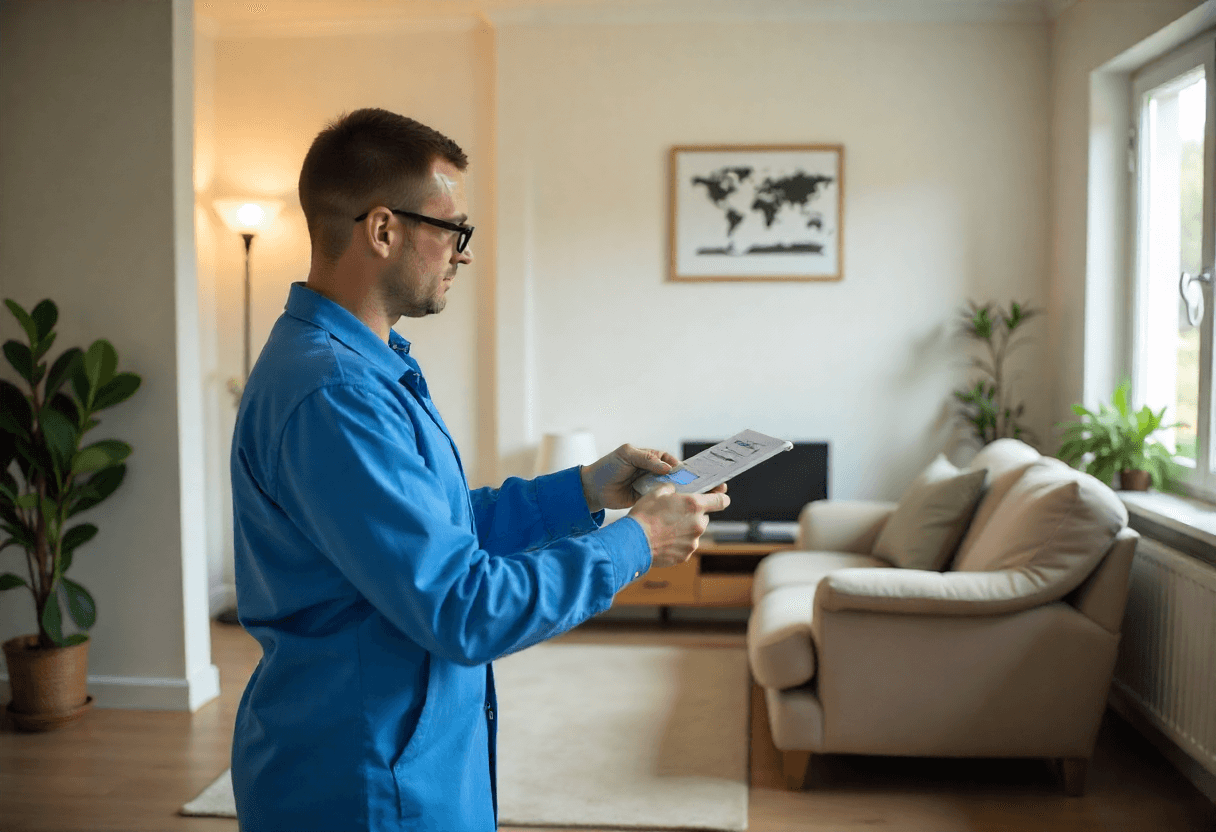
Indoor air quality inspector using a handheld detector to check for mold, allergens, and air pollutants in a living room.

Indoor air quality testing isn’t something you want to cheap out on. But that doesn’t mean you have to overpay either. 

In fact, with a few smart moves, you can get accurate professional-grade results without blowing your budget. 

Yes, that’s right!

Here’s how you can save on indoor air quality testing cost without cutting corners:

1. Bundle multiple tests together

If you’re testing for one issue, say mold, it’s often worth checking for other concerns like VOCs or radon at the same time.

That’s because a lot of IAQ testing companies in New Jersey testing companies offer bundle pricing when you combine services.

For instance:

  • Mold and radon test bundles might cost $550, versus $700 if done separately.
  • At the same time, full IAQ panels (mold + VOC + allergen) often cost $650-$750 in total, which can save you a few hundred dollars.

So, if you’ve already scheduled one test, ask what other checks you can add for a discounted rate.

2. Ask for itemized quotes

I suggest you request an itemized estimate instead of a lump-sum price.

A clear quote should list what’s included including number of samples, lab analysis, report type, and inspection fees.

This way, you can see what costs what when comparing quotes from different indoor air quality testing companies. Also, this will help you avoid hidden add-on charges later.

Pro tip: If a company gives you one flat rate with no breakdown, that’s a red flag. It’s often a sign they’re inflating the total or cutting corners on analysis.

3. Verify lab accreditation

No matter how good the price looks, always make sure the samples go to a certified lab. It should be ideally accredited by the AIHA (American Industrial Hygiene Association) or NJDEP for radon.

You see, accredited labs follow strict testing protocols, which means your results will actually stand up for insurance claims, home inspections, or remediation work.

On the other hand, unaccredited labs might save $50-$100 upfront, but their reports often aren’t recognized officially. 

4. Get written reports and don’t settle for verbal summaries

Some IAQ testing companies only provide quick verbal feedback or a one-page summary. And that’s something you should never settle for.

Instead, ask for a full written report that includes:

  • Sample results and concentration levels
  • Identified contaminants (mold species, VOC types, etc.)
  • Health implications or next steps

This kind of report carries huge value, especially if you’re planning to sell your home or fix an air quality problem. Plus, it’s your proof that the testing was done right.

5. Look for off-season or weekday discounts

A lot of indoor air testing companies in New Jersey, including us, get busy in spring and fall. After all, these are the peak real estate and renovation seasons.

So, if you schedule testing during winter or mid-summer, or even on weekdays instead of weekends, you might get 5-15% lower rates.

It is the same test, done with the same accuracy, but it just costs less than what it usually would.

TL;DR, here’s how to get the best prices for IAQ testing: 

TipHow It HelpsPotential Savings
1. Bundle Multiple TestsCombine tests (e.g., mold + radon) for discounted rates.Save up to $150-$200 on bundles.
2. Ask for Itemized QuotesRequest clear breakdowns of costs to avoid hidden fees.Helps avoid overpaying or unnecessary charges.
3. Verify Lab AccreditationMake sure labs are accredited (AIHA, NJDEP) to ensure valid results.Prevents getting unreliable results that may cost you more in the long run.
4. Get Written ReportsEnsure you get a full report with details on contaminants, concentrations, and recommendations.Essential for insurance claims and home inspections; saves future costs.
5. Look for Off-Season or Weekday DiscountsSchedule testing during less busy times to get lower rates.Save 5-15% depending on timing (e.g., winter or weekdays).
Clean-Air-Technologies's Logo
Angies Super Service
Accredited Business
Aeroseal

Schedule Your Free Estimate Today

Contact us to improve your indoor air
quality with our expert cleaning services in NJ.

Final thoughts

By now, you know how much does indoor air quality testing cost in New Jersey. Also, I am sure you’ll now be able to estimate the air quality testing cost for your home. 

You see, spending a few hundred dollars on professional testing helps detect problems that could cost thousands later and even leave you with health issues.

Got more questions or want to schedule an indoor air quality testing service in your home?

You can get in touch with us!

At Clean Air Technologies, we know exactly how New Jersey’s climate and property types affect your indoor air quality.

Whether it’s spotting hidden mold, identifying VOCs, or testing for radon, our certified technicians use NJ-approved testing methods and state-accredited labs to give you fast, accurate, and actionable results.

FAQs about indoor air quality testing cost in New Jersey 

How much does IAQ testing cost in NJ?

Most homeowners in New Jersey pay about $300-$600 for a standard professional IAQ inspection. 

Single tests, however, can range from $100 to $1,000 each depending on type and scope of testing.

For instance:

  • A simple allergen or single-room mold check might be $100-$300. 
  • Radon screens are commonly $150-$600 depending on short vs long-term monitors.
  • VOC panels and asbestos samples can push the price higher, especially if you want an extended chemical panel or multiple lab analyses. 
  • Bundled full home packages (mold + VOCs + radon + allergens) fall in the $400-$800 range for a typical single-family home.

Is VOC testing worth it?

Yes, but only in the right situations. 

If you’ve had recent renovations, new flooring or cabinetry, chemical odors, or unexplained headaches or dizziness at home, VOC testing is usually worth the cost.

Why?

VOCs (volatile organic compounds) come from paints, adhesives, furniture, and many household products. 

Some VOCs (like formaldehyde) can cause irritation or longer-term health concerns at high levels. 

So, if you have a clear trigger like a recent remodel, new furniture, or a strong chemical smell, a targeted VOC panel gives you actionable results.

How long does IAQ testing take?

On-site sampling usually takes 30 minutes to a few hours. Lab results, at the same time, take 2-10 business days depending on the test.

Can rain or humidity affect test results?

Yes, humidity and weather can influence some test types, especially mold sampling.

How?

High humidity can raise airborne mold spore counts, while a storm or wet basement can temporarily spike readings. 

This is why technicians often ask about recent weather, whether you’ve run dehumidifiers, and when windows were last open. 

What’s included in a full IAQ package?

A full IAQ package bundles multiple tests. This includes mold testing, a basic VOC screen, radon screening, and allergen sampling. Plus, a written report and expert recommendations.

What Is An Indoor Air Quality Assessment And How Does It Help?

Just because your home looks clean doesn’t mean the air inside is. In fact, the air in many New Jersey homes can be 2 to 5 times more polluted than what’s outside. 

And the worst part is most homeowners have no idea about this. 

That’s where an indoor air quality assessment comes in.

Think of it like a regular check-up for your home and HVAC system. It helps detect issues like mold spores, excess moisture, carbon monoxide, or even off-gassing from furniture or building materials.

In this blog, I will break it all down for you. You’ll learn: 

  • What exactly is an air quality assessment 
  • What it tests for and how it’s done
  • How it protects your health and your HVAC system
  • Signs your home might need one
  • What happens after the assessment
  • When to schedule it

So, let’s get started.     

 Key takeaways 

  • Indoor air can be 2-5x more polluted than outdoor air in NJ homes.
  • An IAQ assessment detects invisible pollutants like mold, VOCs, and CO₂.
  • Poor indoor air affects allergies, asthma, and overall health.
  • NJ’s older homes and sealed winters make assessments even more important.
  • IAQ inspections include air sampling, humidity checks, HVAC tests, and more.
  • Signs you need testing include musty smells, stuffiness, headaches, or past water damage.
  • Assessments help prevent long-term damage and protect kids, seniors, and pets.
  • Testing is affordable and often includes a full report with solutions.

What is an indoor air quality assessment?

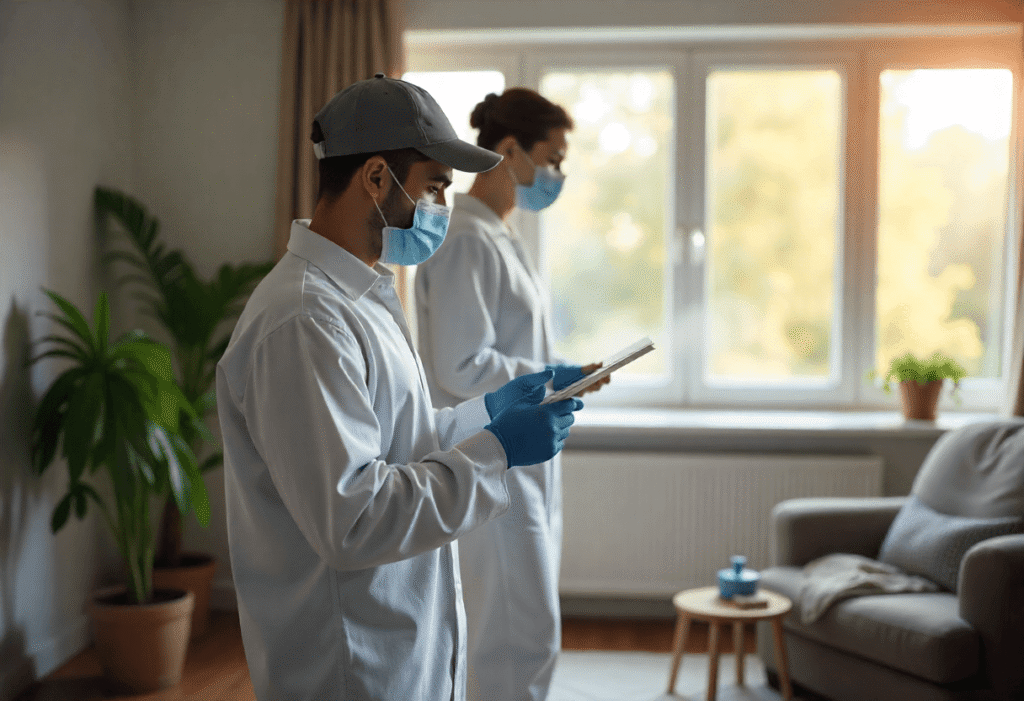
Two indoor air quality professionals wearing protective masks and gloves conducting an air quality inspection inside a home using digital testing equipment.

An indoor air quality or IAQ assessment is a professional evaluation of the air inside your home or building. 

The goal? 

To detect any invisible pollutants, moisture, or ventilation problems that could be causing discomfort, triggering allergies, or putting your health at risk.

The assessment tells you whether there are pollutants, harmful gasses, mold, or any other issues in your indoor air. Also, it checks how well your HVAC system is handling it and if anything needs attention.

In a way, it’s similar to how professionals perform environmental evaluations before major projects — like an environmental site assessment. Both help identify hidden risks early and ensure a safer, healthier environment in the long run.

Clean-Air-Technologies's Logo
Angies Super Service
Accredited Business
Aeroseal

Schedule Your Free Estimate Today

Contact us to improve your indoor air
quality with our expert cleaning services in NJ.

What is involved in an IAQ assessment? 

A complete IAQ assessment isn’t just a quick sniff test of our HVAC filter. Instead, it’s a thorough inspection done by trained professionals with the right tools and experience.

Here’s what usually goes into it:

ComponentWhat It IncludesPurpose
Air SamplingDust, mold spores, VOCs, formaldehydeIdentify invisible airborne pollutants
Humidity & CO₂ ChecksRelative humidity, CO₂ levels, temperatureDetect moisture problems, poor ventilation
HVAC InspectionDucts, vents, filters, airflowEnsure HVAC is functioning and ventilating properly
Mold/Water Damage CheckMoisture meters, thermal imagingFind hidden leaks and mold-prone areas
Resident InputHealth symptoms, room-specific issuesSpot pollutant sources through lived experience

Let’s have a closer look:

1. Air sampling for dust, mold, VOCs

A home air quality inspection majorly involves air sampling. Here, professionals use specialized sensors or lab testing kits to analyze your indoor air. They look for contaminants like:

  • Particulate matter (dust, pet dander, pollen)
  • Mold spores (especially in damp areas like basements or bathrooms)
  • Volatile Organic Compounds (VOCs) from paints, cleaning supplies, and furniture
  • Formaldehyde, ozone, and other toxic gases

These pollutants are often invisible, but they can seriously impact your health and air quality.

2. Humidity, temperature, and CO₂ measurement

Some signs of poor ventilation and moisture problems include unbalanced humidity or excess carbon dioxide. So, IAQ technicians will:

  • Measure humidity levels to detect moisture problems or mold risks
  • Monitor CO₂ concentration levels (if there’s high concentration, it could mean stale air is being recirculated) 
  • Record indoor temperature consistency, which can indicate HVAC imbalances

3. Ventilation and HVAC performance checks

Your HVAC system is central to your indoor air quality. And during an IAQ assessment, the professionals will:

  • Check for restricted airflow, clogged ducts, or dirty filters
  • Inspect the different air vents in your home to see how well your system exchanges indoor and outdoor air
  • See if your HVAC is properly sized and ventilated for your home

4. Mold and water damage detection

If there’s a musty odor or visible signs of moisture, your technician will:

  • Use moisture meters or thermal cameras to find hidden leaks
  • Look for condensation or water staining around ducts, ceilings, or baseboards
  • Check for active mold growth and potential sources

5. Gathering input from people living in your home

An often-overlooked step, air quality assessment consultants will talk to the residents of your home. They will ask you questions like: 

  • Are you or your family experiencing headaches, allergies, or fatigue?
  • Do you notice strange smells, humidity, or stuffiness?
  • Are symptoms worse in certain rooms or times of year?

These clues help pinpoint where air quality issues may be coming from. This is especially true for indoor air quality assessments in New Jersey where older construction or weather changes make problems harder to detect.

What are the professionals looking for during an IAQ assessment? 

When we talk about an indoor air quality assessment, people assume it’s just about checking the air. But they’re far from a regular air flow check. 

You see, professionals carrying out an IAQ examination in your home are trying to understand what’s in the air, how it’s moving, and whether it’s safe to breathe.

Here’s a simple breakdown of what they’re are usually looking for during an IAQ testing: 

Contaminant TypeWhat It IncludesWhy It Is Important
ParticlesDust, dander, pollen, PM2.5, PM10They trigger allergies, asthma, breathing issues
VOCsPaints, cleaners, furniture off-gassingThey cause headaches, nausea, long-term health effects
GasesCO, CO₂, radon, formaldehydeThey are toxic at high levels
Mold & MildewSpores in damp areasThey cause respiratory problems and structural damage
Humidity & MoistureHumid air, condensation, leaksThey lead to mold growth, affects comfort
Airflow / VentilationStale air, blocked vents, poor exhaustThey reduce fresh air and spread pollutants

Why is an indoor air quality assessment important?

Homeowner discussing indoor air quality results with a technician holding a sample container, highlighting testing and consultation for healthier living spaces.

Indoor air pollution is invisible but powerful, and the health effects can sneak up on you over time. 

So, whether you’ve got mild allergies or just want to protect your family, an indoor air quality assessment helps you take control of the air in your home.

Here’s how poor air quality can impact you and why getting your air tested is essential.

1. It prevents allergies and asthma flare-ups

If you or a family member deals with allergies or asthma, poor indoor air can make things much worse.

Particles like dust, pollen, and pet dander irritate the lungs and airways, while mold spores or chemical fumes can trigger coughing, sneezing, wheezing, or full-blown asthma attacks.

An IAQ assessment helps identify exactly what’s floating in your air, so you can eliminate the source and not just treat the symptoms.

2. It eases eye, nose, and throat irritation

Ever feel like your eyes are burning or your throat feels scratchy, more so when you’ve been indoors for a while?

It might not be a cold but airborne irritants like VOCs, ozone, or stale air. 

These pollutants can cause dry eyes, runny nose, sore throat, and sinus irritation even in otherwise healthy people.

So, getting your air tested helps uncover these hidden irritants before they affect your health and comfort.

3. It reduces headaches and fatigue

You might have felt foggy or tired at home but fine when you’re outside. And that’s often a red flag for poor ventilation or gas buildup, especially carbon dioxide (CO₂). 

You see, low air circulation can create stale, low-oxygen environments that leave you feeling sluggish. Worse, it can give you persistent headaches.

An indoor air quality assessment helps find these ventilation issues and create a indoor space that feels fresh.

4. It prevents mold-related illnesses

Mold isn’t just ugly, it’s dangerous.

When mold spores get into your HVAC system or build up in humid or dirty air ducts, they can spread through your air and make you sick

They can cause problems like:

  • Chronic coughing
  • Skin irritation
  • Sinus infections
  • Worsened asthma symptoms

Now, indoor environmental quality testing can pinpoint where mold is hiding, even if it’s behind walls or in your vents. This helps prevent serious health issues down the line.

5. It helps eliminate harmful gases like radon or VOCs

Some air pollutants don’t hit you right away. But over time, they take a toll on your health. 

This is especially true for radon and VOCs, two commonly found gasses in indoor environments. 

Here’s how these gasses affect you: 

An indoor air quality assessment is often the only way to know if these threats are present in your indoor air. Also, it tells you what steps you need to take to remove them.

Why are indoor air quality assessments especially crucial in New Jersey? 

Two indoor air quality technicians wearing protective masks and uniforms reviewing testing results inside a living room to identify potential air contaminants.

Air quality issues can happen anywhere. But in New Jersey, there are a few unique factors that make IAQ assessments even more critical.

From our long winters to older housing stock and naturally high radon levels in certain counties, homeowners in NJ face some real air quality challenges. 

On top of that, reports suggest indoor VOCs are particularly higher in Jersey homes

Overall, here’s why it’s worth taking seriously:

1. Long heating seasons (homes stay sealed for months)

New Jersey winters are long. And during those cold months, most homes are sealed tight to keep heat in.

The downside? 

That also keeps pollutants, moisture, and stale air trapped inside, with nowhere to go.

Now, without good ventilation, harmful particles can build up fast, especially in high-use areas like kitchens, basements, and bedrooms.

2. Older homes have ventilation issues

Many NJ homes were built decades ago. And while the charm is real, the ductwork and ventilation often aren’t up to modern standards.

You might be dealing with:

  • Leaky or clogged ducts
  • Improper vent placement
  • Outdated materials like flex ducting
  • No mechanical ventilation in older bathrooms or attics

All of these contribute to poor airflow, moisture buildup, and increased airborne irritants.

3. Basements and crawlspaces are mold-prone

With New Jersey’s humid summers and rainy seasons, moisture settles in low-lying areas like basements and crawlspaces.

And wherever moisture collects mold follows, spreading quietly through your HVAC system or into living spaces. 

So, if your basement smells musty or feels damp, that’s a red flag for mold.

An air quality assessment can help detect hidden mold spores before they become a serious health or structural issue.

4. NJ also has radon-prone zones 

Certain parts of New Jersey, especially Hunterdon, Morris, Somerset, and Warren counties, are known for naturally high levels of radon. It is odorless, invisible, and deadly over time. 

And the only way to know if it’s in your home is a proper IAQ and radon test.

In short, here’s why IAQ testing is crucial in NJ: 

ReasonWhy It’s a Concern in NJ
Long WintersHomes are sealed, trapping pollutants
Older HomesOutdated or faulty ventilation systems
Damp BasementsHigh humidity encourages mold growth
Radon ZonesSeveral NJ counties have elevated radon risk
VOC LevelsStudies show higher indoor VOCs in NJ homes

When should you get an indoor air quality assessment?

Two professionals in blue uniforms wearing protective masks inside a living room, using digital tools to check home air quality levels.

The truth is, most people don’t think about their indoor air until something starts to feel off.

But indoor air quality issues rarely fix themselves. And by the time symptoms show up, the problem may already be well-developed. 

Here are some of the most common signs when you should get an IAQ assessment. 

1. You notice a musty, stale, or chemical-like smell

Unusual indoor odors are often the first sign of a deeper issue. 

For instance, while a musty smell can point to hidden mold or moisture, chemical or paint-like smells might be VOCs from off-gassing materials.

If your home doesn’t smell fresh and you can’t find the source, it’s time for an air quality check.

2. Residents are sneezing, coughing, or feeling unwell

If your family is experiencing allergy-like symptoms, congestion, dry throat, or headaches, especially when indoors, it could be your air.

Many airborne pollutants cause low-grade chronic irritation that we often brush off as seasonal or normal.

An IAQ assessment helps rule out what’s in the air before symptoms get worse.

3. You’ve had recent water damage, leaks, or flooding

Water damage doesn’t just destroy floors and drywall, it creates a perfect breeding ground for mold.

Even if everything looks dry, lingering humidity and hidden moisture inside walls or ducts can lead to dangerous mold growth that circulates through your air. 

IAQ testing ensures you’re not breathing in mold spores.

4. Your home feels stuffy or overly humid

Poor ventilation or imbalanced humidity can make your space feel oppressive and uncomfortable.

How?

High humidity promotes mold, while low humidity dries out your skin, eyes, and sinuses. 

So, if your home feels heavy, damp, or just off, an IAQ test can help detect the cause.

5. You live with someone who has allergies or asthma

When someone in the home has respiratory sensitivities, your air quality directly impacts their health and quality of life.

IAQ assessments are especially important for homes with children, seniors, or anyone with asthma, COPD, or seasonal/environmental allergies.

6. You’re renovating your home

During a renovation, your indoor environment is going through major changes, whether it’s new materials, fresh paint, HVAC upgrades, or dust from construction.

An IAQ check before or after the process helps ensure the space is safe, healthy, and ready to live in.

Clean-Air-Technologies's Logo
Angies Super Service
Accredited Business
Aeroseal

Schedule Your Free Estimate Today

Contact us to improve your indoor air
quality with our expert cleaning services in NJ.

In short, here’s when you should get an IAQ assessment:

SituationWhat It Might Mean
Musty or chemical smellsMold or VOCs could be present
Frequent allergy symptomsAirborne irritants in indoor air
Recent leaks or water damageRisk of hidden mold or moisture
Stuffy or overly humid homePoor ventilation or humidity issues
Someone has asthma/allergiesAir quality directly affects health
Home renovationsNew materials may release VOCs

To sum up

A professional air quality assessment isn’t just about testing the air, it makes your home safer, healthier, and more efficient. 

And in a state like New Jersey where seasons shift quickly and homes vary in age and design, it’s even more important to stay ahead of it.

Need to get your indoor air tested? 

Let’s talk!

At Clean Air Technologies, we’ve been helping NJ families breathe easier for over 28 years.

Whether you’re dealing with a damp basement or unexplained allergies, our expert IAQ assessments give you the answers and the solutions.

You might also want to read: How To Get Rid Of Mold In Air Ducts

FAQs about indoor air quality assessments

What exactly is tested during an indoor air quality (IAQ) assessment?

An IAQ assessment checks for a variety of indoor air pollutants and environmental conditions, including:

  • Dust and particulate matter (PM2.5, PM10)
  • Mold spores
  • Volatile Organic Compounds (VOCs) from paints, cleaners, furniture
  • Carbon monoxide (CO) and carbon dioxide (CO₂)
  • Formaldehyde and radon (in high-risk areas)
  • Humidity levels
  • Airflow and ventilation performance

How do I know if I need an air quality test in my home?

You should consider an IAQ assessment if:

  • You notice musty, chemical, or stale smells indoors
  • People in the home are experiencing allergies, asthma, or headaches
  • You’ve had water damage, leaks, or high humidity
  • Your home feels stuffy, humid, or overly dry
  • Someone in the household has respiratory sensitivities
  • You’re buying, selling, or renovating your home
  • You live in an older NJ home with poor ventilation or unknown ductwork condition

Even if you don’t have obvious symptoms, a proactive test can catch hidden issues early.

How much does an indoor air quality assessment cost in New Jersey?

The cost typically ranges from $250 to $600 in New Jersey, depending on the:

  • Size of your home
  • Number of tests performed (e.g., mold, VOCs, radon)
  • Whether lab analysis is included
  • Level of detail in the final report

Some companies also offer bundled services with HVAC cleaning, duct inspections, or remediation recommendations

Is mold always visible or can it be hidden in the air?

Mold can absolutely be hidden. In many cases, mold spores are airborne long before you see visible growth on walls or ceilings.

An IAQ assessment can detect elevated mold spore levels and help trace them back to hidden water damage, leaks, or damp areas like basements, crawlspaces, or ductwork.

Are indoor air quality issues dangerous for kids and pets?

Yes, children, seniors, and pets are more sensitive to indoor air pollutants due to their smaller lung capacity and faster breathing rates.

Poor IAQ can cause or worsen:

  • Asthma
  • Allergies
  • Skin and eye irritation
  • Fatigue
  • Respiratory infections

An IAQ assessment helps ensure your home is safe for every member of the family, including kids and pets.

Will I get a report after an IAQ test?

Yes, after the assessment, you’ll typically receive a detailed report showing:

  • What contaminants were detected
  • Whether the levels are safe or concerning
  • Source identification (if possible)
  • Recommended next steps, such as air purification, mold remediation, or improved ventilation

Good IAQ providers also offer post-remediation testing to confirm the problem has been resolved.

How long does a typical air quality assessment take?

Most residential IAQ assessments take between 1 to 3 hours, depending on your home’s size and the complexity of the issue.

Lab-based tests (like mold or VOC samples) might require a few extra days for results, but basic testing like humidity, CO₂, and particulate levels can be read on-site.

Does the EPA recommend indoor air quality testing?

While the EPA doesn’t mandate home air quality tests, it strongly encourages assessments when:

  • Indoor air pollution is suspected
  • Residents are experiencing symptoms
  • There’s a history of moisture problems or poor ventilation
  • Homes are in radon-prone zones (like many parts of New Jersey)

The EPA also provides guidelines for improving IAQ through ventilation, humidity control, and pollutant source reduction.

Will an air purifier fix all air quality issues?

Not always. 

While HEPA air purifiers can reduce particles like dust, pollen, and some allergens, they won’t fix:

  • Mold behind walls
  • VOCs from off-gassing materials
  • Poor ventilation
  • High humidity
  • Radon or CO leaks

An IAQ assessment helps you identify the root cause so you’re not just masking symptoms with a purifier.

Is indoor air really more polluted than outdoor air?

Yes, studies show indoor air can be 2 to 5 times more polluted than outdoor air, especially in well-sealed or energy-efficient homes that lack proper ventilation.

This is because indoor air traps:

  • Dust
  • VOCs
  • Cooking byproducts
  • Mold spores
  • Pet dander
  • Smoke
  • Cleaning chemicals

This is why testing and ventilation are both crucial for maintaining healthy air indoors.