Clean-Air-Technologies's logo

What’s The Difference Between MERV 8 Vs MERV 10 Air Filters?

As homeowners, we know we are supposed to change their air filter every few months. This part is pretty easy.

But how do you choose the right air filter? 

This is where things get confusing.

You’ll come across MERV 8 and MERV 10 air filters, the two most common HVAC air filters for homes. Both clean your air and are safe for your HVAC system. 

In fact, they look almost identical at first look. 

But the thing is, that small number difference can change how clean your indoor air is, how hard your HVAC system works, and how often you’ll need air filter replacement

In this blog, I will explain all the differences between MERV 8 vs MERV 10 air filters that you need to know as a homeowner. 

By the end, you’ll know exactly which filter makes the most sense for your home.

So, let’s get started. 

Key takeaways 

  • MERV 8 is the standard filter for most homes.
  • MERV 10 offers slightly better filtration for allergies and dust.
  • Both are safe for most residential HVAC systems.
  • MERV 10 captures smaller particles than MERV 8.
  • MERV 10 may clog a little faster than MERV 8.
  • Airflow impact between MERV 8 and 10 is usually very small.
  • MERV 10 is a good upgrade if you want cleaner air without high resistance.

What is a MERV 8 air filter?
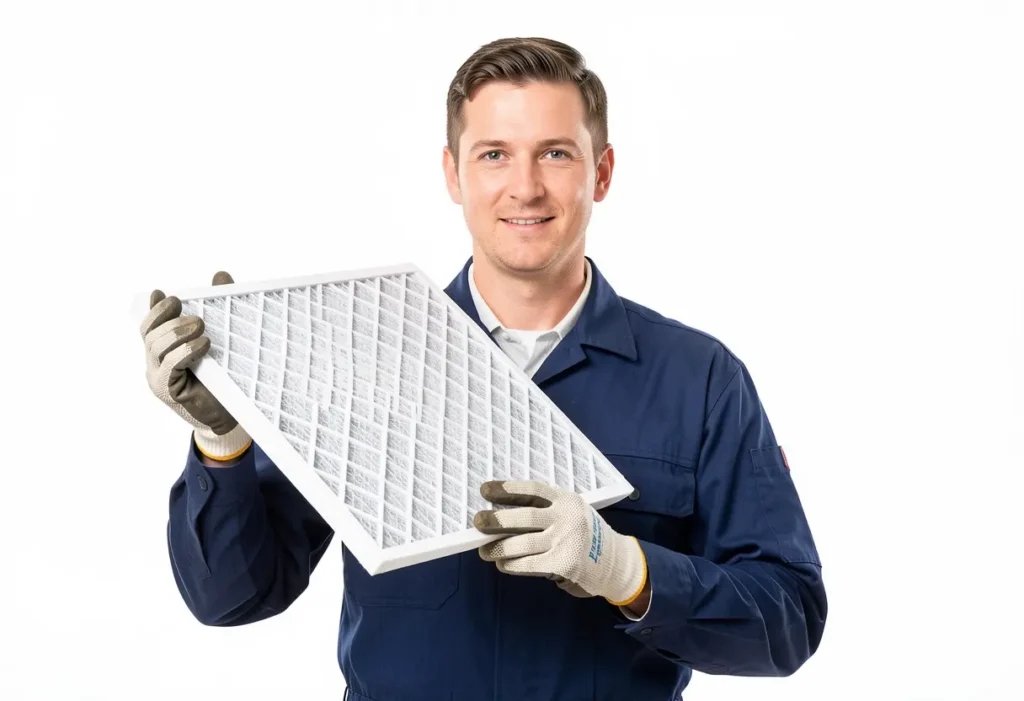
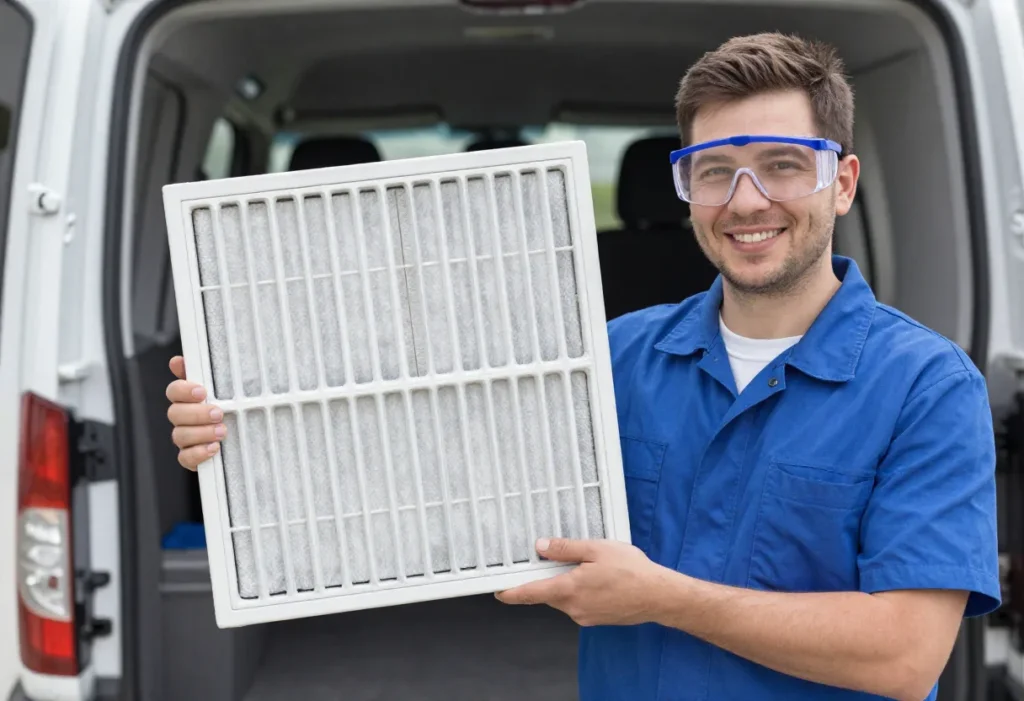
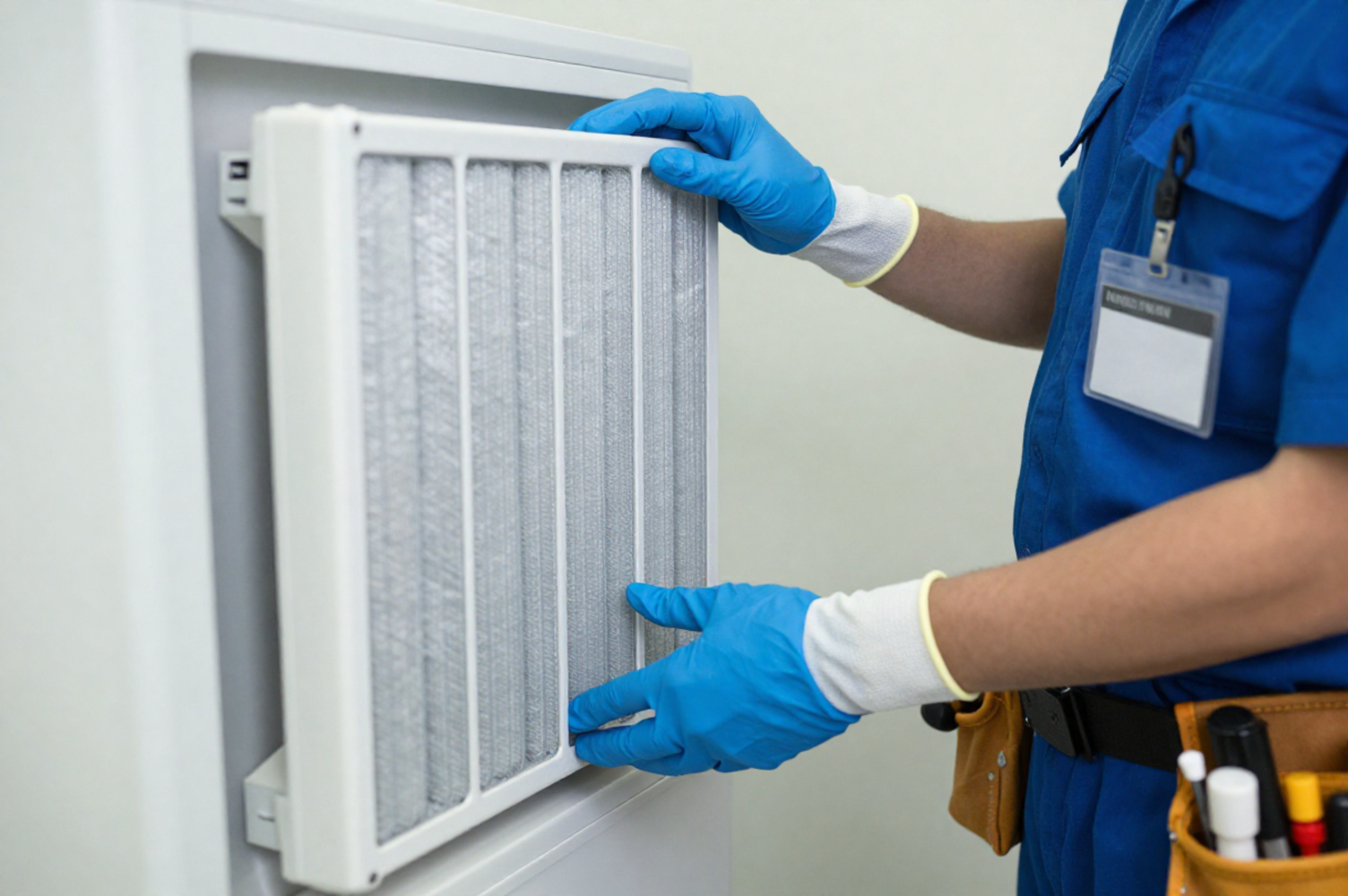
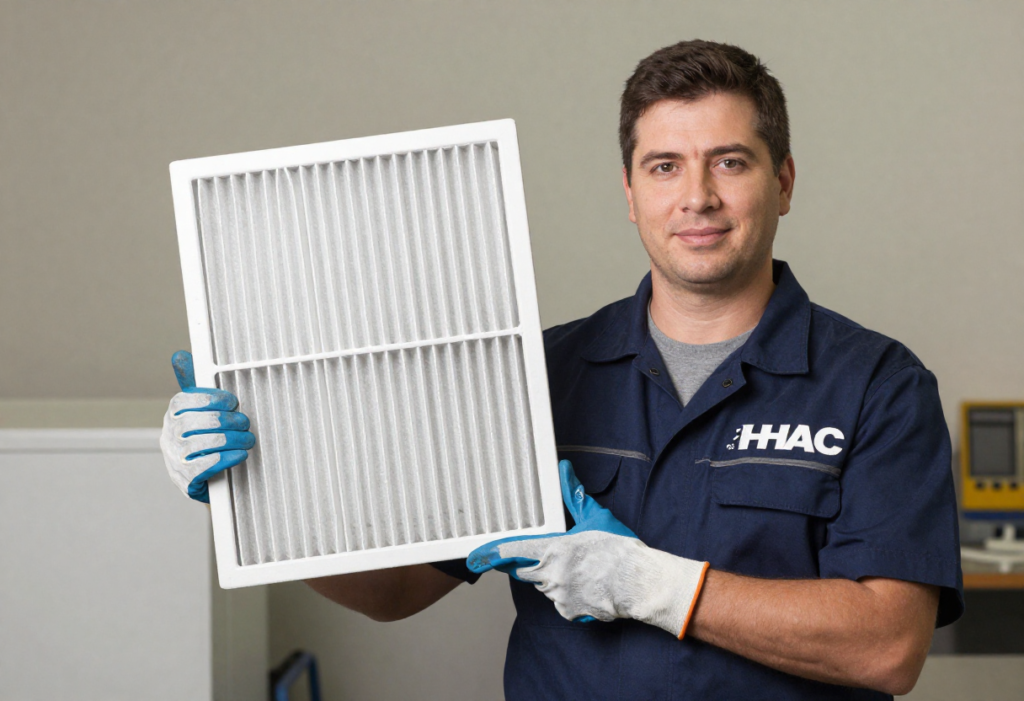
HVAC technician holding a residential air filter used in home heating and cooling systems

A MERV 8 filter is the standard air filter you’ll find in most homes. In fact, many residential HVAC systems are designed to work with this exact level of filtration. 

So how does this filter work?

A MERV 8 filter captures common household particles like dust, pollen, lint, dust mites, and pet dander. These are everyday pollutants floating around your home. 

It won’t catch the tiniest microscopic particles though. But for most households, it does a very solid job.

Think of the MERV 8 air filter as dependable and practical. It keeps your air cleaner without putting extra pressure on your system and offers the right balance between air quality, airflow, and affordability.

Clean-Air-Technologies's Logo
Angies Super Service
Accredited Business
Aeroseal

Schedule Your Free Estimate Today

Contact us to improve your indoor air
quality with our expert cleaning services in NJ.

Why do homeowners like MERV 8 air filter? 

The reason why MERV 8 air filter is so popular among households is that it works well with just about any HVAC system. 

It allows strong airflow and your HVAC system doesn’t have to struggle to push air through it. This helps maintain steady comfort throughout the home. 

Also, it puts very little strain on the blower motor, which is especially important for older systems.

Plus, it is widely available and budget-friendly. A MERV 8 filter costs about $5 per filter, you can find it almost anywhere, and use it for one to three months depending on the dust levels.

So, for homeowners who simply want a reliable air filtration, MERV 8 is the easiest and safest choice.

What is a MERV 10 air filter?

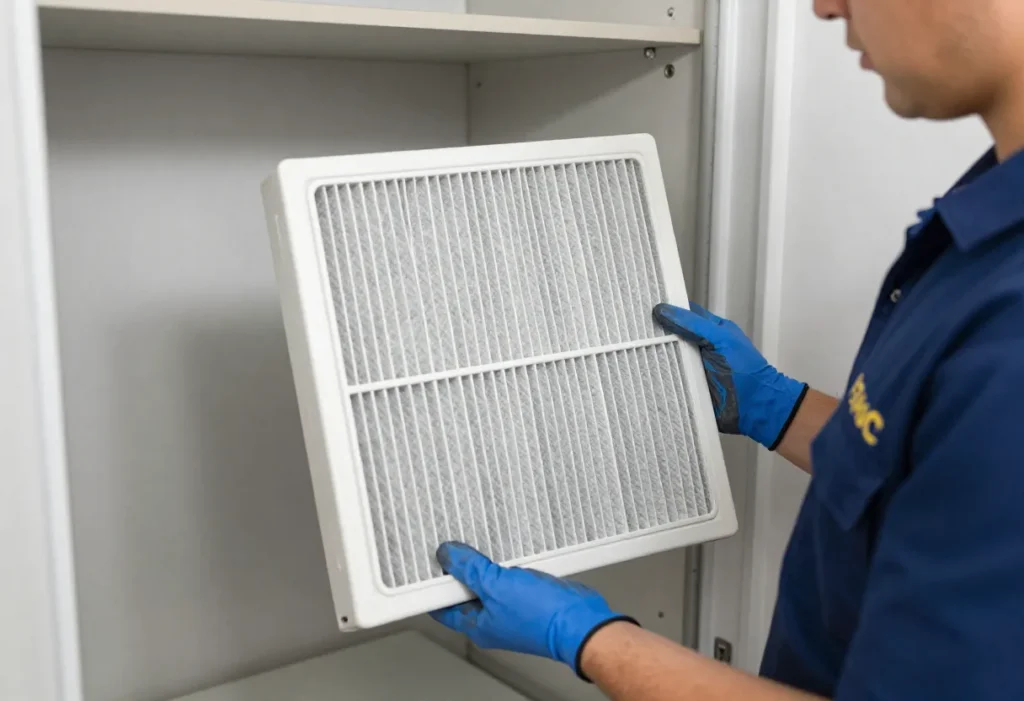
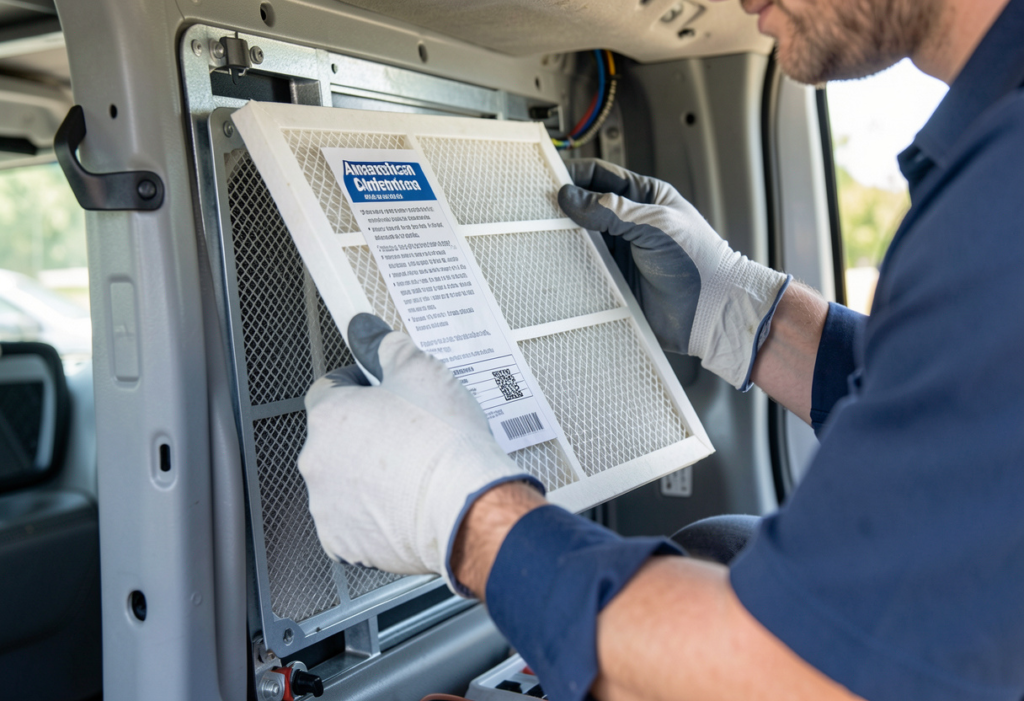
Homeowner or HVAC professional checking a residential HVAC air filter for proper fit and airflow compatibility

A MERV 10 air filter is simply a small upgrade from MERV 8. It is designed to catch smaller particles while still being safe for most home HVAC systems. 

To put it simply, it is a slightly finer net that can catch particles in the 7-10 micron range. 

So what’s the difference in real life?

MERV 10 does a better job capturing finer household dust, smaller pollen particles, mold spores, and tiny bits of pet dander that a MERV 8 filter might miss. 

It doesn’t turn your system into a hospital-grade purifier, but it does clean the air a little deeper.

For a lot of homeowners, this small step up does make a noticeable difference, especially during allergy season. 

The best part? 

These filters improve air filtration without moving into the higher-resistance filter range that can stress some HVAC systems.

So, this is a balanced upgrade for people who want cleaner air but still want their system running comfortably.

Why do homeowners like MERV 10 air filter? 

Homeowners like MERV 10 air filters because they want better air quality without overcomplicating things.

You see, if someone in the home deals with seasonal allergies, mild asthma, or dust sensitivity, MERV 10 can help reduce some of those everyday airborne triggers. Also, it is helpful in homes where dust seems to settle quickly on furniture, even after cleaning.

Any other reason it’s popular? 

Certainly. 

The airflow change with MERV 10 filters is usually very small in most HVAC systems. You get improved filtration without a dramatic impact on comfort.

The air filter replacement cost, however, is higher here. That’s because a MERV 10 filter costs between $10-30, which is way more expensive compared to MERV 8. 

MERV 8 vs MERV 10 air filters: What are the differences?
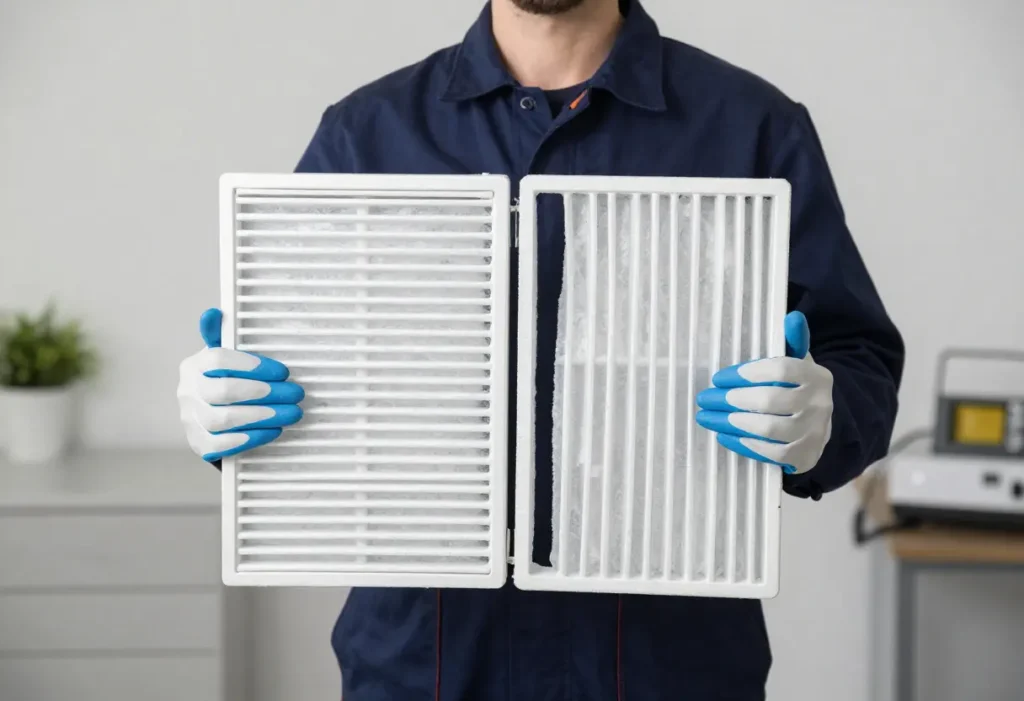
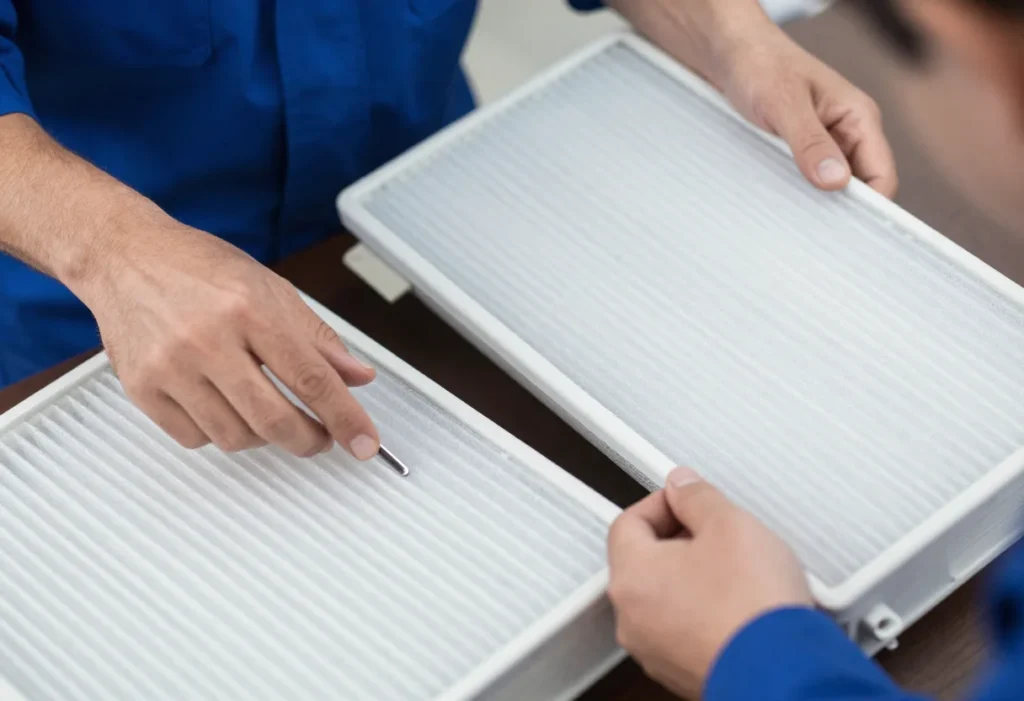
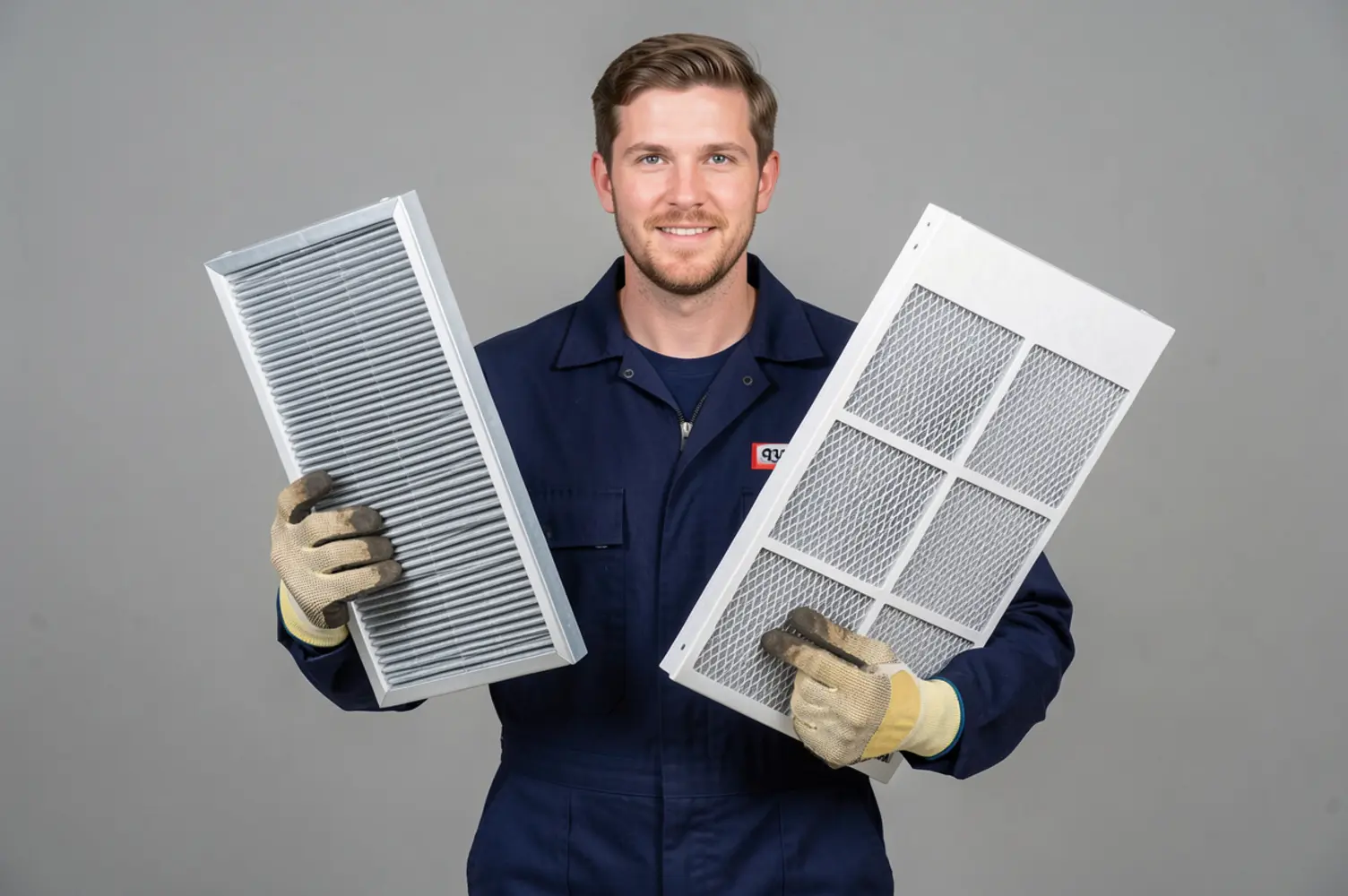
Side-by-side comparison of two HVAC air filters showing the difference between MERV 8 and MERV 10 filtration density

MERV 8 and MERV 10 filters look almost the same. They are the same size and the installation process is also the same . 

So what’s the real difference?

Well, just like MERV 11 VS MERV 13 air filters, the difference comes down to two main things:

  • How small of particles they capture
  • How that affects your airflow over time. 

Let’s have a close look at the difference between MERV 8 and 10 for a better understanding. 

MERV 8 air filter 

1. Offers reliable everyday air filtration

MERV 8 is built for normal, everyday air filtration. It captures common household particles like dust, pollen, lint, and pet dander, the things floating around in almost every home. 

And for most families, this already makes the air feel noticeably cleaner.

2. There is very low airflow resistance

One of the biggest advantages of MERV 8 is how easily air moves through it. Your HVAC system doesn’t have to strain or work harder to push air into your rooms. 

This means strong airflow, steady temperatures, and consistent comfort throughout the house. 

3. Excellent for older or smaller HVACs

If your HVAC system is older, smaller, or you’re simply unsure what it can handle, MERV 8 is usually the safest choice. 

In fact, older HVAC systems were designed for this very level of filtration. So, you get cleaner air while keeping the system running smoothly. 

4. Lower cost and longer usable life

MERV 8 filters are way more affordable than higher-rated options. Also, they tend to clog a little more slowly because they aren’t trapping the smallest particles. 

In most homes, they can last anywhere from one to three months, depending on dust levels and whether you have pets. This makes them practical and budget-friendly.

MERV 10 air filter

1. Offer better fine-particle filtration

MERV 10 is designed to catch smaller particles that MERV 8 might miss. This includes finer household dust, smaller pollen particles, and mold spores. 

Now, while the difference sounds small, it does make the air feel cleaner in homes that struggle with dust buildup.

2. Better for allergy-prone homes

If someone in your home deals with seasonal allergies, pet sensitivity, or dust irritation, MERV 10 can offer noticeable improvement in comfort. That’s because it traps smaller airborne particles, fewer allergens continue circulating through the air. 

Over time, this can mean less sneezing, less irritation, and more comfort indoors. 

3. There is slightly higher airflow resistance

Since a MERV 10 air filter is denser than MERV 8, airflow resistance is slightly higher, which in simple terms means that air doesn’t pass through quite as easily. 

However, in most properly sized and well-maintained residential HVAC systems, this difference is small and usually not a problem. 

Modern HVAC systems are designed to handle this level comfortably. So, as long as the filter is changed regularly, it should not cause noticeable airflow or comfort issues.

4. It clogs a bit faster

MERV 10 captures smaller particles which makes it fill up much faster, especially during heavy pollen seasons or in homes with pets. Meaning you might need to replace it a little more often than MERV 8. 

And if you don’t replace the filter often, airflow can start to decrease. 

So, you’ve got to check the filter almost every month and replace it when it looks loaded with dust. 

Note: A MERV 10 air filter is still safe for most residential HVACs

Even though it reduces the airflow slightly and clogs faster, MERV 10 is still considered safe for the majority of residential HVAC systems. That’s because it doesn’t create the kind of high resistance you see with very high-MERV filters. 

So, for most homeowners, this is a balanced upgrade offering better air quality without putting the system under stress.

In short, here are all the differences between MERV 8 vs MERV 10 air filters:

FeatureMERV 8MERV 10
Particle captureHousehold dust, pollen, lint, pet danderFiner dust, smaller pollen, mold spores
Airflow resistanceVery lowSlightly higher
Best forStandard homesHomes with allergies and dust concerns
Filter lifeSlightly longerMay clog a little faster
System impactVery minimalStill very safe for most systems

MERV 8 vs MERV 10 air filter: Which one is better for your home?
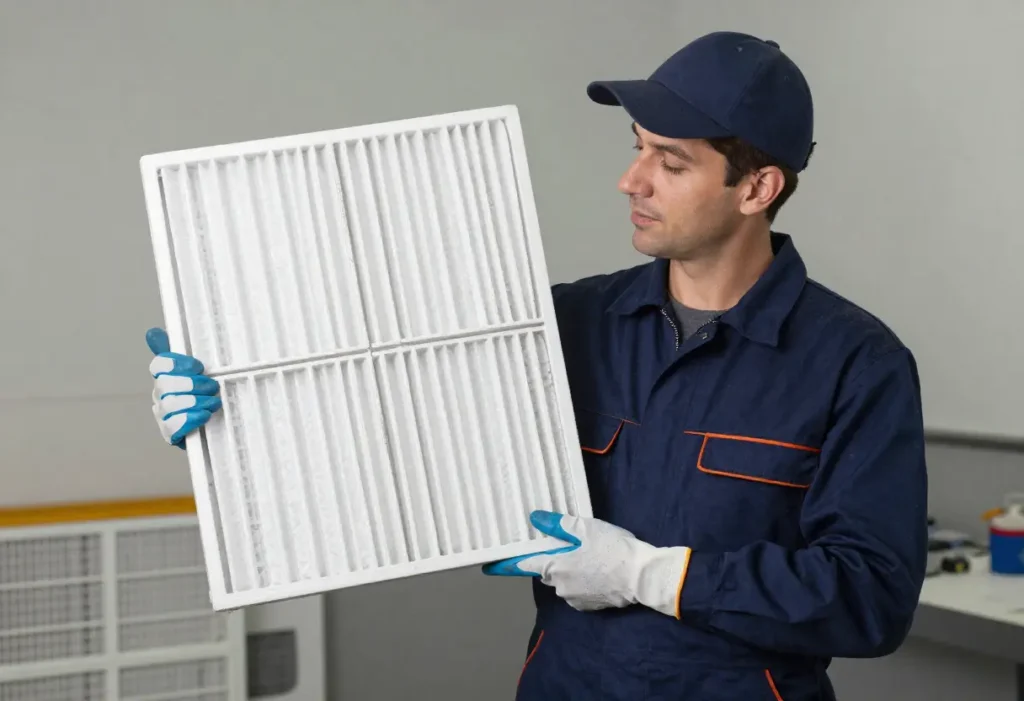
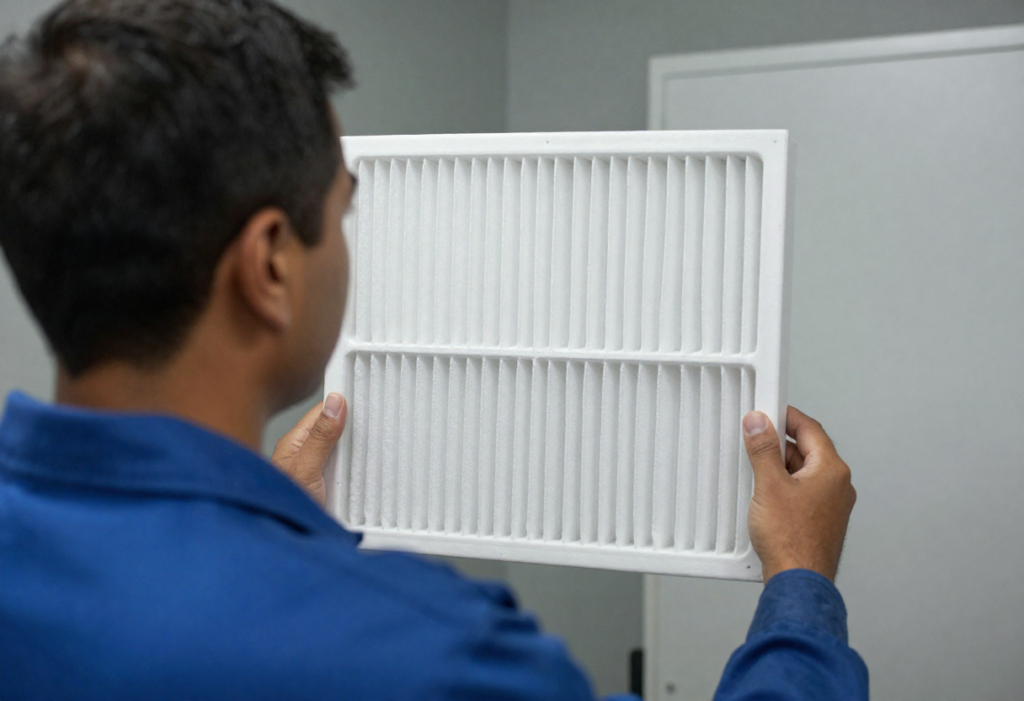
HVAC technician inspecting a residential air filter to check dust buildup and replacement timing

When it comes to the right choice between MERV 8 vs MERV 10 air filter, you’ll have to factor in your HVAC system and what air quality concerns you face. 

After all, while some homes need a basic yet reliable filtration, others do need an upgrade. 

Let me break this down so you can confidently decide which filter makes the most sense for you.

Choose MERV 8 if:

1. You want reliable filtration with zero risk

If your main goal is to keep things simple and safe, MERV 8 is hard to beat. It provides solid everyday filtration without adding strain to your HVAC system. 

Air flows easily, your blower motor doesn’t work harder than it should, and comfort stays consistent. 

2. Your home has normal dust and allergy levels

If your home doesn’t deal with constant dust buildup, heavy pet shedding, or strong allergy triggers, MERV 8 is usually more than enough. 

It handles common household particles very well and keeps the air clean for everyday living. In fact, families have been using MERV 8 for years without issues. 

3. You have an older or smaller HVAC system

Older HVAC systems were designed around lower-resistance filters like MERV 8. So, if your HVAC unit is aging or already struggles with airflow, keeping air resistance low is important.

MERV 8 allows air to pass through easily, which protects the blower motor and helps prevent unnecessary wear.

4. You want the safest and most affordable option

For many homeowners, cost and simplicity matter. 

MERV 8 filters are widely available and typically more budget-friendly than higher-rated options. Also, they last a little longer before clogging. 

So, if you want reliable performance, low cost, and minimal maintenance concerns, MERV 8 remains one of the safest and most practical choices.

Choose MERV 10 if:

1. You want better allergy and dust control

If someone in your home deals with allergies, sneezing, congestion, or dust sensitivity, MERV 10 can help. It captures smaller airborne particles that often trigger irritation. 

Over time, this can make your indoor air feel fresher and more comfortable. 

It is not a medical-grade solution, but it can provide noticeable improvement for households that want cleaner air without making a dramatic change.

2. Your home collects dust quickly

Do you clean your furniture only to see dust settling again a few days later? 

That’s often a sign that fine particles are staying airborne. 

MERV 10 is better at trapping those smaller particles before they circulate back into your living space. 

3. You want better air quality without jumping to high-MERV filters

Some filters with very high MERV ratings can restrict airflow if the system isn’t designed for them. 

MERV 10 gives you improved filtration without moving into that higher-risk category. It is a middle-ground upgrade offering better particle capture while still remaining safe for most residential systems.

4. Your HVAC system is new and well-maintained

Most newer HVAC systems can handle MERV 10 without any airflow problems. So, if your HVAC unit is in good condition and regularly serviced, this level of filtration is something you can go for without double thoughts.

In short, here’s how to decide between MERV 8 vs MERV 10 air filters:

Choose MERV 8 for Choose MERV 10 for
Normal home environmentDust and allergy concerns
Older or unknown system capacityModern, healthy HVAC system
Budget-friendlinessUpgrade in air quality
Maximum airflow safetyBetter fine-particle capture
Clean-Air-Technologies's Logo
Angies Super Service
Accredited Business
Aeroseal

Schedule Your Free Estimate Today

Contact us to improve your indoor air
quality with our expert cleaning services in NJ.

Final words

I am sure that by now you know all the differences between MERV 8 vs MERV 10 air filters. Also, you know how to pick the right filter from among them for your home. 

You see, for most homes, MERV 8 is still a great everyday air filter. It keeps airflow strong, protects your system, and removes common household particles very well.

MERV 10 is a smart upgrade only if you want:

  • Cleaner air
  • Better dust control
  • Improved allergy support

Also, it is a safe choice if you want to avoid airflow problems caused by higher MERV filters.

Got more questions or want to schedule an air filter replacement for your home?

You can get in touch with us!

At Clean Air Technologies, we offer the highest-quality MERV-rated air filters. We help you choose the right air filtration for your home based on your HVAC system type and indoor air quality concerns. 

FAQs about MERV 8 vs MERV 10 air filters

Is MERV 10 much better than MERV 8 for home air quality?

MERV 10 is better than MERV 8, but the difference is not huge for most homes. 

MERV 10 captures slightly smaller particles, such as finer dust and smaller pollen, that MERV 8 might miss. This can help if your home has allergy issues or feels dusty. 

However, MERV 8 already does a good job for everyday living. 

Will switching from MERV 8 to MERV 10 reduce airflow in my home?

In most homes, the airflow difference between MERV 8 and MERV 10 is very small. 

MERV 10 is only slightly denser than MERV 8, so properly sized residential systems usually handle it without problems. Your rooms should still feel comfortable and air should move normally. 

Is MERV 10 safe for older HVAC systems?

In many cases, yes. 

MERV 10 is still considered a low to moderate resistance filter and works safely in most homes.

That said, older systems were often designed around MERV 6 to MERV 8 filters. So, if your HVAC unit is very old or has weak airflow already, staying with MERV 8 is the safer choice.

How often should I replace MERV 8 and MERV 10 air filters?

Air filter replacement frequency differs for both MERV 8 and MERV 10 filters. 

Most MERV 8 filters should be replaced every one to three months, depending on how dusty your home is and whether you have pets. 

MERV 10 filters usually need to be changed a little more often, often every one to two months. Because MERV 10 traps finer particles, it can fill up faster. Checking your filter once a month is the easiest way to avoid airflow and performance problems.

Is MERV 10 better for allergies than MERV 8?

Yes, for many people it is. 

MERV 10 captures smaller dust and pollen particles than MERV 8, which helps reduce common allergy triggers. 

So, if someone in your home sneezes often, has mild asthma, or reacts to dust, MERV 10 might provide cleaner and more comfortable indoor air. 

That said, MERV 8 still performs well for everyday allergy control in most households.

Does MERV 10 use more energy than MERV 8?

Usually, no noticeable increase happens in most homes. That’s because the airflow resistance difference between MERV 8 and MERV 10 is small. 

However, if a filter becomes clogged and is not changed on time, the system has to work harder to move air. This can increase run time and energy use.

Which filter should I choose if I am not sure about my system?

If you are unsure about your HVAC system’s capacity, MERV 8 is the safest and most reliable choice. It provides solid filtration while keeping airflow strong and protecting your equipment. 
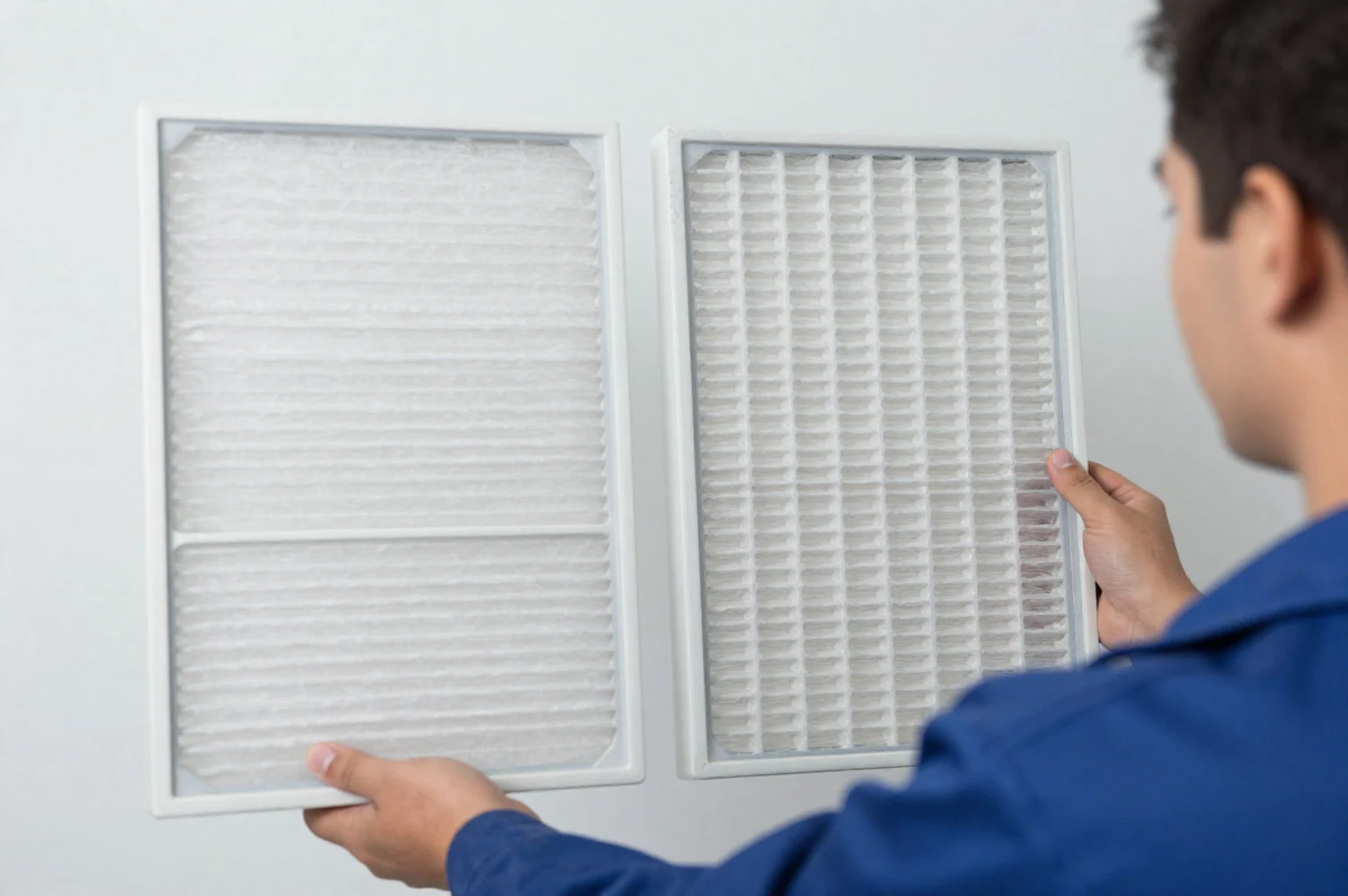
MERV 11 Vs MERV 13 Air Filters: All the Differences Explained

When it comes to shopping for the right HVAC air filter, we all wonder whether we should go for MERV 11 or MERV 13 filters. 

After all, both these filters look similar, promise cleaner air, claim to trap dust and allergens, and seem like a smart upgrade. 

Most importantly, both are MERV-rated and look like an ideal air filter replacement for your HVAC system. 

But here’s what most homeowners don’t realize: Your HVAC system is designed for a certain kind of filter, and it might not support one of these filters. 

So, choose the wrong MERV-rating and can affect indoor air quality, airflow, and your comfort. 

In this blog, I will walk you through all the differences between MERV 11 vs MERV 13 air filters. By the end, you’ll know exactly which filter is right for your home.

Let’s begin with it. 

Key takeaways 

  • MERV 11 is great for everyday homes and common allergens.
  • MERV 13 captures smaller particles like smoke and fine dust.
  • Higher MERV means better filtration but more airflow resistance.
  • Older or smaller HVAC systems may struggle with MERV 13.
  • Replace MERV 11 every 2-3 months, MERV 13 every 1-2 months.
  • Always check your HVAC system before upgrading to MERV 13.

What exactly is a MERV rating for air filters?

Before we get into MERV ratings, let’s first understand what this rating is all about. 

MERV stands for Minimum Efficiency Reporting Value. And although it sounds complicated, this rating is just a number that tells you how good an air filter is at catching tiny particles floating in the air.

You see, when you run your HVAC system, the air passes through a filter that traps things like dust, pollen, pet dander, and other particles. 

Now, all standard filters in the country are MERV-rated filters. And here, the higher the MERV number, the smaller the particles the filter can catch.

So yes, a higher MERV number usually means cleaner air.

What is a MERV 11 air filter?

HVAC technician holding air filter during replacement service

A MERV 11 filter is what I consider a strong, reliable upgrade for most homes. It is neither basic nor extreme, and it sits right in that sweet spot for residential use.

When air moves through your system, a MERV 11 filter does a very good job of catching common household particles. This includes dust, pollen, pet dander, mold spores, lint, and even some larger smoke particles. 

The result is fewer allergens floating around and less buildup inside your system.

So, if you’re currently using something like a MERV 6 or MERV 8 filter, switching to MERV 11 can make a noticeable difference in air quality. The air will feel cleaner, and your allergy symptoms might also show improvement, especially during pollen season.

The best part: For most households, MERV 11 provides a big step up in protection without creating airflow problems.

Clean-Air-Technologies's Logo
Angies Super Service
Accredited Business
Aeroseal

Schedule Your Free Estimate Today

Contact us to improve your indoor air
quality with our expert cleaning services in NJ.

MERV 11 filters are especially popular among homeowners, here’s why:

Homeowners like MERV 11 because it offers a healthy balance. It cleans the air well, and it doesn’t restrict airflow in most standard HVAC systems. 

Also, it is more affordable than higher-rated filters and tends to last longer. 

Most importantly, it doesn’t put as much strain on the blower motor. This is why MERV 11 is considered the safe upgrade for homes. 

What is a MERV 13 air filter?

Technician installing MERV rated HVAC air filter into system

A MERV 13 filter takes air filtration to the next level.

While MERV 11 handles common household particles very well, MERV 13 is built to catch much smaller and finer particles that you can’t even see. 

I am talking about very fine dust, smoke from cooking or wildfires, tiny allergen particles, bacteria-sized contaminants, and even small droplets released when people cough or sneeze.

In simple terms, MERV 13 is designed to grab the particles that easily slip through lower-rated filters.

And for this reason, it’s often used in places where air quality really matters, like schools, medical offices, and buildings that want a higher level of protection.

For homeowners who are concerned about smoke, pollution, asthma triggers, or strong allergies, MERV 13 filters do provide a noticeable boost in filtration. 

MERV 11 vs MERV 13 air filters: What’s the difference?

Technician comparing HVAC air filter thickness and density for airflow performance

At first look, MERV 11 and MERV 13 filters may look almost identical. But the real difference shows up when air starts moving through them. 

You see, these filters are built to capture different particle sizes. So their effect is different on both air quality and airflow inside your system. 

Let’s have a look at the main differences between MERV 11 vs MERV 13 filters: 

MERV 11 air filter

A. Offers decent household filtration

MERV 11 is designed for normal, everyday homes. It captures common particles like dust, pollen, pet dander, and mold spores very effectively. 

For most families, this already provides a noticeable improvement in indoor air quality. Y

So, if your main goal is reducing allergens and keeping the air cleaner without going overboard, MERV 11 does the job very well.

B. Pressure drop is lower than MERV 13

Pressure drop simply means how hard it is for air to pass through the filter. 

MERV 11 filters are less restrictive than MERV 13, so air flows through them more easily. This means your system doesn’t have to work as hard to push air through, which helps maintain proper airflow and steady comfort throughout your home.

C. It is easy on on old or small HVAC systems

If your HVAC system is older or wasn’t designed for high-efficiency filters, MERV 11 is a safe choice. 

It provides better filtration without adding too much strain on the blower motor. That’s important because too much resistance can reduce airflow and slowly wear down system components over time.

D. Good for dust, pollen, pets, and everyday allergens

For typical allergy triggers like pollen and pet hair, MERV 11 performs very well. 

In fact, most homeowners dealing with seasonal allergies or shedding pets find that this level of filtration makes a real difference. It helps reduce airborne irritants without creating airflow problems in most homes.

E. Lower cost and longer usable life

MERV 11 filters are generally more affordable than MERV 13. So you can expect a lower air filter replacement cost

Also, they tend to last a bit longer because they are not trapping ultra-fine particles as aggressively. 

In many homes, they can run for two to three months before needing replacement, depending on dust levels.

MERV 13 air filter

A. Offers much stronger fine-particle filtration  

MERV 13 is built to capture much smaller particles than MERV 11. This includes very fine dust, smoke particles, and other tiny airborne contaminants in the 0.3 to 10 micron range

So, if your goal is maximum air cleaning within a standard residential system, MERV 13 offers a noticeable step up in filtration performance.

B. Better for smoke, pollution, and sensitive occupants 

If someone in your home has asthma, strong allergies, or sensitivity to smoke, MERV 13 is great for added protection. 

It is especially helpful in areas affected by wildfire smoke or heavy outdoor pollution. The filter is designed to trap the finer particles that often trigger respiratory symptoms.

C. Pressure drop is higher than MERV 11

MERV 13 filters are denser, which makes it harder for air to move through them. This creates more resistance inside the system. 

And if your HVAC unit isn’t designed to handle that added resistance, airflow can decrease, and the system might need to run longer to keep your home comfortable.

D. Filters clog faster 

Since MERV 13 traps smaller particles, it fills up more quickly. And during heavy pollen seasons or smoky conditions, it might need to be replaced more often. 

Also, if it becomes clogged, airflow will drop even further, which can increase strain on the system.

E. Needs proper system evaluation

Before switching to MERV 13, you’ll need to make sure your HVAC system can handle it. 

A technician will check airflow and system capacity to confirm it won’t create problems. That’s because MERV 13 filters work best only when your HVAC system is designed to support it safely.

In short, here are all the differences between MERV 11 vs MERV 13 air filters: 

FeatureMERV 11MERV 13
Particle captureCommon household dust, pollen, pet danderFine dust, smoke, small allergens, bacteria
Airflow resistanceLowHigher
Best forEveryday homesHomes with allergies, asthma, smoke concerns
Filter lifeLongerShorter, clogs faster

Note: The biggest difference between MERV 11 and 13 filters is how small particles they can capture

The biggest difference between MERV 11 and 13 air filters comes down to how tiny the particles they can catch are.

MERV 11 does a great job capturing everyday particles like dust, pollen, and pet dander, mostly in the 1 to 3 micron range. That’s plenty for most homes and regular allergy protection.

MERV 13 goes further. It captures a much higher percentage of those same particles and starts trapping even smaller particles that MERV 11 might miss. 

This includes fine smoke, pollution, and tiny airborne irritants that can trigger asthma or allergies.

Simply put, MERV 13 cleans the air more deeply, which can make a noticeable difference if you’re sensitive to smoke or fine dust.

MERV 11 vs MERV 13 filters: What’s better for your home?

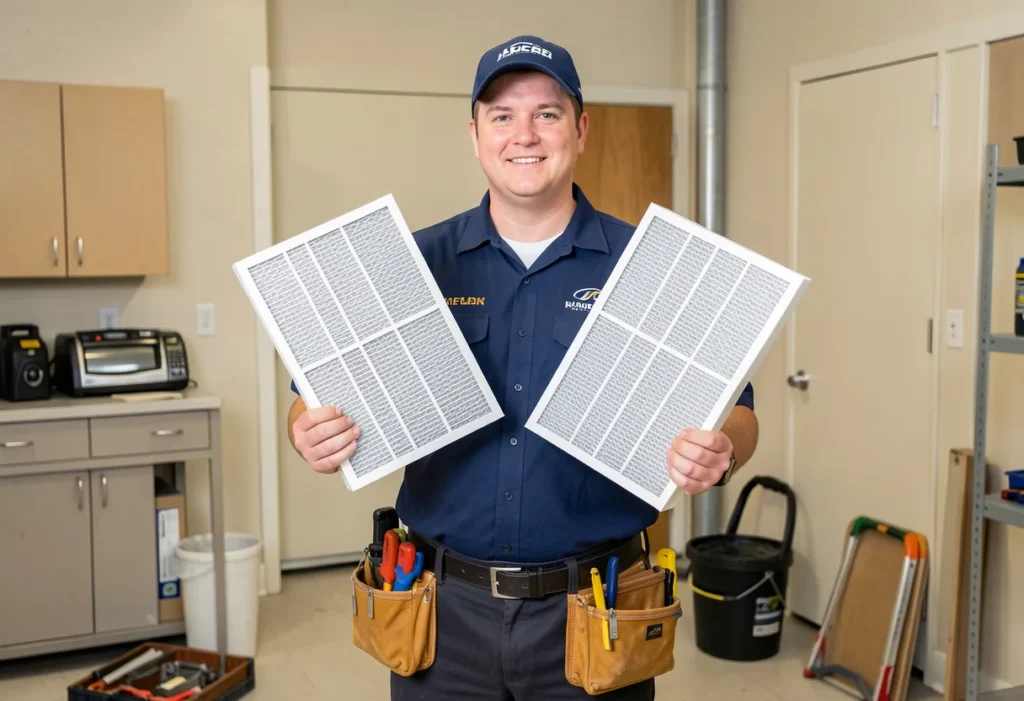
HVAC technician holding MERV 11 and MERV 13 air filters for comparison

The best air filter for you between MERV 11 vs MERV 13 depends on your home, your air quality needs, and your HVAC system. 

Both MERV 11 and MERV 13 clean the air, but in different ways. One is great for everyday use without stressing your system, and the other is stronger for very fine particles, smoke, and allergy triggers. 

Let’s see what suits your home the best: 

Choose MERV 11 air filter if:

1. You want better air quality without risking airflow problems

MERV 11 improves your home’s air quality significantly, catching dust, pollen, pet dander, and other common particles. 

At the same time, it doesn’t restrict airflow too much, so your HVAC system can keep running efficiently. 

This balance means cleaner air without putting extra strain on your system or reducing comfort in your home.

2. You have pets or mild allergies

If your household has pets or mild seasonal allergies, MERV 11 is a solid choice. It traps hair, dander, pollen, and dust effectively, helping reduce sneezing, itchy eyes, and other common allergy symptoms. 

This is strong enough to make a noticeable difference but gentle enough not to cause airflow or system issues.

3. Your home is fairly normal in terms of dust and pollution

For homes in areas with average dust, pollen, or pollution levels, MERV 11 is usually sufficient. It handles the everyday airborne particles without being overkill. 

Most households will notice cleaner air and fewer allergens floating around without the complications of higher-resistance filters.

4. You are not sure about your HVAC system’s capacity

If you aren’t certain how strong your HVAC system is, MERV 11 is the safer upgrade. It provides improved filtration without risking the system’s airflow or efficiency. 

This makes it a reliable choice for most homes, especially older units or smaller systems that might struggle with higher-MERV filters.

Simply put, MERV 11 is the best overall balance for most homes

Overall, MERV 11 is a great mix of clean air, system safety, and affordability. It improves indoor air quality noticeably while keeping your HVAC system running smoothly. 

For most households, this filter provides the best balance of performance, comfort, and long-term reliability.

Choose MERV 13 air filter if:

1. Someone in your home has asthma or severe allergies

MERV 13 is a strong choice for households dealing with asthma or serious allergies. It traps much smaller particles, like fine dust, smoke, and allergens, that MERV 11 may miss. 

This extra filtration can reduce triggers, help improve breathing, and make indoor air healthier for sensitive occupants.

2. You are concerned about wildfire smoke or heavy outdoor pollution

If you live in an area prone to wildfire smoke or heavy pollution, MERV 13 can provide extra protection. 

It captures tiny smoke particles and pollutants that easily bypass lower-rated filters. This means cleaner air indoors, even when the air outside is unhealthy, which is especially important during fire or high-pollution seasons.

3. You want the highest possible filtration your system can safely handle

MERV 13 provides the strongest residential-level filtration available. If your system can handle it, it will remove far more tiny particles than MERV 11, giving you the cleanest indoor air possible. 

This is ideal if you prioritize air quality, although it increases your typical air filter replacement frequency.

4. Your system has been checked and approved for higher-MERV filters

Before switching to MERV 13, it’s important to make sure your HVAC system can handle the higher resistance. 

A professional check ensures proper airflow and system efficiency. 

Once approved, MERV 13 can safely deliver superior filtration without causing strain, helping your home breathe cleaner and healthier air.

In short, here’s how to choose between MERV 11 vs MERV 13 filters: 

Choose MERV 11 ifChoose MERV 13 if
Pets or mild allergiesSevere allergies or asthma
Average dust & pollutionSmoke or heavy pollution concerns
Unsure about HVAC systemHVAC checked for higher MERV
Everyday clean airMaximum filtration possible
Clean-Air-Technologies's Logo
Angies Super Service
Accredited Business
Aeroseal

Schedule Your Free Estimate Today

Contact us to improve your indoor air
quality with our expert cleaning services in NJ.

Final words 

By now, I am sure you know all the differences between MERV 11 vs MERV 13 air filters. 

Also, you’ve clarity on which filters suit your home the best based on your HVAC system type and the level of air filtration you need. 

MERV 11 air filter is definitely the everyday winner. It improves air quality, handles common allergens, and keeps your system running smoothly without extra strain.

MERV 13 is a more powerful upgrade, as it catches smaller particles like fine smoke, pollution, and allergens. 

But it’s only a safe choice if your system can handle the extra resistance. 

Got more questions or want to schedule air filter replacement?

You can get in touch with us!

At Clean Air Technologies, we bring the highest quality MERV-rated air filters. Our technicians assess your HVAC system and suggest you the best MERV-rating for your home. 

Also, we offer recurring air filter replacement plans to help keep you on top of routine air filter replacement. 

Frequently asked questions 

Does a higher MERV filter increase energy use?

Yes, it can, but it doesn’t always happen. 

A higher MERV filter, especially MERV 13, can restrict airflow if your system isn’t designed for it.

And when airflow becomes restricted, the fan has to work harder and the system may run longer to reach the set temperature. So, total energy use can increase slightly. 

This is more likely when a system is pushed beyond what it was designed to handle, especially in older or smaller HVAC systems.

Is MERV 13 always better than MERV 11?

Not always. 

MERV 13 cleans the air more deeply, but that doesn’t mean it’s right for every home. If your HVAC system cannot handle the extra airflow resistance, you might actually lose comfort and system efficiency. 

In many homes, MERV 11 offers a much better balance between clean air and proper airflow.

So, the best filter is the one your system can handle safely, not just the one with the higher number.

What is the biggest difference between MERV 11 and MERV 13 filters?

The biggest difference is how small the particles they can capture. 

MERV 11 is great for dust, pollen, pet dander and mold spores. MERV 13 can trap much finer particles, including smoke and very small airborne contaminants. 

However, MERV 13 also creates more resistance to airflow. That’s why the real difference is not just cleaner air, but how much strain the filter may put on your HVAC system.

What role does filter thickness play when choosing MERV 11 or MERV 13?

Filter thickness really matters and is often overlooked. 

A 4-inch MERV 13 filter is usually much easier on airflow than a 1-inch MERV 13 filter. Thicker filters give air more surface area to pass through, which reduces resistance. 

Can MERV 13 filters cause airflow problems in some homes?

Yes, they can. 

MERV 13 filters are denser and catch much smaller particles, which means air has a harder time moving through them. 

In older HVAC systems, systems with small return ducts, or systems designed for basic filters, this can reduce airflow. 

Lower airflow can make rooms feel uncomfortable and can force the system to run longer. That is why it’s important to confirm your HVAC system can handle MERV 13 before switching.

How often should MERV 11 and MERV 13 filters be replaced?

MERV 11 filters usually last around two to three months in most homes. MERV 13 filters often need to be changed sooner, usually every one to two months. 

Should I upgrade from MERV 11 to MERV 13 for allergies or asthma?

Upgrading can help, especially if someone in your home has allergies, asthma, or reacts to smoke and fine dust. 

MERV 13 captures smaller airborne particles that MERV 11 might miss. 

However, the upgrade should only be done if your system can safely support it. 

Do I need a professional check before switching to MERV 13?

Yes, you do. 

A technician can check airflow and static pressure and see how much resistance your system can handle. This helps avoid problems like weak airflow, higher energy use, and extra strain on the blower. 

What Are The Standard HVAC Filter Sizes In New Jersey? 

Ever stood in the HVAC filter aisle at Home Depot staring at a wall of boxes? 

You might have thought, why are there so many sizes, and how am I supposed to know which one is right?

Well, we’ve all been there.

In fact, this is one of the most common questions I hear from homeowners all across New Jersey. 

And, it makes sense. After all, HVAC filter sizing feels way more complicated than it should be.

One filter looks almost right, another says it’s standard, and suddenly you’re second-guessing everything.

The good news? 

It is actually much simpler once you know the standard HVAC filter sizes.

In this guide, I will break it all down. You’ll know:  

  • Which HVAC filter sizes are most common in New Jersey homes 
  • How to measure your filter the right way
  • Why the size printed on the filter doesn’t always match what you measure at home

And a lot more. 

By the end, you should be able to choose the right filter with confidence.

So, let’s get started. 

Key takeaways

  • There is no single standard HVAC filter size for all New Jersey homes
  • Most NJ homes use 1-inch filters, especially 16×25×1 and 20×25×1 filters
  • Thicker filters (2-inch and 4-inch) only work if your system is built for them
  • The size printed on the filter is a rounded nominal size, not the exact measurement
  • Using the wrong size can cause gaps, dirt buildup, and airflow problems 
  • Always match the filter size and thickness your system was designed to use

What are the most common HVAC filter sizes used in New Jersey homes?  

common HVAC filter used in New Jersey

When it comes to HVAC filters in New Jersey, there isn’t just one standard size. However, some sizes show up far more often than others. 

In fact, be it a single-family home, townhouse, or apartment, your system likely uses either one or a mix of some common filter sizes. 

So, just know these sizes and your HVAC filter shopping will be much easier. 

Overall, here are the most common residential air filter sizes: 

1. 1-inch HVAC filters (most common in New Jersey Homes)

One-inch HVAC filters are the most common filter type we see in New Jersey homes. If your home has a typical furnace or air handler and a single return grille, there’s a very good chance you’re using a 1-inch filter.

These filters have been around for decades, which is why they’re easy to find almost anywhere, including at hardware stores, big box stores, and online. They’re also what most older HVAC systems were designed to use.

Here are the 1-inch sizes I see most often in NJ homes and where they usually show up:

  • 14 × 20 × 1: Common in smaller systems, condos, and apartments
  • 16 × 20 × 1: Often used in townhomes and compact HVAC setups
  • 16 × 25 × 1: Very common in single-family homes
  • 20 × 20 × 1: Frequently found in older homes with square return grilles
  • 20 × 25 × 1: One of the most popular filter sizes in New Jersey overall

Here’s why homeowners like 1-inch filters: 

  • They’re inexpensive
  • They’re easy to find in almost any store
  • They fit most older HVAC systems without modifications

Things you should keep in mind:

  • They clog faster than thicker filters
  • Most need to be changed every 1 to 2 months
  • They have less surface area, so they don’t hold as much dust

Pro tip: If you’re using a 1-inch filter, you should stay on top of air filter replacement. That’s because waiting too long can restrict airflow and make your system work harder than it should.

In short, here are the most common 1-inch HVAC filter sizes in New Jersey: 

Filter SizeWhere It’s Commonly Used
14×20×1Apartments, condos, small systems
16×20×1Townhomes and compact HVAC setups
16×25×1Many single-family homes
20×20×1Older homes with square return vents
20×25×1One of the most common sizes in NJ homes

2. 2-inch HVAC filters

Two-inch HVAC filters are becoming more common in New Jersey, especially in newer homes or systems that have been upgraded over the years.
These are a nice middle ground between basic 1-inch filters and the larger 4-inch filters used in high-efficiency systems.

The most common 2-inch filter sizes I see are:

  • 16 × 25 × 2
  • 20 × 20 × 2
  • 20 × 25 × 2

Homeowners tend to like 2-inch filters because they simply do more than a standard 1-inch filter without being a major change to the system.

Here’s why 2-inch HVAC filters are becoming popular:

  • They have more surface area, so they can hold more dust and debris
  • They usually last longer and need fewer replacements over the year
  • They can support better overall filtration while keeping airflow steady

Things you should keep in mind:

  • They only work if your system is designed for a 2-inch filter
  • You cannot safely squeeze a 2-inch filter into a 1-inch slot

Pro tip: If your system already uses a 2-inch filter, you should stick with the correct filter size and replace it on schedule 

In short, here are the most common 2-inch HVAC filter sizes in New Jersey: 

Filter SizeTypical Homes
16×25×2Upgraded single-family homes
20×20×2Newer HVAC setups
20×25×2Homes needing better filtration

3. 4-inch HVAC filters 

Four-inch HVAC filters are usually found in high-efficiency HVAC systems and homes that have been built or upgraded more recently. 

These are often called deep media filters, and they’re designed to do a much better job at filtering air without hurting airflow.

The most common 4-inch HVAC filter sizes you’ll see in New Jersey homes are:

  • 16 × 25 × 4
  • 20 × 20 × 4
  • 20 × 25 × 4

You’ll typically find 4-inch filters in:

  • Newer homes
  • Homes with upgraded HVAC systems
  • Systems that have a dedicated filter cabinet built into the ductwork

Here’s why homeowners like 4-inch filters: 

  • They have a much larger surface area
  • They’re great for homes with pets, allergies, or higher dust levels
  • They load with dirt more slowly, so airflow stays consistent
  • They often last 4 to 6 months between changes 

Things you should keep in mind:

  • They cost more upfront than thinner filters
  • They require a proper filter cabinet

Pro tip: You should never try to upgrade to a 4-inch filter unless your system was designed for it. That’s because if the slot isn’t made for a thicker filter, forcing one in can block airflow and create HVAC problems instead of solving them.

Note: If you’ve been experiencing poor airflow, the problem might not be with the filter but clogged vents and ducts. So, before going for a thinner filter, you should first get a proper HVAC system cleaning

In short, here are the most common 4-inch HVAC filter sizes in New Jersey: 

Filter SizeWhere You’ll Find Them
16×25×4Newer homes
20×20×4High-efficiency systems
20×25×4Homes with filter cabinets

4. Less common (but still standard) HVAC filter sizes

Not every New Jersey home uses one of the popular filter sizes above, and that’s completely normal. 

I regularly see plenty of homes with filter sizes that aren’t as common on store shelves but are still standard residential sizes.

And some of these less common sizes I often run into include:

  • 10 × 20 × 1
  • 12 × 12 × 1
  • 12 × 24 × 1
  • 14 × 25 × 1
  • 18 × 30 × 1
  • 24 × 24 × 1

These filter sizes usually show up in:

  • Older homes built before today’s typical HVAC layouts
  • Finished basements with their own return grille
  • Home additions where a system was modified or extended
  • Converted systems that were updated over time

So, if your filter size is on this list, it doesn’t mean anything is wrong with your system. It just means your home has a unique layout or has been changed over the years, which is very common.

In short, here are the less common HVAC filter sizes in New Jersey: 

Filter SizeWhere They’re Used
10×20×1Older or compact systems
12×12×1Small return vents
12×24×1Custom layouts
14×25×1Modified systems
18×30×1Larger return openings
24×24×1Wide square returns
Clean-Air-Technologies's Logo
Angies Super Service
Accredited Business
Aeroseal

Schedule Your Free Estimate Today

Contact us to improve your indoor air
quality with our expert cleaning services in NJ.

Nominal vs actual air filter sizes for homes: What’s the difference?

nominal HVAC filter size in New Jersey

This is one of the most confusing parts of buying an HVAC filter, and it trips up a lot of homeowners.

You see, the size printed on the filter box is called the nominal size. And it is not the exact physical measurement of the filter. 

This is done on purpose.

For instance, a filter labeled 16 × 25 × 1 will usually measure a little smaller, something like 15.5 × 24.5 × 0.75 inches. That small difference allows the filter to slide in and out of the slot without getting stuck.

Here’s the simple way to think about it:

  • The number on the filter box means nominal size
  • The real, tape-measure size means actual size

This is completely normal and does not mean the filter is wrong or poorly made.

So, when you’re shopping for a filter replacement, always buy the filter using the printed size from your old filter, not the exact measurements you get with a tape measure. That’s because measuring and guessing often leads to buying the wrong size and creating gaps around the filter.

In short, here’s the difference between nominal vs actual air filter sizes for homes:

TermWhat It Means
Nominal sizeThe size printed on the filter box
Actual sizeThe real measured size
Why it’s smallerHelps the filter slide in easily

How to measure your HVAC filter size correctly?

a professional measuring HVAC filter size in New Jersey

Sometimes your old filter is missing or the label has worn off. But you can still measure your HVAC filter. 

The trick is to measure the filter frame (not the pleated cardboard) and round to the nearest inch. 

Here’s a simple step-by-step guide to do so:

Step 1: Remove the old filter

Take the filter out of the slot completely. Make sure the system is off so it’s safe. 

Removing it fully gives you the best access to measure the exact frame size, and it prevents bending or damaging the filter.

Step 2: Measure the frame, not the cardboard

Check the length, width, and thickness of the filter frame using a tape measure. Don’t measure the pleated part, just the rigid edges. 

This gives you the true size that fits the slot properly.

Step 3: Round to the nearest whole number

Take the measurements you recorded and round each one up or down to the nearest inch. For instance, 15.5 inches becomes 16, and 24.5 becomes 25. 

This rounded number is your nominal size, the one you’ll use when buying a new filter.

In short, here’s how to measure your HVAC filter size correctly:

StepWhat To Do
Step 1Turn system off and remove filter
Step 2Measure the filter frame
Step 3Round measurements to nearest inch

You might also want to read: Can You Put A Filter On Return Air Vent?

Clean-Air-Technologies's Logo
Angies Super Service
Accredited Business
Aeroseal

Schedule Your Free Estimate Today

Contact us to improve your indoor air
quality with our expert cleaning services in NJ.

Final words

By now, I am sure you know what are the standard HVAC filter sizes used in New Jersey homes. 

You see, there really isn’t a single standard HVAC filter size for all homes in Jersey. But then, a few sizes are very common, like 16 × 25 × 1, 20 × 25 × 1, 16 × 20 × 1, and 20 × 20 × 1, along with their 2-inch and 4-inch versions. 

Still not sure what’s the right HVAC filter size for your home or want to get a filter replacement? 

You can get in touch with us!

At Clean Air Technologies, we offer the highest-quality MERV-rated air filters for both home and commercial properties. Our filters are designed to keep your indoor air clean and healthy to breathe throughout. 

We also offer recurring filter replacement plans to help you stay on top of HVAC filter replacement. 

FAQs about HVAC filter sizes

What is the most common HVAC filter size in New Jersey homes?

In most New Jersey homes, the most common HVAC filter sizes are 16×25×1 and 20×25×1.

These sizes are very popular in single-family homes and newer townhouses. 

However, there is no single standard size for every home. Your system’s filter slot decides the size, not your house size. 

So, always check the size printed on your current filter before buying a replacement.

How do I know the correct HVAC filter size for my system?

The easiest way is to remove your current filter and read the size printed on the frame, such as 16×25×1. That number is your nominal size and is what you should use when shopping. 

If the label is missing, measure the filter opening and round each measurement to the nearest whole inch. 

Do not guess, because the wrong size can allow dirty air to bypass the filter.

Can I use a different filter size if it almost fits?

No, you should never use a filter that only almost fits. 

Even small gaps around the edges let dust and debris go straight into your HVAC system. This can dirty your blower, coils, and ductwork and reduce system efficiency. 

A filter should fit snugly in the slot without bending or forcing it in. The correct size is very important for both air quality and system protection.

What does the third number in a filter size mean?

The third number in a filter size shows the thickness of the filter. For instance, in a 16×25×1 filter, the ‘1’ means the filter is one inch thick. 

Some systems use thicker filters such as 2-inch or 4-inch filters. You must use the same thickness your system is designed for. 

Thicker filters only work if your HVAC system has the proper filter cabinet.

Are 4-inch HVAC filters better than 1-inch filters?

In many homes, 4-inch filters can be better because they have more surface area and can hold more dust while maintaining good airflow. They also usually last longer between changes.

However, you can only use a 4-inch filter if your HVAC system has a proper deep filter cabinet.

You should never try to upgrade to a thicker filter unless your system was designed for it.

Why do my filter measurements not match the size printed on the filter?

This happens because HVAC filters use nominal sizing. The printed size is rounded and slightly larger than the real physical size. 

For instance, a filter labeled 16×25×1 is usually a little smaller so it can slide into the slot easily. This is completely normal and does not mean the filter is wrong. 

You should always shop using the printed size, not the exact measured size.

Should I use the same filter size if I have more than one HVAC system?

Not always. 

Many New Jersey homes have two HVAC systems, such as one for the main floor and one for the basement or second floor. Here, each system can use a different filter size. 

So, you should check the filter location for each unit and confirm the size separately. Never assume both systems use the same filter, even if they are in the same house.

How Often Should You Change Your Air Filter? A Complete Guide For New Jersey Homes

As someone who lives in New Jersey, you know how essential your HVAC system is for staying comfortable through hot summers and cold winters.

But here’s the catch: Your air filter plays a big role in keeping your air clean and your HVAC running smoothly. And you need to change it regularly to maintain good air quality and avoid higher energy bills or system damage.

But how often should you change your air filter? 

This is one question I am often asked as an HVAC cleaning professional

Now, although the exact frequency depends on things like the season, pets, and air quality in your area, you should change filters at-lease every 60-90 days. 

In this blog, I will help you figure out exactly when and how often to change your filter based on your home’s needs. 

So, let’s get started. 

Key takeaways 

  • Check your air filter every month.
  • Change the filter every 60-90 days on an average.
  • Replace sooner (every 20-45 days) if you have pets, allergies, asthma, or heavy HVAC use.
  • If you use higher-efficiency filters (MERV 11-13), check more frequently, as they clog faster.
  • During dusty seasons, construction nearby, or heavy pollen (spring/fall), you might need to change it more often.
  • If your air feels dusty, your HVAC is running longer than usual, or energy bills spike, replace the filter immediately.

How often should you change your air filter exactly? 

Man inspecting a pleated HVAC air filter before replacing it at home.

For starters, most experts, including us at Clean Air Technologies, suggest changing your filter every 30 to 90 days.

But the exact AC air filter replacement frequency depends on a few things like the type of filter you use, how often your HVAC runs, and your home itself.

Here’s a quick breakdown:

1. Replace filter every 30-60 days if you use basic fiberglass or disposable filters

Fiberglass or disposable filters are the most affordable filters. But they also fill up with dust quickly. 

So, you’ll likely need to replace them every 30-60 days, especially if you have pets, dust, or if your HVAC runs a lot. 

Also, if you start to notice weak airflow or more dust in the air, it’s time to swap it out.

2. Replace filter every 60-90 days if you use pleated or mid-grade filters (MERV 8-11)

Pleated or mid-grade filters with MERV 8-11 rating last a bit longer and trap more particles like dust, pollen, and pet hair. 

You can usually go 60-90 days between changes, but keep an eye on them. 

But, if you notice your home getting dustier or the air feels stuffy, it might be time to replace it.

3. Replace filter every 45-60 days if you use high-efficiency filters (MERV 12-16 or HEPA)

MERV 12-16 or HEPA filters are great for homes with allergies, asthma, or lots of pollution. They trap tiny particles like mold spores and smoke.

But they also clog up faster. So, if you have one of these filters, plan to replace it every 45-60 days, or more often if you have heavy dust or pet dander.

Pro tip: Check your filter every month

No matter which type of filter you have, it’s a good idea to check it every month. 

To do this, simply remove it and hold it up to the light. If you can’t see light through it, it’s time for a change. 

Even if it looks okay, if your HVAC system is running longer than usual or the air feels stuffy, it might be worth replacing the filter early.

In short: 

Filter TypeWhat It MeansReplacement Frequency
Fiberglass / DisposableBasic, cheap filters that catch large dustEvery 30-60 days
Pleated / Mid-Grade (MERV 8-11)Better at catching dust, pollen, and pet hairEvery 60-90 days
High-Efficiency (MERV 12-16 / HEPA)Best for allergies, asthma, tiny particlesEvery 45-60 days (sometimes sooner)
Any Filter TypeCheck monthly using the light test
Clean-Air-Technologies's Logo
Angies Super Service
Accredited Business
Aeroseal

Schedule Your Free Estimate Today

Contact us to improve your indoor air
quality with our expert cleaning services in NJ.

What factors decide how often to replace AC filter in New Jersey? 

Person holding a clean HVAC air filter unit, showing the front panel before installation.

There are several factors that speed up the process of your air filter clogging. Meaning you’ll need to replace it more often than the standard 60-90 days. 

Let’s have a look at these key factors that determine how quickly your filter gets dirty:

1. Pets hair and dander

If you’re a pet owner, your filter is working overtime. 

How? 

Pets shed fur and dander, and they bring in dirt and dust from outside, all of which get trapped in your air filter. 

This means the filter can clog up much faster. 

So, for pet owners, it’s generally recommended to change the filter every 45-60 days. Also, in some cases, you might need to replace it as often as every 30-45 days to keep things clean and allergy-free. 

2. Household size and activity

The more people in your home, the more dust, skin flakes, and other airborne particles your HVAC system has to deal with. 

For instance, larger households, or homes with active kids and lots of cooking or movement, tend to accumulate more dirt. 

So, if you have a busy household, you might want to plan on changing your filter more frequently, likely every 45-60 days. 

Also, if you’ve got a household full of kids or frequent gatherings, you might need a quicker change to maintain clean air.

3. Air quality and outdoor conditions

New Jersey’s air can be challenging, especially during certain seasons. Plus, construction dust, pollen, and pollution can all impact your filter’s life. 

Now, if your home is near a construction zone or major roads, or you’re dealing with pollen-heavy seasons, your filter may get clogged quicker than usual. 

In these cases, you’ll likely need to change your filter more often, around every 30-60 days. 

Also, if you live in a particularly polluted or dusty area, it’s a good idea to check the filter more regularly, especially in the spring and fall.

4. Allergies, asthma, or health sensitivities 

If anyone in your household has allergies, asthma, or other respiratory conditions, maintaining clean air becomes even more important. 

Why? 

A clogged filter won’t be able to trap allergens. Meaning dust, pollen, and other irritants will recirculate through your home. 

In these cases, changing your air filter every 20-45 days is a good practice to help reduce the buildup of allergens and maintain better air quality.

5. Heavy HVAC use 

In New Jersey, your HVAC system likely gets a lot of use during both the summer and winter months. 

In fact, whether you’re running the AC in the heat or cranking up the heat during a cold spell, your system is working harder. 

The more your HVAC system is running, the more air it cycles, and the quicker the filter can get clogged with dust and particles. 

So, during high-use seasons, you might need to change your filter more frequently, around every 30-45 days, or at least check it monthly.

6. Filter type, material and thickness

A basic 1-inch fiberglass filter tends to get clogged much faster than pleated filters, which have more surface area and last longer. 

However, even pleated filters need regular checks. 

For instance, if you’re using higher-efficiency filters (MERV 11-13), they trap even more particles. But they clog faster and reduce airflow if your HVAC system isn’t designed for them. 

So, if you have a higher-MERV filter, be prepared to change it more often to keep the airflow strong and your HVAC system running smoothly.

In short:

FactorWhy It MattersHow Often to Replace
PetsPets shed hair and dander that clog filters fastEvery 30-60 days
Large or active householdMore people = more dust, movement, and cooking particlesEvery 45-60 days
Air quality outdoorsNJ pollen, road traffic, construction dust clog filtersEvery 30-60 days
Allergies/AsthmaNeed cleaner air and fewer allergensEvery 20-45 days
Heavy HVAC useMore heating/cooling cycles = faster cloggingEvery 30-45 days
Filter type (MERV rating)Higher-MERV filters trap more particlesCheck monthly; replace sooner as needed

Still not sure when to change air filter? Here’s an air filter replacement schedule you can use:

Household / ConditionsFilter Type / NotesSuggested Frequency
Single person, no pets, light use1″ basic or pleatedCheck monthly, replace every 90 days
Small family (2-4 people), no pets, moderate usePleated or mid-gradeReplace every 60-90 days
Household with 1-2 pets, moderate usePleated or MERV 8-11Replace every 45-60 days
Household with pets and people with allergies/asthma Pleated or MERV 11-13Replace every 30-45 days
Large, active household / heavy HVAC usePleated or high-eff filtersCheck monthly, replace every 30-45 days
Periods of heavy use (summer heat, winter cold, wildfire smoke)Inspect monthly, expect 30-day replacements

Pro tip: Mark the date on your filter when you install it. This makes tracking replacements much easier.

Bonus: You can check your air filter through a light test

Want to know if it’s time for a change? 

Skip guessing and use the light test. 

Here’s how it works:

  1. Remove the filter from your HVAC system.
  2. Hold it up to a bright light or sunlight.
  3. If you can’t see light coming through, it’s time to replace the filter. 

You might also want to read: How To Clean Out Your Dryer Vent?

Clean-Air-Technologies's Logo
Angies Super Service
Accredited Business
Aeroseal

Schedule Your Free Estimate Today

Contact us to improve your indoor air
quality with our expert cleaning services in NJ.

Final thoughts

By now, I am sure you know how often should you change your air filter in New Jersey. Also, you know what factors decide the intensity of filter change in your home.

You see, changing your air filter is one of the simplest, most cost-effective ways to improve both your home’s air quality and the efficiency of your HVAC system.

And for New Jersey homeowners dealing with humidity, dust, pets, and extreme seasonal temperatures, it’s even more important.

After all, not only will this ensure cleaner air, but it will also save you money on energy bills and extend the life of your HVAC system.

Got more questions or want a peace of mind with an affordable air filter replacement plan?

You can get in touch with us!

At Clean Air Technologies, we can help you choose the right filter for your home along with recurrent replacement plans. 

Simply put, we’ve got your air filter maintenance and upkeep needs covered on a budget. 

FAQs about how often to replace AC filter

Is replacing my filter every 90 days enough?

It could be, especially if your home is small, you have few people living there, and no pets.

However, it’s always a good idea to check your filter monthly. If you notice weak airflow, more dust around the house, or your HVAC system is running longer than usual, it’s time to change it sooner.

I have pets. How often should I change the filter?

Pets are wonderful, but they can really fill up your air filter with hair and dander. 

If you have pets, aim to replace your filter every 45–60 days. 

If you have multiple pets, heavy shedding, or allergy concerns, consider changing it more often, every 30-45 days. It helps keep the air cleaner and your HVAC system working efficiently.

Are high-efficiency (MERV 13+) filters better?

High-efficiency filters rated MERV 13 or more are great for catching tiny particles like dust, pollen, and even bacteria, making them excellent for allergy sufferers. 

But, they do clog up faster and can restrict airflow if your HVAC system isn’t built to handle them. 

So, while they offer better air quality, you might need to change them more often, like every 45-60 days, depending on your home’s air quality and HVAC usage.

How can I tell when my air filter is really clogged?

If your filter looks dirty and you can’t see light through it when you hold it up to the sun, it’s probably time to change it. 

Also, if you notice your HVAC system is running longer than usual or your vents are blowing weak air, those are signs that the filter may be clogged. 

Always check it monthly to avoid any surprises!

What happens if I don’t change my air filter?

Neglecting to change your air filter can lead to a few problems. 

First, it reduces airflow, making your HVAC system work harder and use more energy, which can drive up your bills. 

Over time, it can even cause the system to overheat or break down. 

Plus, dirty filters mean dust, allergens, and other particles stay in your air, which can make your indoor air quality worse.

Can I clean and reuse my disposable filter?

It’s best not to clean disposable filters as they’re not designed to be reused. Cleaning them can damage the filter material and reduce its effectiveness. 

It’s always better to replace them with a fresh one to ensure your system is working efficiently and your air stays clean.