
As homeowners, we know we are supposed to change their air filter every few months. This part is pretty easy.
But how do you choose the right air filter?
This is where things get confusing.
You’ll come across MERV 8 and MERV 10 air filters, the two most common HVAC air filters for homes. Both clean your air and are safe for your HVAC system.
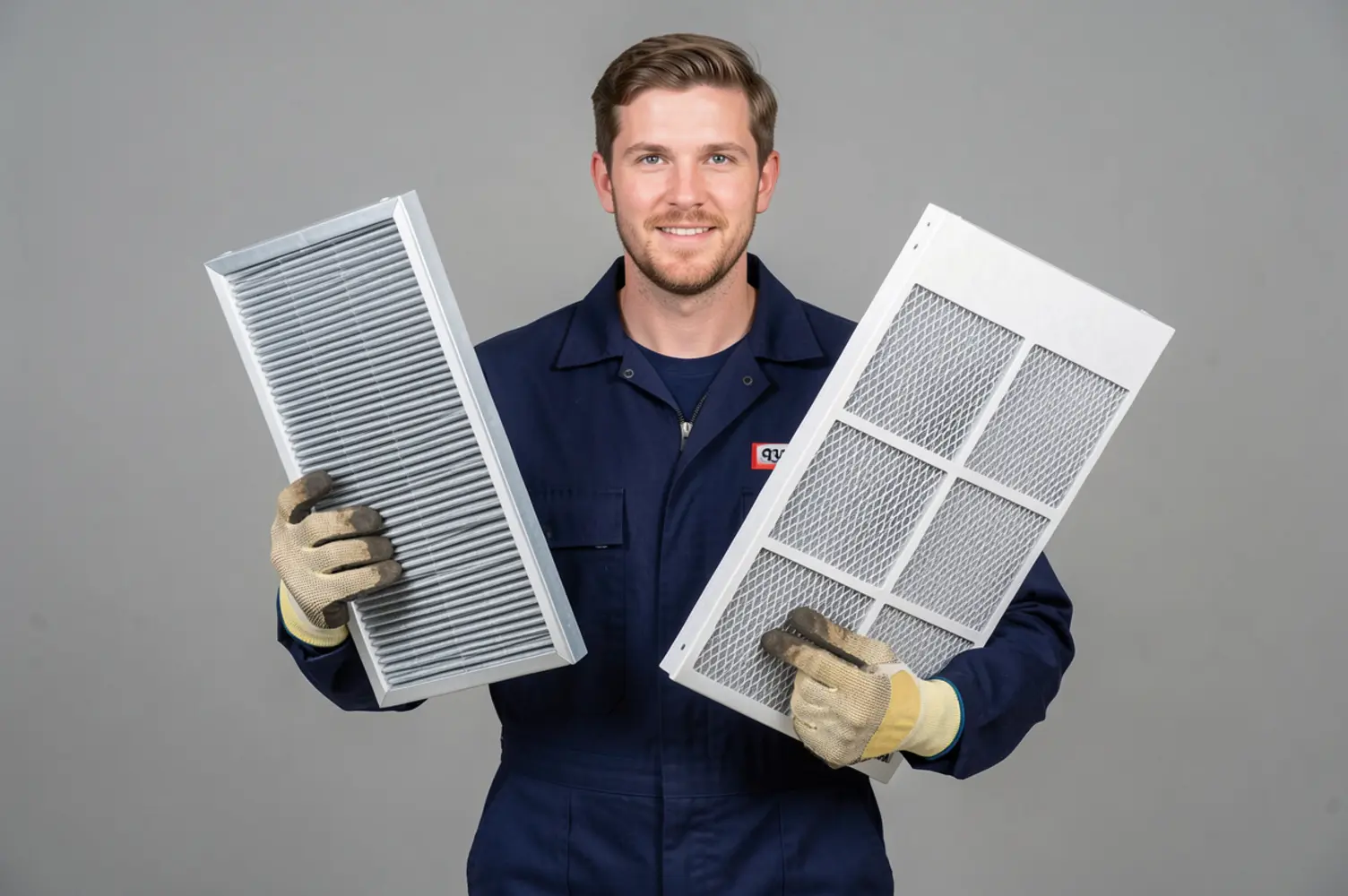
In fact, they look almost identical at first look.
But the thing is, that small number difference can change how clean your indoor air is, how hard your HVAC system works, and how often you’ll need air filter replacement.
In this blog, I will explain all the differences between MERV 8 vs MERV 10 air filters that you need to know as a homeowner.
By the end, you’ll know exactly which filter makes the most sense for your home.
So, let’s get started.
Key takeaways
- MERV 8 is the standard filter for most homes.
- MERV 10 offers slightly better filtration for allergies and dust.
- Both are safe for most residential HVAC systems.
- MERV 10 captures smaller particles than MERV 8.
- MERV 10 may clog a little faster than MERV 8.
- Airflow impact between MERV 8 and 10 is usually very small.
- MERV 10 is a good upgrade if you want cleaner air without high resistance.
What is a MERV 8 air filter?
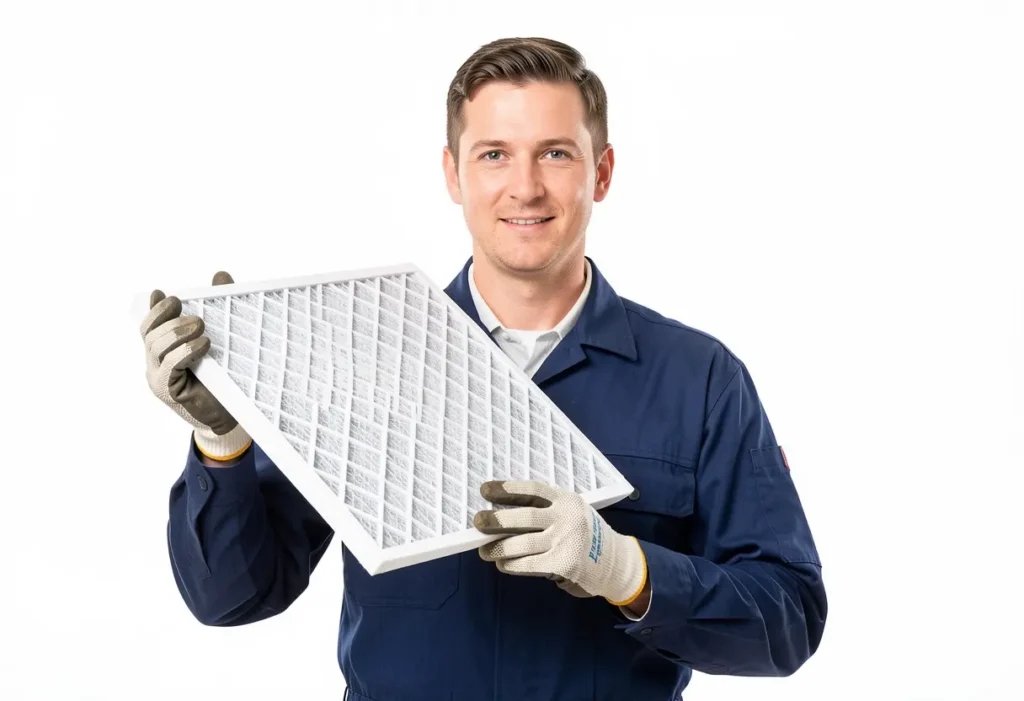
A MERV 8 filter is the standard air filter you’ll find in most homes. In fact, many residential HVAC systems are designed to work with this exact level of filtration.
So how does this filter work?
A MERV 8 filter captures common household particles like dust, pollen, lint, dust mites, and pet dander. These are everyday pollutants floating around your home.
It won’t catch the tiniest microscopic particles though. But for most households, it does a very solid job.
Think of the MERV 8 air filter as dependable and practical. It keeps your air cleaner without putting extra pressure on your system and offers the right balance between air quality, airflow, and affordability.


Schedule Your Free Estimate Today
Contact us to improve your indoor air
quality with our expert cleaning services in NJ.
Why do homeowners like MERV 8 air filter?
The reason why MERV 8 air filter is so popular among households is that it works well with just about any HVAC system.
It allows strong airflow and your HVAC system doesn’t have to struggle to push air through it. This helps maintain steady comfort throughout the home.
Also, it puts very little strain on the blower motor, which is especially important for older systems.
Plus, it is widely available and budget-friendly. A MERV 8 filter costs about $5 per filter, you can find it almost anywhere, and use it for one to three months depending on the dust levels.
So, for homeowners who simply want a reliable air filtration, MERV 8 is the easiest and safest choice.
What is a MERV 10 air filter?

A MERV 10 air filter is simply a small upgrade from MERV 8. It is designed to catch smaller particles while still being safe for most home HVAC systems.
To put it simply, it is a slightly finer net that can catch particles in the 7-10 micron range.
So what’s the difference in real life?
MERV 10 does a better job capturing finer household dust, smaller pollen particles, mold spores, and tiny bits of pet dander that a MERV 8 filter might miss.
It doesn’t turn your system into a hospital-grade purifier, but it does clean the air a little deeper.
For a lot of homeowners, this small step up does make a noticeable difference, especially during allergy season.
The best part?
These filters improve air filtration without moving into the higher-resistance filter range that can stress some HVAC systems.
So, this is a balanced upgrade for people who want cleaner air but still want their system running comfortably.
Why do homeowners like MERV 10 air filter?
Homeowners like MERV 10 air filters because they want better air quality without overcomplicating things.
You see, if someone in the home deals with seasonal allergies, mild asthma, or dust sensitivity, MERV 10 can help reduce some of those everyday airborne triggers. Also, it is helpful in homes where dust seems to settle quickly on furniture, even after cleaning.
Any other reason it’s popular?
Certainly.
The airflow change with MERV 10 filters is usually very small in most HVAC systems. You get improved filtration without a dramatic impact on comfort.
The air filter replacement cost, however, is higher here. That’s because a MERV 10 filter costs between $10-30, which is way more expensive compared to MERV 8.
MERV 8 vs MERV 10 air filters: What are the differences?
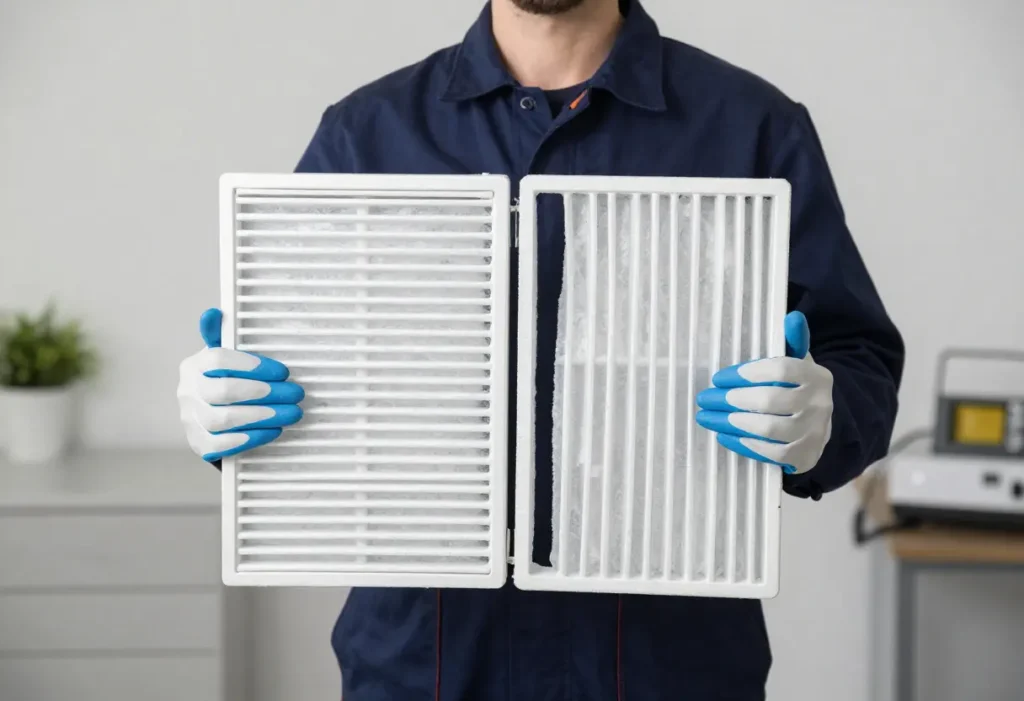
MERV 8 and MERV 10 filters look almost the same. They are the same size and the installation process is also the same .
So what’s the real difference?
Well, just like MERV 11 VS MERV 13 air filters, the difference comes down to two main things:
- How small of particles they capture
- How that affects your airflow over time.
Let’s have a close look at the difference between MERV 8 and 10 for a better understanding.
MERV 8 air filter
1. Offers reliable everyday air filtration
MERV 8 is built for normal, everyday air filtration. It captures common household particles like dust, pollen, lint, and pet dander, the things floating around in almost every home.
And for most families, this already makes the air feel noticeably cleaner.
2. There is very low airflow resistance
One of the biggest advantages of MERV 8 is how easily air moves through it. Your HVAC system doesn’t have to strain or work harder to push air into your rooms.
This means strong airflow, steady temperatures, and consistent comfort throughout the house.
3. Excellent for older or smaller HVACs
If your HVAC system is older, smaller, or you’re simply unsure what it can handle, MERV 8 is usually the safest choice.
In fact, older HVAC systems were designed for this very level of filtration. So, you get cleaner air while keeping the system running smoothly.
4. Lower cost and longer usable life
MERV 8 filters are way more affordable than higher-rated options. Also, they tend to clog a little more slowly because they aren’t trapping the smallest particles.
In most homes, they can last anywhere from one to three months, depending on dust levels and whether you have pets. This makes them practical and budget-friendly.
MERV 10 air filter
1. Offer better fine-particle filtration
MERV 10 is designed to catch smaller particles that MERV 8 might miss. This includes finer household dust, smaller pollen particles, and mold spores.
Now, while the difference sounds small, it does make the air feel cleaner in homes that struggle with dust buildup.
2. Better for allergy-prone homes
If someone in your home deals with seasonal allergies, pet sensitivity, or dust irritation, MERV 10 can offer noticeable improvement in comfort. That’s because it traps smaller airborne particles, fewer allergens continue circulating through the air.
Over time, this can mean less sneezing, less irritation, and more comfort indoors.
3. There is slightly higher airflow resistance
Since a MERV 10 air filter is denser than MERV 8, airflow resistance is slightly higher, which in simple terms means that air doesn’t pass through quite as easily.
However, in most properly sized and well-maintained residential HVAC systems, this difference is small and usually not a problem.
Modern HVAC systems are designed to handle this level comfortably. So, as long as the filter is changed regularly, it should not cause noticeable airflow or comfort issues.
4. It clogs a bit faster
MERV 10 captures smaller particles which makes it fill up much faster, especially during heavy pollen seasons or in homes with pets. Meaning you might need to replace it a little more often than MERV 8.
And if you don’t replace the filter often, airflow can start to decrease.
So, you’ve got to check the filter almost every month and replace it when it looks loaded with dust.
Note: A MERV 10 air filter is still safe for most residential HVACs
Even though it reduces the airflow slightly and clogs faster, MERV 10 is still considered safe for the majority of residential HVAC systems. That’s because it doesn’t create the kind of high resistance you see with very high-MERV filters.
So, for most homeowners, this is a balanced upgrade offering better air quality without putting the system under stress.
In short, here are all the differences between MERV 8 vs MERV 10 air filters:
| Feature | MERV 8 | MERV 10 |
| Particle capture | Household dust, pollen, lint, pet dander | Finer dust, smaller pollen, mold spores |
| Airflow resistance | Very low | Slightly higher |
| Best for | Standard homes | Homes with allergies and dust concerns |
| Filter life | Slightly longer | May clog a little faster |
| System impact | Very minimal | Still very safe for most systems |
MERV 8 vs MERV 10 air filter: Which one is better for your home?
When it comes to the right choice between MERV 8 vs MERV 10 air filter, you’ll have to factor in your HVAC system and what air quality concerns you face.
After all, while some homes need a basic yet reliable filtration, others do need an upgrade.
Let me break this down so you can confidently decide which filter makes the most sense for you.
Choose MERV 8 if:
1. You want reliable filtration with zero risk
If your main goal is to keep things simple and safe, MERV 8 is hard to beat. It provides solid everyday filtration without adding strain to your HVAC system.
Air flows easily, your blower motor doesn’t work harder than it should, and comfort stays consistent.
2. Your home has normal dust and allergy levels
If your home doesn’t deal with constant dust buildup, heavy pet shedding, or strong allergy triggers, MERV 8 is usually more than enough.
It handles common household particles very well and keeps the air clean for everyday living. In fact, families have been using MERV 8 for years without issues.
3. You have an older or smaller HVAC system
Older HVAC systems were designed around lower-resistance filters like MERV 8. So, if your HVAC unit is aging or already struggles with airflow, keeping air resistance low is important.
MERV 8 allows air to pass through easily, which protects the blower motor and helps prevent unnecessary wear.
4. You want the safest and most affordable option
For many homeowners, cost and simplicity matter.
MERV 8 filters are widely available and typically more budget-friendly than higher-rated options. Also, they last a little longer before clogging.
So, if you want reliable performance, low cost, and minimal maintenance concerns, MERV 8 remains one of the safest and most practical choices.
Choose MERV 10 if:
1. You want better allergy and dust control
If someone in your home deals with allergies, sneezing, congestion, or dust sensitivity, MERV 10 can help. It captures smaller airborne particles that often trigger irritation.
Over time, this can make your indoor air feel fresher and more comfortable.
It is not a medical-grade solution, but it can provide noticeable improvement for households that want cleaner air without making a dramatic change.
2. Your home collects dust quickly
Do you clean your furniture only to see dust settling again a few days later?
That’s often a sign that fine particles are staying airborne.
MERV 10 is better at trapping those smaller particles before they circulate back into your living space.
3. You want better air quality without jumping to high-MERV filters
Some filters with very high MERV ratings can restrict airflow if the system isn’t designed for them.
MERV 10 gives you improved filtration without moving into that higher-risk category. It is a middle-ground upgrade offering better particle capture while still remaining safe for most residential systems.
4. Your HVAC system is new and well-maintained
Most newer HVAC systems can handle MERV 10 without any airflow problems. So, if your HVAC unit is in good condition and regularly serviced, this level of filtration is something you can go for without double thoughts.
In short, here’s how to decide between MERV 8 vs MERV 10 air filters:
| Choose MERV 8 for | Choose MERV 10 for |
| Normal home environment | Dust and allergy concerns |
| Older or unknown system capacity | Modern, healthy HVAC system |
| Budget-friendliness | Upgrade in air quality |
| Maximum airflow safety | Better fine-particle capture |
Schedule Your Free Estimate Today
Contact us to improve your indoor air
quality with our expert cleaning services in NJ.
Final words
I am sure that by now you know all the differences between MERV 8 vs MERV 10 air filters. Also, you know how to pick the right filter from among them for your home.
You see, for most homes, MERV 8 is still a great everyday air filter. It keeps airflow strong, protects your system, and removes common household particles very well.
MERV 10 is a smart upgrade only if you want:
- Cleaner air
- Better dust control
- Improved allergy support
Also, it is a safe choice if you want to avoid airflow problems caused by higher MERV filters.
Got more questions or want to schedule an air filter replacement for your home?
You can get in touch with us!
At Clean Air Technologies, we offer the highest-quality MERV-rated air filters. We help you choose the right air filtration for your home based on your HVAC system type and indoor air quality concerns.
FAQs about MERV 8 vs MERV 10 air filters
Is MERV 10 much better than MERV 8 for home air quality?
MERV 10 is better than MERV 8, but the difference is not huge for most homes.
MERV 10 captures slightly smaller particles, such as finer dust and smaller pollen, that MERV 8 might miss. This can help if your home has allergy issues or feels dusty.
However, MERV 8 already does a good job for everyday living.
Will switching from MERV 8 to MERV 10 reduce airflow in my home?
In most homes, the airflow difference between MERV 8 and MERV 10 is very small.
MERV 10 is only slightly denser than MERV 8, so properly sized residential systems usually handle it without problems. Your rooms should still feel comfortable and air should move normally.
Is MERV 10 safe for older HVAC systems?
In many cases, yes.
MERV 10 is still considered a low to moderate resistance filter and works safely in most homes.
That said, older systems were often designed around MERV 6 to MERV 8 filters. So, if your HVAC unit is very old or has weak airflow already, staying with MERV 8 is the safer choice.
How often should I replace MERV 8 and MERV 10 air filters?
Air filter replacement frequency differs for both MERV 8 and MERV 10 filters.
Most MERV 8 filters should be replaced every one to three months, depending on how dusty your home is and whether you have pets.
MERV 10 filters usually need to be changed a little more often, often every one to two months. Because MERV 10 traps finer particles, it can fill up faster. Checking your filter once a month is the easiest way to avoid airflow and performance problems.
Is MERV 10 better for allergies than MERV 8?
Yes, for many people it is.
MERV 10 captures smaller dust and pollen particles than MERV 8, which helps reduce common allergy triggers.
So, if someone in your home sneezes often, has mild asthma, or reacts to dust, MERV 10 might provide cleaner and more comfortable indoor air.
That said, MERV 8 still performs well for everyday allergy control in most households.
Does MERV 10 use more energy than MERV 8?
Usually, no noticeable increase happens in most homes. That’s because the airflow resistance difference between MERV 8 and MERV 10 is small.
However, if a filter becomes clogged and is not changed on time, the system has to work harder to move air. This can increase run time and energy use.
Which filter should I choose if I am not sure about my system?
If you are unsure about your HVAC system’s capacity, MERV 8 is the safest and most reliable choice. It provides solid filtration while keeping airflow strong and protecting your equipment.