
If you’ve been told by an air duct cleaning pro that your ducts need to be disinfected, you’re probably wondering two things:
- Is that really necessary?
- And if so, how do you do it safely?
And it isn’t just you.
Air duct disinfection is one of the most misunderstood HVAC services out there.
Some companies push it as a routine add-on.
Some DIY videos make it look easy.
And homeowners like you are often left confused.
But not anymore.
In this blog, I will tell you how to disinfect air ducts in New Jersey with easy steps. Also, I will tell you when you need it and when you don’t.
So, let’s get started.
Key takeaways
- Air ducts should be cleaned before they can be disinfected
- Disinfection is not routine maintenance
- Fogging only works after proper cleaning
- Improper disinfecting can worsen indoor air quality
- Most homes do not need duct disinfection
How Is disinfecting air ducts different from cleaning?
For starters, disinfecting air ducts is not the same as cleaning them.
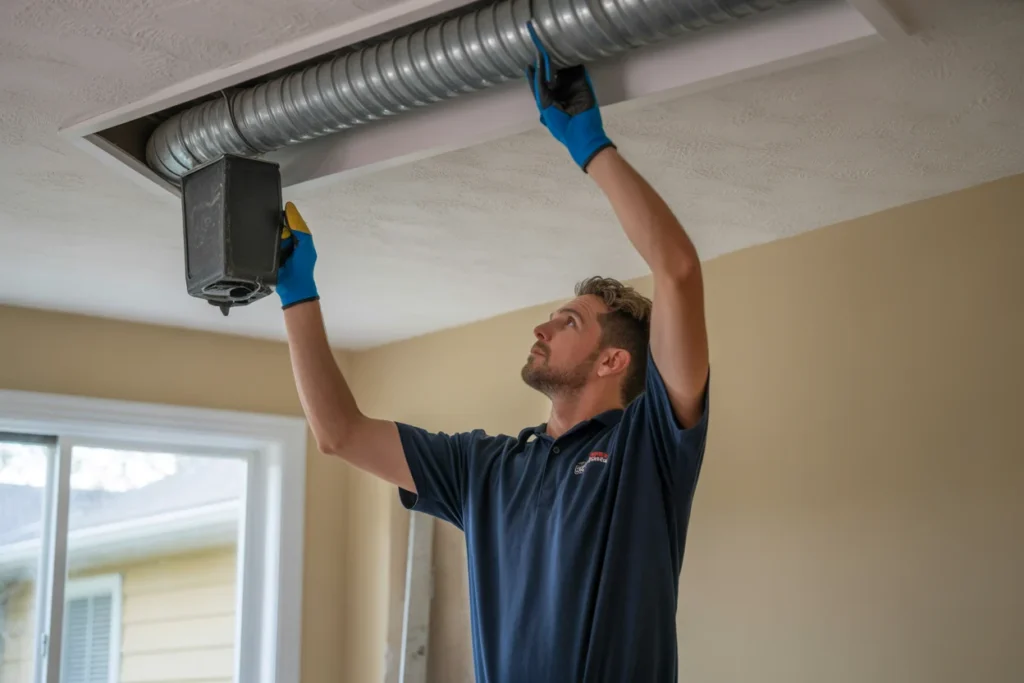
You see, cleaning HVAC ducts is all about getting rid of the visible things like:
- Dust
- Pet hair
- Debris
- Construction leftovers
- Allergens
Disinfecting, on the other hand, kills germs, bacteria, viruses, and other tiny bugs that might be hiding in your ducts. Also, it helps get rid of bad smells caused by things like mold or bacteria.
But here’s the catch: Disinfectants don’t clean dirt.
In fact, if there’s dust or debris still in your ducts, the disinfectant won’t work properly and it can even make things worse by trapping moisture. This is why, as per NADCA, you should first clean your ducts and then disinfect.
In short, here’s how air duct disinfection is different from cleaning:
| Cleaning | Disinfecting |
| Removes visible dirt, dust, pet hair, debris | Kills bacteria, viruses, and mold |
| Improves air flow | Targets bad odors and germs |
| Essential for disinfection to work | Works best on clean surfaces |
Because disinfectants only work on clean surfaces, professional air duct cleaning New Jersey is the essential first step before any air duct disinfection is considered.


Schedule Your Free Estimate Today
Contact us to improve your indoor air
quality with our expert cleaning services in NJ.
How to disinfect air ducts?
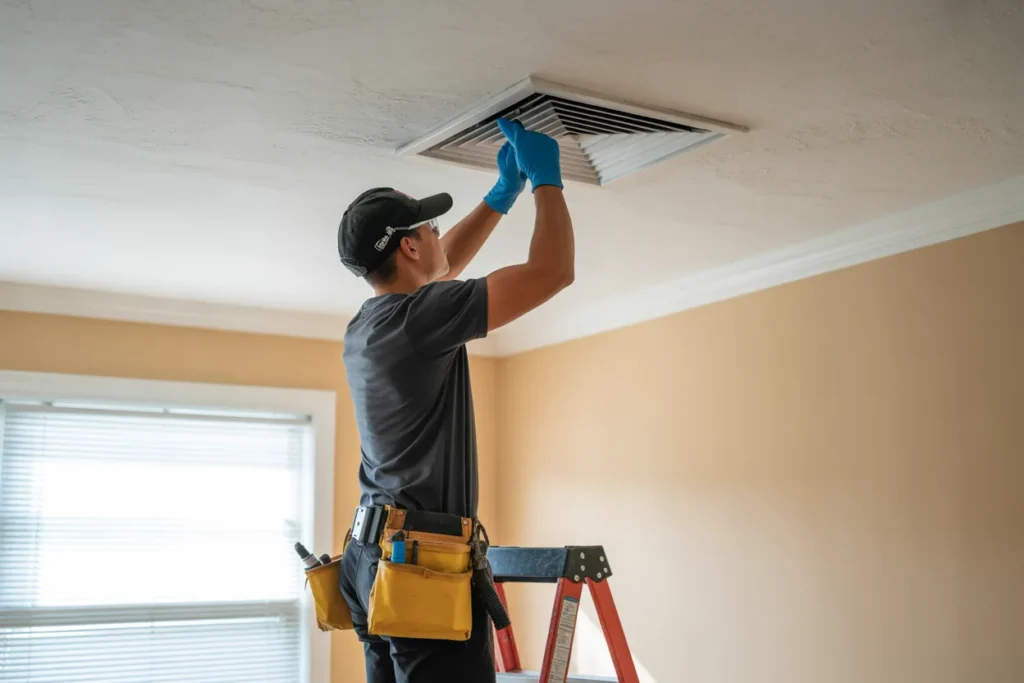
Tricky as it might seem, disinfecting your air ducts is actually a straightforward process if you do it right.
The key here is to follow the correct steps and make sure your ducts are clean, safe, and free of germs.
Overall, here’s how you can do HVAC air duct sanitization;
First, get professional-grade disinfectants only
Before you start sanitizing air conditioning ducts, I suggest you get EPA-registered products designed specifically for HVAC systems. These products are:
- Non-corrosive
- Low-odor
- Designed to evaporate quickly
- Safe when used correctly
And you should definitely use household cleaners like:
- Bleach
- Vinegar
- Essential oil fogging
- Ozone generators
- Unlabeled chemicals
These methods are either ineffective or potentially harmful.
Then, follow these steps to disinfect air ducts
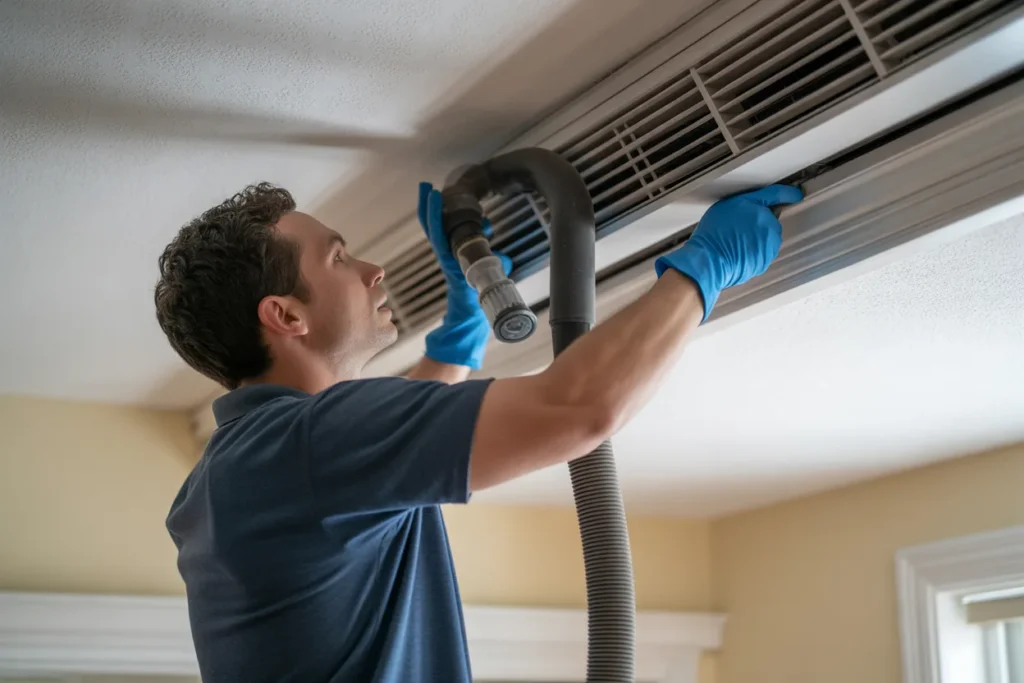
Once you’ve got the right kind of disinfectants, you can follow these steps and disinfect the ducts:
Step 1: Inspect the system
Before you do anything, you need to inspect your entire HVAC system. This step is all about checking for problems that might need attention before you disinfect. Here’s what you should look for:
- Visible contamination: Check for dirt, dust, or even mold inside your ducts. If you see mold, you’ll have to clean the ducts first before disinfecting them.
- Moisture issues: If there’s any sign of water in the ducts, that could lead to mold growth, so you need to addres that beforehand.
- Mold indicators: If you suspect that there are mold in air ducts, it’s a good idea to look closely for it. Mold can cause health issues, so I suggest you treat that first.
- Duct material type: Check if your ducts are metal or flexible. This will decide how you clean and disinfect them, as flexible ducts need a gentler approach.
This inspection ensures that disinfection actually works and that there are no hidden issues that could make the disinfection less effective.
Step 2: Clean the ducts first
Cleaning your ducts is essential before you start disinfecting. Disinfectants work best on clean surfaces, so you should remove all dust, dirt, and debris first. Here’s how you can do it:
- Seal the vents: Cover up the vents to prevent dust and debris from escaping into the rest of your house while you clean.
- Vacuum the ducts: You can use a vacuum or negative air machine to create suction that pulls dirt and debris from the ducts. This step is crucial because it ensures that nothing gets stuck or left behind.
- Clean the duct walls: You can use brushes or air whips to loosen up dirt stuck to the sides of the ducts. This helps the debris become loose and be sucked out.
- Remove debris: Finally, vacuum out all the dirt, dust, pet hair, and any other loose particles from the ducts.
If you skip this cleaning step, the disinfectant won’t work properly and could end up making things worse.
Step 3: Choose the right disinfection method
Once your ducts are clean, it’s time to apply disinfectant. One of the best methods for disinfecting air ducts is ULV or ultra-low volume fogging. It is safe, effective, and won’t leave your ducts too wet. Here’s how it works:
- Creates a fine mist: The fogging machine creates a mist that’s fine enough to reach all the corners of your ducts.
- Evenly coats surfaces: The mist ensures that all surfaces inside the ducts are covered evenly, disinfecting every part.
- Uses minimal moisture: ULV fogging uses very little moisture, so your ducts won’t get too wet, which can cause problems like mold growth.
- Reaches long ducts: It’s great for longer duct runs where air might not be able to reach easily.
ULV fogging is perfect for disinfecting. But remember, it doesn’t remove mold. If there’s mold, that needs to be dealt with separately.
Step 4: Apply the disinfectant
After you’ve selected the right disinfectant, it’s time to apply it properly. You don’t want to over-apply, so it’s important to focus on specific areas. Here’s how you can apply the disinfectant:
- Through access points: You’ll apply the disinfectant through small access points in your ductwork, which are usually found near the air handler or main duct lines.
- Near the air handler or trunk lines: These are the main areas where the air flows through, so you want to make sure these parts are disinfected.
- Sometimes at registers: Depending on your system, you might also apply the disinfectant near the registers, where air is pushed out into the rooms.
It’s important to not over-apply the disinfectant, as that can lead to excess moisture in your ducts.
Step 5: Ventilate and flush the system
Once you’ve applied the disinfectant, you need to clear out any lingering chemicals and freshen up the air. This is the final step in the process.
- Run the system to circulate fresh air: Turn on the HVAC system to allow the air to circulate throughout the ducts. This helps spread the disinfectant and fresh air throughout the house.
- Ventilate the home: Open windows or use fans to help air out any remaining smells or moisture. This also ensures the disinfectant dissipates properly.
- Occupants should leave for a bit: It’s a good idea to leave the house for a short while after disinfection to let the air clear out.
- A light odor is normal: You might smell a slight, temporary odor, but it should fade away. Strong chemical smells, however, are a sign that something went wrong.
Follow this final step and you’ll make sure your home is safe, it has good air quality, and the disinfectant has done its job without leaving behind chemicals.
In short, here are all the steps to disinfect your air ducts
| Step | What to Do |
| Step 1: Inspect the System | Check for visible contamination, moisture issues, and duct type. |
| Step 2: Clean the Ducts | Seal vents, create negative pressure, agitate duct walls, remove debris. |
| Step 3: Choose the Right Method | Use ULV fogging for effective, minimal-moisture disinfecting. |
| Step 4: Apply the Disinfectant | Apply carefully through access points, air handler, and registers. |
| Step 5: Ventilate & Flush | Run the system, ventilate the home, and clear lingering chemicals. |
When is air duct disinfection actually necessary?
Disinfecting your air ducts isn’t something you should do all the time. It is a targeted solution, and not a routine procedure.
So when should you consider it?
Here are a few situations where disinfection might actually be needed:
- Confirmed mold growth: If mold was found in your ducts, disinfection can help after the mold has been removed. But mold remediation comes first as disinfection won’t fix mold problems on its own.
- Flooding or sewage backup: If your home has experienced flooding or a sewage backup, disinfection can help get rid of bacteria and harmful microbes that could have made their way into your ducts.
- Rodent or pest contamination: If pests (like rodents or insects) have made their way into your ducts, disinfection can help clean up any biological contaminants they left behind.
- Persistent biological odors: Sometimes, you might have a bad smell that cleaning alone doesn’t fix. Disinfection can help remove any lingering biological odors caused by bacteria or mold.
- Bacteria contamination: Though it’s rare, bacteria can sometimes contaminate your ducts, especially if there’s been moisture buildup. In these cases, disinfection can help kill the bacteria and improve air quality.
In short, here’s when disinfection is actually necessary:
| Situation | Why Disinfection is Needed |
| Confirmed Mold Growth | Only after mold removal, to eliminate germs. |
| Flooding or Sewage Backup | To remove bacteria and harmful microbes. |
| Rodent or Pest Contamination | To clean biological contaminants left by pests. |
| Persistent Odors | To remove bad smells that cleaning doesn’t fix. |
| Bacteria Contamination | Rare, but can be disinfected if moisture issues exist. |
When you should not disinfect your air ducts?
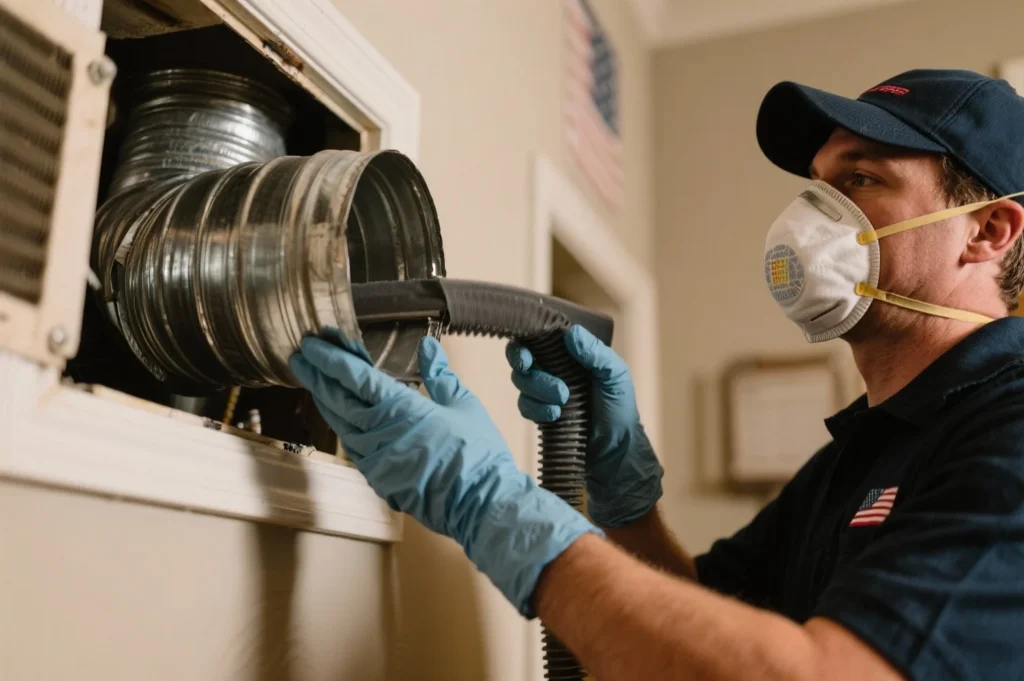
Now, let’s talk about when disinfection is not necessary. In most homes, you don’t need to disinfect your ducts. Here are a few times when you can skip the disinfection:
- Your ducts are just dusty but otherwise dry: If your ducts have some dust in them but there’s no mold, moisture, or pests, you don’t need to disinfect. A simple cleaning is usually enough.
- You’re doing routine duct cleaning: If you’re just cleaning your ducts as part of regular maintenance, disinfection isn’t needed. Cleaning the ducts to remove dust, hair, and debris is usually enough to keep things running smoothly.
- You’re trying to reduce allergies: If your goal is to reduce allergens in the air, cleaning the ducts is more important than disinfecting them. Disinfecting won’t remove the allergens like dust, pollen, or pet dander; cleaning will.
- You were told it’s just standard procedure: If someone tells you that duct disinfection is just a standard part of the cleaning process, you can question that. Disinfection is not always necessary, and it’s not something that should be done unless there’s a specific problem.
- No contamination was confirmed: If you haven’t found any mold, pests, or other contaminants, disinfection won’t do much. It’s unnecessary if your ducts are clean and dry.
- Routine fogging: Avoid fogging your ducts just for the sake of it. Experts discourage this, as it introduces chemicals into your system without providing any real benefit. It’s not going to improve air quality if there’s no actual contamination.
In short, routine fogging or disinfection can be a waste of time and money if it’s not needed. So, always make sure there’s a real reason for disinfection, and that cleaning comes first.
In short, here’s when disinfection is not necessary:
| Situation | Why Disinfection is Not Needed |
| Just Dusty Ducts | If there’sno moisture, mold, or pests, cleaning is enough. |
| Routine Cleaning | Cleaning alone keeps ducts in good condition. |
| Trying to Reduce Allergies | Cleaning is more effective for allergens than disinfection. |
| You were told It’s Standard Procedure | Disinfection isn’t necessary unless there’s contamination. |
| No Confirmed Contamination | If ducts are clean and dry, no need for disinfection. |
Bonus: Here are some common myths about air duct disinfection
Myth 1: Fogging kills all mold
Reality: No, mold roots inside insulation are unaffected.
Myth 2: If it smells clean, it worked
Reality: Strong odors often mean misuse.
Myth 3: Disinfection replaces cleaning
Reality: It does not.
Myth 4: More chemicals mean better results
Reality: It is false and dangerous.
Schedule Your Free Estimate Today
Contact us to improve your indoor air
quality with our expert cleaning services in NJ.
Final words
So far, I am sure you know exactly how to disinfect air ducts in your New Jersey home. Also, you know when you really need to disinfect and how you can do it right.
Air duct disinfection is not something you should do all the time. But when done right, it can improve your indoor air quality singifcantly.
Need experts to dinfect your air ducts in New Jersey?
You can get in touch with us!
At Clean Air Technologies, we are seasoned air duct cleaning and disinfection experts with three plus decades of expertise. And we’ve got all your air duct disinfection needs covered on a budget.
FAQs about air duct sanitization
Is air duct disinfection safe?
Yes, air duct disinfection is safe when done properly and only when it’s really needed.
Professionals use special disinfectants that are designed for HVAC systems and follow strict guidelines to make sure it’s done right.
However, if done incorrectly or unnecessarily, it can be risky and cause more harm than good.
So, always make sure disinfection is needed and done by someone experienced.
How long does duct disinfecting last?
Duct disinfection is not permanent. Its effectiveness depends on things like how much moisture is in your home and how clean your ducts stay.
If you have moisture problems, like leaks or high humidity, the disinfection may not last as long.
Regular maintenance and moisture control are key to keeping your air ducts clean and free of contaminants. And if your ducts get dirty again, disinfection might need to be repeated.
Does disinfecting help allergies?
Disinfecting your ducts won’t help allergies as much as cleaning them.
Dust, pet dander, and pollen are common allergens that get trapped in your ducts. Cleaning your ducts to remove these particles is more effective for reducing allergy symptoms.
Disinfecting only targets bacteria, mold, or odors, and doesn’t remove allergens. If you’re trying to ease allergies, focus on regular cleaning instead of disinfection.
Can disinfecting remove mold completely?
No, disinfecting cannot completely remove mold.
Mold removal is a separate process that requires more than just cleaning or disinfecting.
Mold grows deep in the materials of your ducts and may even be inside insulation, so just spraying disinfectant won’t solve the problem.
You’ll need a professional mold remediation service to fully remove mold and fix the underlying issues, like moisture problems, before disinfection.