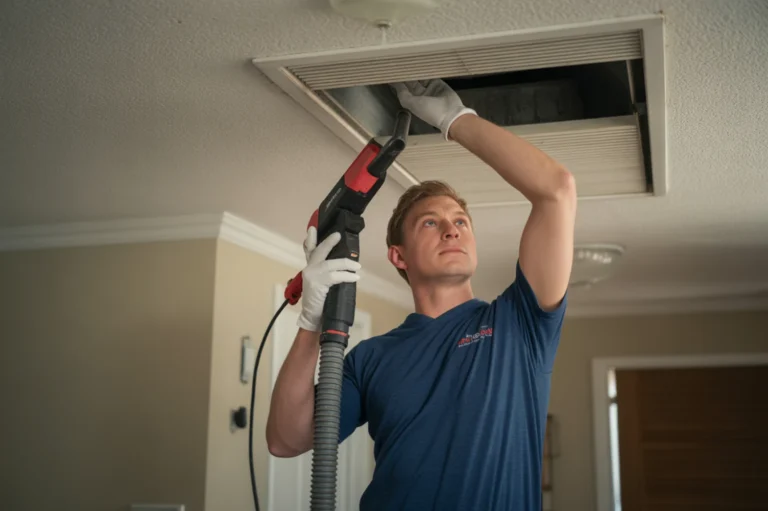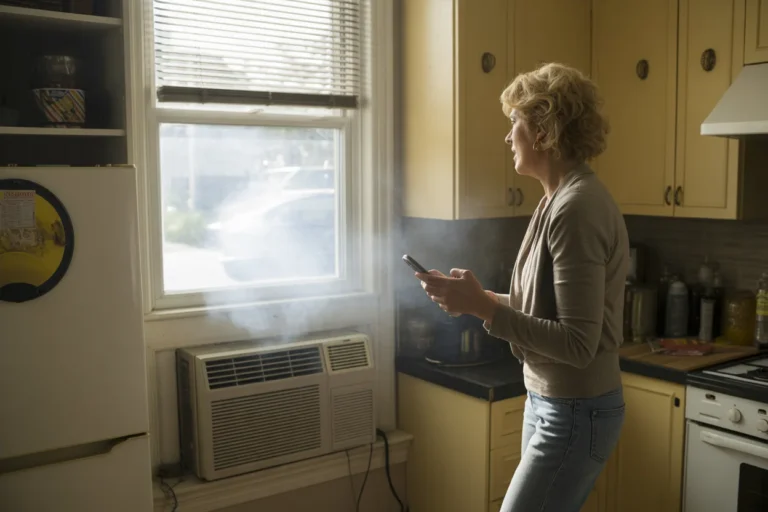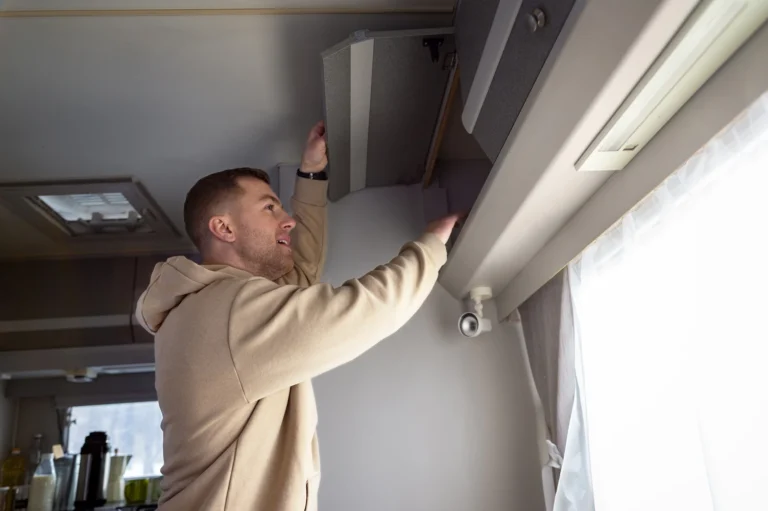


You turn on the AC or heater, and there is a strange musty smell. It is kind of damp, a little earthy, and definitely not right.
At first, you might ignore it, thinking it’s just the old filter or that the system hasn’t run in a while. But over time, it lingers and you start to wonder: What’s actually blowing through these vents?
Here’s the truth: That smell could be mold hiding inside your air ducts.
And while it might seem harmless at first, mold in your duct system can make you sick and even lead to bigger problems. This includes worsened allergies, unexplained headaches, poor indoor air quality, and even long-term damage to your home, which is why professional air duct cleaning in new jersey is often the fastest way to stop mold at the source.
The tricky part?
You don’t know what does mold in air ducts look like.
That’s because it could be masking itself as dust or black spot and quietly spreading through your ductwork every time the system turns on.
In this guide, I will walk you though 8 clear signs of mold in air ducts. I will show you what it looks like, what causes it, and what can you do about it.
So, let’s get started.
Table of Contents
Key takeaways
- Mold in air ducts often smells musty or damp.
- It can appear black, green, white, gray, or even yellow.
- Mold spreads through moisture, leaks, and poor ventilation.
- Common signs: visible growth, black dust, worsening allergies.
- Mold can make you sick if left untreated.
- It often returns if only surface-cleaned.
- DIY kits can help detect, but pros should remove.
- Prevent mold by fixing moisture problems and cleaning regularly.
What does mold in air ducts look and feel like? 8 Red Flags!
For starters, mold in air ducts can look like black, green, white, or even gray spots or patches. And depending on the type of mold, it might be fuzzy, slimy, or powdery.
You’ll often find it around vent covers, inside duct walls, or near the air handler.
Mold usually feels damp or sticky to the touch and may give off a strong and musty odor. So, if you see strange stains or buildup in or around your vents, it could be mold growing.
Overall, here are the symptoms of mold in air ducts:
| Symptom | What to Look or Smell For |
| Musty smell | Damp or earthy odor when HVAC is running |
| Visible growth | Spots or patches near vents or ducts |
| Black dust | Dark particles blowing from vents |
| Allergy flare-ups | Sneezing, coughing, itchy eyes indoors |
| Water stains or moisture | Stains, condensation, or damp insulation |
| Mold in filter or grille | Fuzzy spots on or inside vent/filter |
| Mold returns after cleaning | Repeated smell or spots in same area |
| Fuzzy/splotchy patches in ducts | Irregular, fuzzy or dotted textures inside vents |
Let’s have a detailed look.
1. Musty smell when you turn the HVAC on

One of the first signs that something’s not right inside your air ducts is the smell.
Here, every time you turn on your AC or heater, you’ll notice a damp, musty, or old-basement-like odor.
This is a red flag because it’s not just dirty air or normal dust, but mold growing somewhere inside the ductwork.
But why does it smell like that?
Well, mold gives off gases as it grows, creating that funky or earthy scent. And since your HVAC system moves air all around your home, it also spreads that smell through every room.
So, even if you can’t see mold, if you can smell it, that’s reason enough to take a closer look.


Schedule Your Free Estimate Today
Contact us to improve your indoor air
quality with our expert cleaning services in NJ.
2. Visible mold growth around vents or duct covers
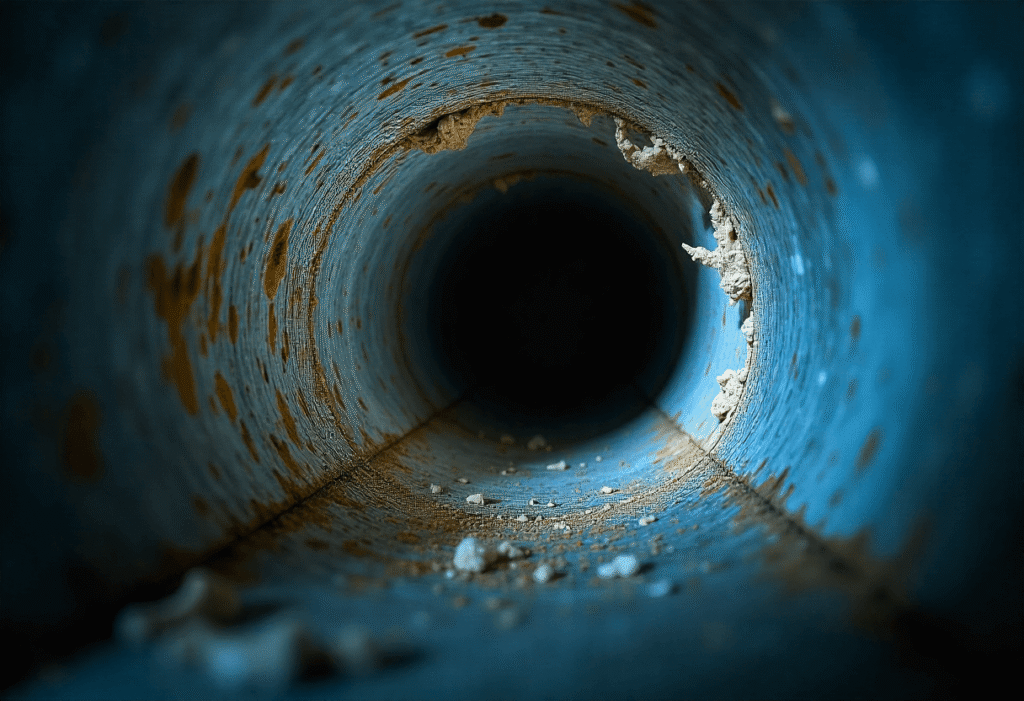
Sometimes, mold doesn’t try to hide and it shows up right in front of you.
Take a close look at your vent covers, air returns, or the area around them. If you see any spots, streaks, or fuzzy patches that look out of place, it could be mold. Regular air vent cleaning can help eliminate dust and contaminants that provide a breeding ground for mold.
Here’s mold on vents actually look like:
- Colors: Black, dark green, gray, brown, or even yellow
- Texture: It might look fuzzy, slimy, or powdery
- Shape: It can show up as small spots, splotchy smears, or full-on patches
Now, some people mistake it for dirt or dust buildup. But if it keeps coming back even after you clean it, it’s probably mold.
Pro tip: Don’t forget to check the ceiling or wall around the vent. That’s because sometimes mold spreads beyond the cover, hinting at a bigger problem inside the system.
3. Black dust or particles blowing from vents

This one’s easy to miss.
You might have noticed black dust or tiny dark particles blowing out when the air kicks on. Maybe they settle on your furniture, window sills, or even your floor.
This might not be regular dust but mold spores or fragments breaking off from inside your air ducts.
Here’s how it works:
When mold dries out, it becomes brittle. And the airflow from your HVAC system breaks it into dry and loose pieces, sending them flying through your vents and right into the air you’re breathing.
Moreover, people also notice dark smudges around the vent covers, like a soot-like ring. This is another clue that mold is growing inside and blowing out slowly over time.
4. Allergy worsens when you’re indoors

If your body feels off at home but fine when you’re outside your air ducts might be to blame.
Why?
You see, mold spores in your HVAC system don’t just stay in the vents but get pushed out into the air you breathe. And if you or someone in your household is sensitive, this mold-infestation in ducts can lead to all kinds of allergy-like symptoms.
Here’re some common symptoms you or your family members might experience:
- Sneezing, coughing, or sore throat
- Itchy or watery eyes
- Runny nose or nasal congestion
- Headaches or dizziness
- Skin irritation
- Feeling tired or foggy
In fact, some people even report tightness in the chest or trouble breathing, more so if they’ve got asthma, allergies, or weak immune systems.
So if you feel crummy at home, but totally fine elsewhere, your home’s air is most likely mold infested.
5. You notice water Stains, condensation, or moisture around duct
Mold thrives the most on one thing: moisture.
So, water stains on the ceiling around your vents, damp spots near your ductwork, or condensation on or inside the ducts are all red flags. These signs mean there’s too much humidity, and mold might already be moving in. In addition to fixing leaks, air filter replacement can help improve airflow and reduce moisture that contributes to mold growth.
Here are some symptoms of mold in air ducts you should look out for:
- Water rings or stains around ceiling vents
- Rust or corrosion on duct joints
- Insulation that feels damp or looks discolored
- Drips or puddles near air handler units or attic ducts
Even if you don’t see mold yet, moisture is the first ingredient it needs to grow. And in many cases, by the time you spot a water stain, mold has already started forming inside the ducts where you can’t see it.
Meaning if your duct system looks sweaty or your ceiling looks stained, it’s time to take a closer look.
6. You can clearly see mold inside filter, grille, or duct opening

Sometimes, you don’t even need to go deep inside the ductwork to spot mold as it’s right there at the surface.
So the next time you’re changing your air filter or cleaning a vent cover, take a close look. If you see dark spots, fuzzy growth, or anything that doesn’t wipe off easily, there’s a good chance it’s mold.
Here’s where you should check for mold:
- The back side of the vent cover or grille
- The edges and corners of the air filter
- The inside walls of the duct (use a flashlight)
- Around the blower or air handler if accessible
Mold in these spots usually means it’s also growing deeper inside the system. And it often starts in the filter or return vents, where air first enters the ducts and moisture can collect.
7. Mold comes back even after you clean it

You clean the vent and it looks absolutely fine. Even that musty smell’s gone.
But a couple weeks later, you start to notice mold over again.
That’s one of the clearest signs that there’s mold hiding deeper in your duct system.
You see, surface-level vent cleaning like wiping down vent covers or spraying some disinfectant has its benefits. However, if the root of the problem is still inside the ducts or the HVAC unit itself, the mold will keep coming back.
Here are some common clues:
- Mold spots reappear in the same exact place
- The musty smell fades but returns soon after
- Allergy symptoms keep flaring up even after cleaning
This happens a lot because the actual mold colony might be living further inside on insulation, around bends, or near the evaporator coil where.
Bottom line: If you feel like you’re cleaning the same spots over and over again, don’t ignore it as there’s a bigger problem under the surface.
8. You see fuzzy, splotchy, or speckled textures inside vents

Sometimes mold can be sneaky. So much so you that you’d not even notice it at first.
However, if you shine a flashlight into your vents or behind a grille and see patches that look fuzzy, dusty, or speckled, that could be mold growth. And in this case, it is growing on a layer of dust inside the duct.
Here’s what you should look for:
- Fuzzy textures like cotton or felt
- Splotchy patches irregular shapes, not uniform like dust
- Speckled patterns like little dots in clusters
- Unusual colors like dark green, gray, brown, yellowish, even bluish
These are clear signals that there is mold in your system.
Here are the most common mold types in air ducts:
| Mold Type | Appearance | Common Traits |
| Stachybotrys (Black mold) | Dark green-black, slimy | Needs lots of moisture; they’re potentially toxic |
| Alternaria | Dark green or brown, fuzzy | Often found near damp areas |
| Penicillium | Blue-green, velvety or powdery | Spreads quickly in air |
| Aspergillus | White, green, or gray | Very common in HVAC systems |
| Ulocladium | Black and fuzzy | Grows in areas with water damage |
Is it mold or just dust? Here’s how to tell:
Not everything you see inside your vents is mold, even if it looks dark or suspicious. A lot of the time, it’s just regular dust buildup.
But the tricky part is that mold and dust can look very similar. That’s why it’s important to look beyond color and pay attention to texture, smell, and how it behaves over time.
Here’s how you can tell if it is mold or just dust:
It’s likely mold if:
A. It looks fuzzy, patchy, or uneven
Mold rarely looks smooth or uniform. Instead, it appears irregular, with fuzzy edges or blotchy patches that spread unevenly across a surface.
Also, it might have slight color variations within the same area, which makes it look more organic and alive compared to flat, consistent dust buildup.
B. It comes back quickly after cleaning
If you clean a spot and it looks fine at first but returns within days or weeks, that’s a strong sign of mold.
You see, unlike dust, mold grows back because the root problem still exists. It usually indicates that there’s hidden moisture or growth deeper inside the duct system.
C. There’s a musty smell along with it
Mold often gives off a distinct musty or damp smell, similar to a wet basement or old clothes left in a closed space.
This odor becomes more noticeable when your HVAC system runs, as air pushes the smell through your vents and spreads it across different rooms.
D. It feels slimy or damp (not dry)
When touched carefully, mold might feel slightly wet, sticky, or slimy, especially if it’s actively growing. This happens because mold thrives in moisture-rich environments.
Dust, on the other hand, always feels dry and powdery, so texture can be a helpful clue when identifying the difference.
It’s likely dust or dirt if:
A. It’s dry and wipes away easily
Dust is loose and dry, so it comes off surfaces without much effort. A simple wipe with a cloth usually removes it completely.
It doesn’t cling or smear like mold might. So, if the area stays clean for a while after wiping, it’s most likely just regular dust buildup.
B. It looks like a fine, even layer
Dust tends to settle evenly across surfaces, forming a thin and consistent layer. It doesn’t create patches or clusters unless disturbed.
This uniform appearance is an essential difference from mold, which usually grows in irregular shapes and spreads unevenly.
C. There’s no smell
Dust doesn’t produce any noticeable odor on its own. Even when there’s a lot of dust, the air smells neutral.
So, if you’re not noticing any musty or damp scent when your HVAC system is running, the buildup you see is far more likely to be harmless dirt.
D. It doesn’t return quickly
Once you clean dust, it usually takes time to build up again. It settles gradually from the air and doesn’t suddenly reappear in the same spot.
Meaning if the surface stays clean for a while after wiping, it’s a clear sign you’re dealing with dust, not mold growth.
In short, here’s how to tell if it is mold or just dust:
| Feature | Likely Mold | Likely Dust |
| Appearance | Fuzzy, patchy, uneven, irregular shapes | Fine, smooth, and evenly spread layer |
| Texture | Damp, sticky, or slightly slimy | Dry and powdery |
| Smell | Musty, damp, or earthy odor | No noticeable smell |
| After Cleaning | Comes back quickly in same spot | Takes time to build up again |
| Color Pattern | Uneven with slight variations | Consistent and uniform |
What to do if you suspect mold in your air ducts?
If you’ve noticed one (or several) of the mold signs we just covered, don’t panic, but don’t ignore it either.
Mold won’t go away on its own. And the longer it sits in your air system, the worse it can get.
So, here’s what you should do:
1. Inspect the vents
Turn off your HVAC, remove a few vent covers, and use a flashlight to peek inside. Look for unusual spots, fuzzy patches, or black dust around the edges.
2. Smell for mustiness
Run your system for a few minutes and walk through your home. If there’s a strong earthy, damp, or mildew smell blowing from the vents, that’s a mold sign.
3. Use a DIY mold test kit
DIY mold test kits are easily available online or at hardware stores. And although they’re not the best solution, they can still confirm if mold spores are present in your air ducts.
4. Call in a professional
If you’ve seen visible mold or had recurring symptoms, it’s time to bring in a mold remediation or HVAC specialist.
Here’s what professionals can do:
- Inspect deeper parts of your duct system
- Identify the mold type (if needed)
- Fully clean and sanitize the ducts
- Recommend fixes to prevent it from coming back
5. Fix the root cause
Mold needs moisture to grow. So, if your ducts are sweating, leaking, or not properly insulated that needs to be fixed too, or else, mold will just come back.
In short, here’s what to do if you suspect mold:
| Step | Action |
| 1. Inspect vents | Use a flashlight to look for stains or spots |
| 2. Smell test | Run the system and walk around to sniff for musty odors |
| 3. DIY mold kit | Use a test kit to check for spores (basic screening) |
| 4. Call professionals | For deep cleaning and root-cause removal |
| 5. Fix moisture issues | Repair leaks, insulate ducts, and reduce indoor humidity |
Curious how to prevent mold from coming back?
Read my blog about how to get rid of mold in your air ducts.
Schedule Your Free Estimate Today
Contact us to improve your indoor air
quality with our expert cleaning services in NJ.
Final words
Mold in your air ducts isn’t always easy to spot.
However, your nose, your eyes, and even your body can give you clues.
That musty smell when the AC runs?
The weird black dust around your vents?
The allergy symptoms that only show up at home?
These are all signs your air system might be hiding something nasty.
But the good news is you can still fix it. Just trust your gut feeling and schedule a complete HVAC cleanup.
Got more questions or want to get your air ducts professionally cleaned?
You can get in touch with us!
At Clean Air Technologies, we are seasoned duct and HVAC cleaning professionals with three decades of experience delivering clean indoor environments throughout New Jersey. And from ducts to vents to full HVAC maintenance, we’ve got it all covered on a budget.
FAQs about mold in air ducts
What causes mold in air ducts?
Mold in air ducts is usually caused by excess moisture, poor ventilation, or leaks.
Also, when warm and humid air meets cool duct surfaces, it forms condensation, creating the perfect damp environment for mold to grow and spread.
Where does mold grow inside your HVAC system?
When people think of mold in duct work, they usually imagine it sitting inside the ducts alone.
But here’s the truth: Mold often starts outside the ducts first, and then spreads.
You see, your HVAC system has multiple parts where moisture builds up, and any of these can become a breeding ground.
Here are the most common spots where mold hides:
- Evaporator coils: These stay wet due to condensation and are one of the most common starting points
- Drain pan: If water doesn’t drain properly, it becomes stagnant and mold-friendly
- Air ducts: Especially if they’re poorly insulated or leaking
- Air filters: Dirty filters trap moisture and organic debris
- Blower components & air handler: Because they’re dark, enclosed, and often humid
Can air duct mold make you sick?
Yes. In fact, dirty air ducts can make you sick by triggering allergy-like symptoms such as sneezing, coughing, itchy eyes, headaches, and even worsening asthma when mold spores circulate through your HVAC system.
Some mold types, like black mold or white mold in air ducts, might even cause more serious health issues if left untreated.
What does mold in air vents smell like?
People describe smell from moldy air vents as a musty, damp, or earthy smell, kind of like a wet basement or old socks. If you notice that smell when the AC or heat is running, it could be mold.
Is it dangerous to run the HVAC if there’s mold in the ducts?
It’s not immediately dangerous for most people, but it’s not a good idea.
Mold spores can circulate through your air and cause health issues over time, especially for kids, seniors, or people with allergies or asthma.
Can I clean mold out of air ducts myself?
Only small surface spots around vent covers might be safe to clean with a disinfectant and mask.
But any mold on air vent deeper in the system should be handled by professionals. After all, you don’t want to spread spores or damage your HVAC.
How do professionals clean mold from ducts?
They use HEPA vacuums, antimicrobial sprays, and sometimes fogging equipment to sanitize the system. They’ll also find and fix what’s causing the moisture so it doesn’t come back.
Will cleaning my air ducts stop mold from coming back?
Not by itself.
You’ll also need to reduce moisture (fix leaks, control humidity), change filters regularly, and schedule occasional checkups.