
Are you noticing ice forming on your air conditioner?
If yes, this is a clear sign your AC’s evaporator coil is freezing.
And this isn’t just your AC. A frozen evaporator coil is among the most common air conditioning problems homeowners experience during New Jersey summers.
In fact, a lot of people don’t even realize there’s an issue until their AC suddenly stops cooling, starts blowing warm air, or they notice water leaks from the AC.
Now, an evaporator coil never freezes during normal operation. So, if it is covered in ice, there is definitely something preventing your air conditioner from working the way it should.
Thankfully, a frozen AC coil doesn’t always mean you need a big repair. The problem is mostly caused by restricted airflow or a simple maintenance issue.
In this blog, I will explain everything, including:
- Why is your air conditioner evaporator coil freezing
- How to tell if your evaporator coil is frozen
- The most common reasons an AC coil freezes
- How to fix a frozen evaporator coil
- When you should call an HVAC professional
So, let’s get started.
Table of Contents
Key takeaways
- An evaporator coil should never freeze during normal operation.
- Restricted airflow is one of the most common causes of a frozen AC coil.
- Dirty air filters, blocked vents, dirty coils, and low refrigerant can all cause the evaporator coil to freeze.
- Running your AC with a frozen coil can damage the system and increase repair costs.
- Some issues can be fixed with basic HVAC maintenance, while others require professional service.
- Regular filter changes and annual HVAC maintenance can help prevent frozen evaporator coils.
Why is your air conditioner evaporator coil freezing?
To understand why an air conditioner evaporator coil freezes, you need to first know what the evaporator coil actually does.
For starters, the evaporator coil is located inside your indoor air handler. And its job is to absorb heat from the air inside your home.
Here’s how it works: As warm indoor air passes over the evaporator coil, the refrigerant inside the coil absorbs that heat. At the same time, the coil removes excess humidity from the air.
Now, under normal conditions, this process keeps your home cool. But problems begin when the evaporator coil gets too cold.
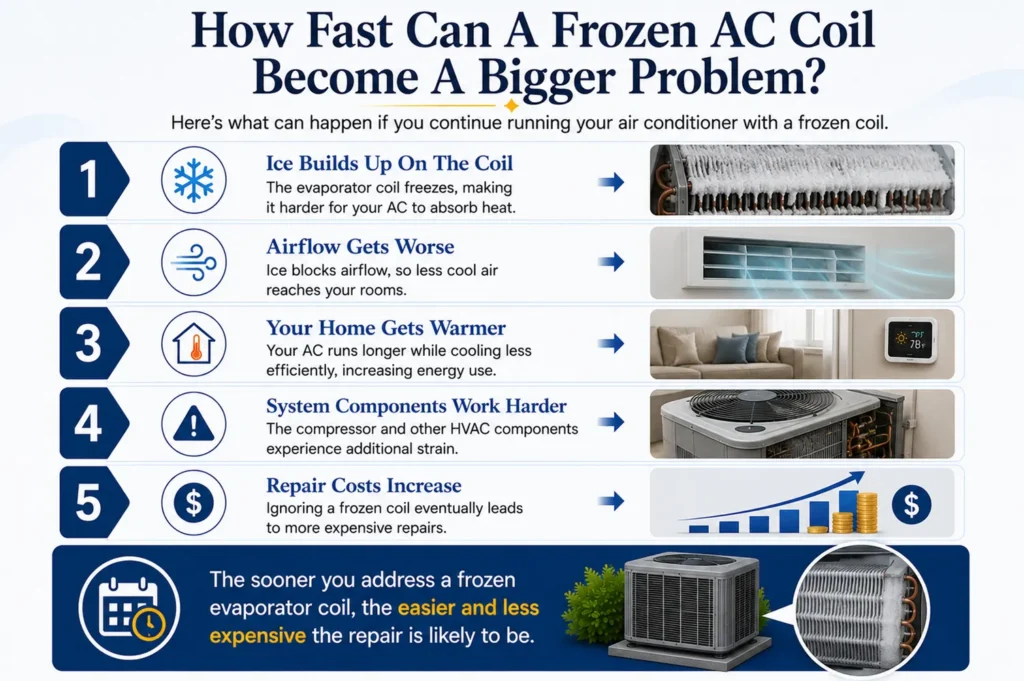
In this case, instead of simply removing heat from the air, moisture on the surface of the coil starts freezing into ice. And as more moisture freezes, the layer of ice becomes thicker and thicker.
Eventually, the ice blocks airflow across the coil, making it even harder for your air conditioner to cool your home.


Contact us to improve your indoor air
quality with our expert cleaning services in NJ.
How to tell if your evaporator coil is frozen?
Sometimes, the signs of frozen AC coil are obvious. But the other times, they’re much harder to spot.
That’s because since the evaporator coil is inside the indoor unit, you don’t see the ice unless you remove the access panel.
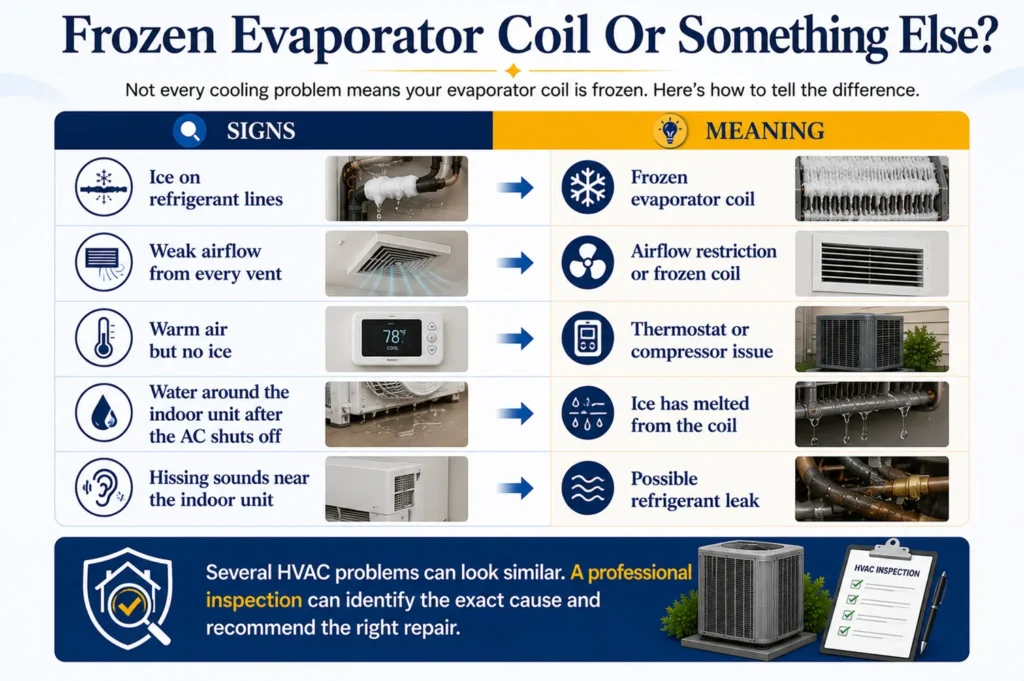
Thankfully, your air conditioner usually gives you several warning signs before the problem gets that far. Some of the most common frozen evaporator coil symptoms include:
- Warm air coming from your vents
- Weak airflow throughout your home
- Ice forming on the refrigerant lines or indoor unit
- Water leaking around the indoor air handler after the ice melts
- Your AC running constantly without cooling the house
- Higher-than-normal energy bills
- Increased indoor humidity
If you notice one or more of these signs, turn your air conditioner off and let the ice thaw before trying to diagnose the problem further.
Running an AC with a frozen evaporator coil can put extra strain on the compressor and other components, which can cause more damage.
Air conditioner evaporator coil freezing: Here are the most common reasons it is happening
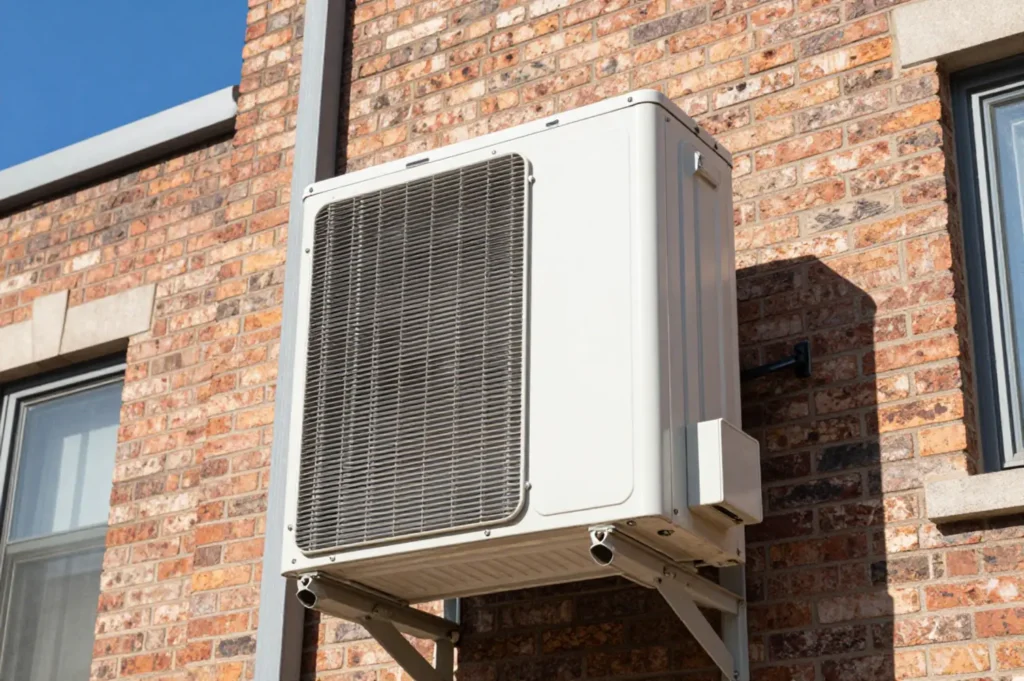
Air conditioner evaporator freezing is caused by a few common HVAC problems. And while some of them are related to lack of routine maintenance, others require professional repairs.
Here are some of the most common causes:
1. Dirty HVAC air filter
A dirty air filter is one of the most common reasons what causes an AC unit to freeze up.
You see, your HVAC air filter is responsible for trapping dust, dirt, and other airborne particles before they enter the system.
But over time, the filter becomes clogged. And when that happens, less air is able to flow over the evaporator coil.
Here’s why that’s a problem: The evaporator coil relies on a steady flow of warm indoor air to absorb heat. So when airflow becomes restricted, the coil gets colder than it should.
Eventually, the moisture on the coil freezes, creating a layer of ice that continues to grow as the system runs.
Now, this is also one of the easiest problems to fix, all you need is an air filter replacement.
2. Blocked or closed air vents
Closed vents can also contribute to an indoor AC coil freezing up. Here’s why:
Your air conditioner is designed to circulate a specific amount of air throughout your home. But when supply or return vents are blocked by furniture, rugs, or even intentionally closed, airflow gets restricted.
As a result, the evaporator coil can’t absorb enough heat from the air passing over it. This allows the coil to become too cold and eventually freeze.
3. Dirty evaporator coil
Dust and debris can build up directly on the evaporator coil. And while you might not see it, that layer of dirt acts like insulation.
So instead of efficiently absorbing heat from your home’s air, the dirty coil struggles to transfer heat properly.
And as the coil temperature continues to drop, condensation begins freezing on its surface. In fact, the longer the system runs, the thicker the ice becomes.
Pro tip: Cleaning an evaporator coil is usually best left to HVAC cleaning professionals, since the coil is delicate and can be damaged if handled improperly.
4. Low refrigerant levels
Refrigerant allows your air conditioner to absorb heat from inside your home. But if your HVAC system has a refrigerant leak, the pressure inside the evaporator coil drops.
This causes the coil to become much colder than normal. Eventually, moisture on the coil freezes into ice instead of draining away as condensation.
Here, it’s important you understand that refrigerant doesn’t get used up. So, if the refrigerant level is low, there’s a leak somewhere in your HVAC system that needs to be repaired.
Note: Refrigerant leaks should always be repaired by a licensed HVAC technician. Simply adding more refrigerant without fixing the leak won’t solve the problem.
5. Blower fan problems
Your blower fan plays an important role in keeping your air conditioner working properly. Its job is to move warm indoor air across the evaporator coil.
However, if the blower motor begins failing, the fan belt becomes damaged, or the blower wheel gets clogged with dirt, airflow can drop significantly.
And without enough warm air moving across the coil, temperatures continue falling until ice begins to form.
6. Thermostat or electrical issues
Sometimes, your thermostat or another electrical component can also cause the system to run longer than it should.
For instance, if the blower fan isn’t operating properly but the cooling cycle continues, the evaporator coil might become cold enough to freeze. Although this isn’t as common as airflow or refrigerant issues, it can happen.
A professional inspection can determine whether the issue is related to the thermostat, control board, or another electrical component.
In short, here are the most common reasons behind air conditioner evaporator freezing:
| Problem | What Happens |
| Dirty air filter | Restricted airflow causes the evaporator coil to freeze |
| Blocked supply or return vents | Reduced airflow lowers the coil temperature |
| Dirty evaporator coil | Dirt prevents proper heat transfer and leads to ice buildup |
| Low refrigerant | Low pressure causes the coil to become too cold |
| Blower fan problems | Not enough warm air passes over the coil |
| Thermostat or electrical issues | The system might run improperly and allow the coil to freeze |
How to fix a frozen evaporator coil?
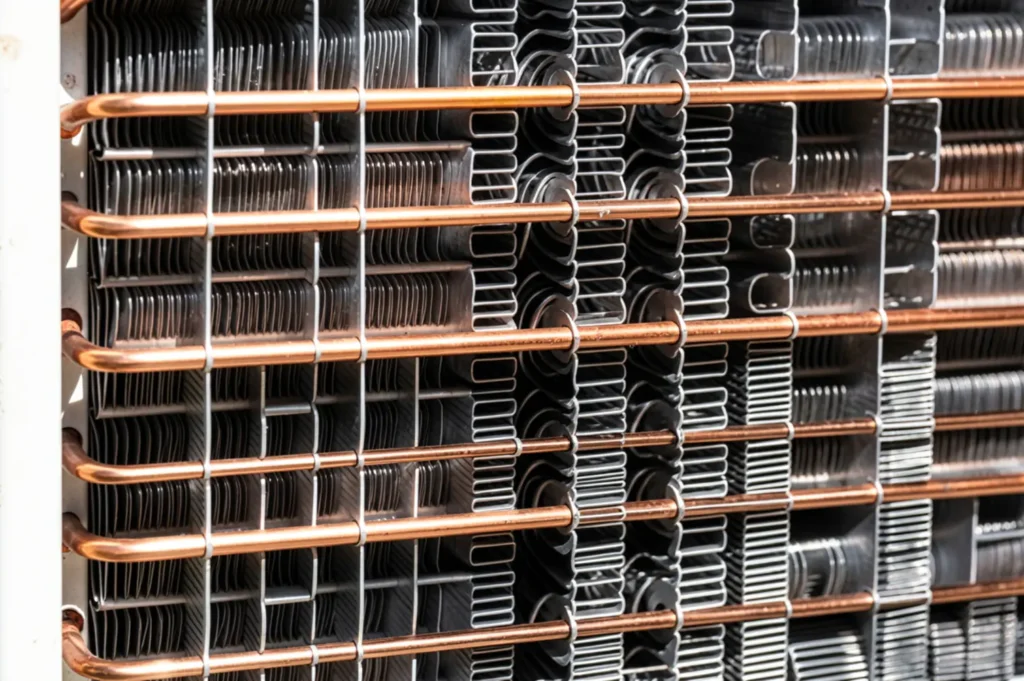
Once you’ve identified the possible cause of the problem, the next step is fixing it before it leads to more serious HVAC damage.
The good news is that some cases of air conditioner evaporator coil freezing can be resolved with simple maintenance.
Here are some practical ways to fix a frozen evaporator coil:
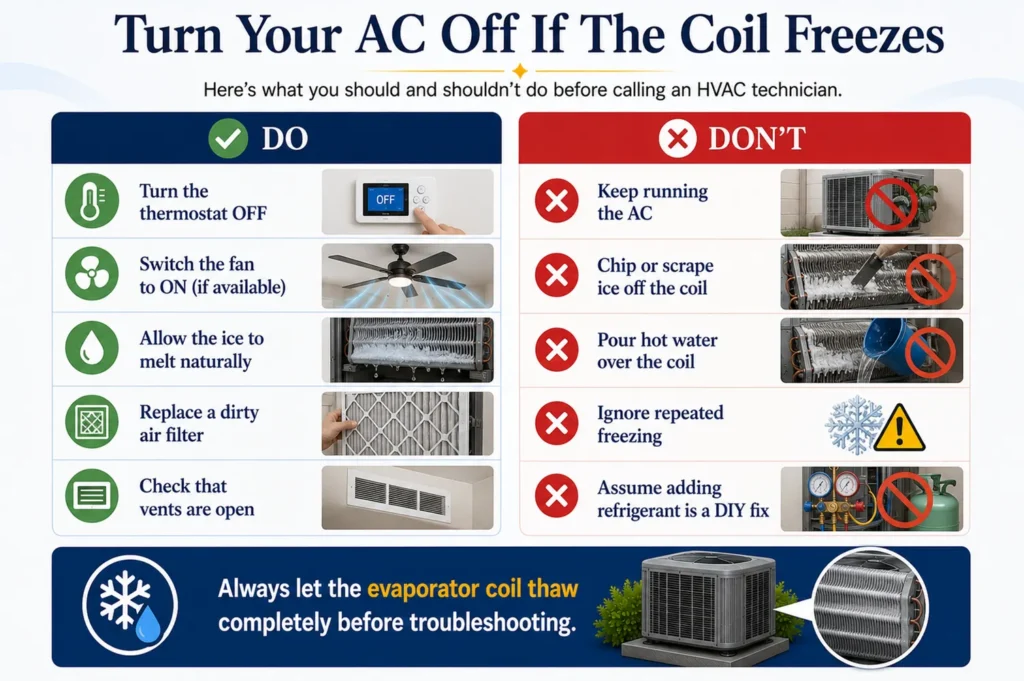
1. Turn off the air conditioner and let the coil thaw
If the evaporator coil is covered in ice, continuing to run the system will only make the problem worse.
Instead, switch the thermostat to OFF and, if possible, turn the fan to ON. This helps circulate warm air over the coil and speeds up the thawing process.
Depending on how much ice has built up, it can take anywhere from a few hours to a full day for the coil to thaw completely.
Important: Never try to chip or scrape the ice off the coil. The aluminum fins are delicate and can be damaged easily.
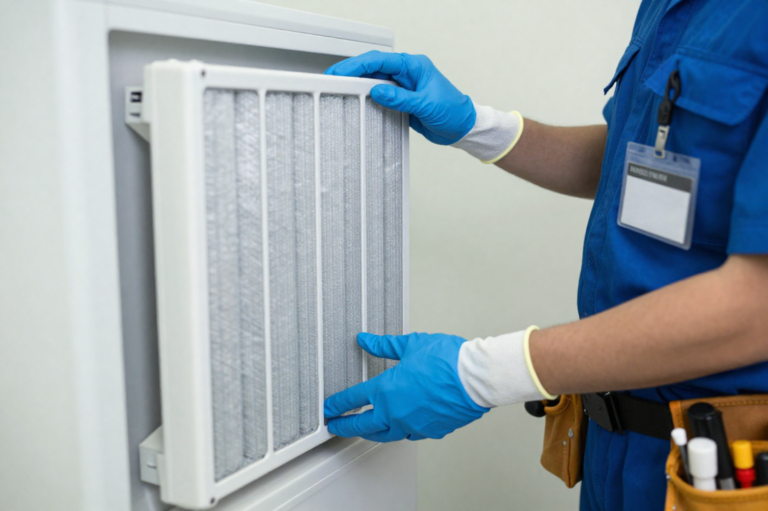
2. Replace the HVAC air filter
If your air filter looks dirty, replace it before restarting the system.
A clogged filter is one of the leading causes of a frozen AC coil, and installing a clean filter can restore proper airflow.
Here’s how to replace the filter:
- Turn off the HVAC system.
- Locate the air filter.
- Remove the old filter.
- Install a new MERV 8 or MERV 10 filter that matches your system’s specifications.
- Turn the system back on after the coil has completely thawed.
Pro tip: Replace your HVAC air filter every 1-3 months.
3. Check that your vents are open
Walk through your home and make sure your supply and return vents are fully open. Also, check that furniture, curtains, or rugs aren’t blocking airflow.
Even a few blocked vents can reduce airflow enough to contribute to an AC evaporator coil frozen in ice.
4. Schedule professional service for refrigerant or mechanical problems
If you’ve replaced the air filter, opened the vents, and allowed the coil to thaw, but the problem keeps coming back, there’s likely a deeper issue.
This might include:
- Low refrigerant
- A refrigerant leak
- Blower motor problems
- Dirty evaporator coil
- Electrical or thermostat issues
These repairs require specialized equipment and should always be handled by a licensed HVAC technician.
In short, here’s how to fix a frozen AC coil:
| Method | What It Does |
| Turn off the AC | Allows the evaporator coil to thaw completely |
| Replace the air filter | Restores proper airflow through the system |
| Open blocked vents | Improves air circulation across the coil |
| Schedule professional service | Repairs refrigerant, blower, or electrical problems |
Bonus: Here’s how to prevent your evaporator coil from freezing
| Prevention Step | What To Do | Benefit |
| Change air filters regularly | Replace filters every 1-ma3 months | Maintains proper airflow and reduces the risk of freezing |
| Keep vents open and unobstructed | Avoid blocking supply and return vents | Improves airflow throughout the system |
| Schedule annual HVAC maintenance | Have your system professionally inspected each year | Helps identify small issues before they become expensive repairs |
| Keep the evaporator coil clean | Schedule professional coil cleaning when needed | Improves heat transfer and system efficiency |
| Address cooling problems early | Don’t ignore weak airflow or poor cooling | Prevents larger HVAC issues later |
When should you call a professional HVAC technician?
Some causes of a frozen evaporator coil are simple enough to address yourself.
For instance, replacing a dirty air filter or opening blocked vents might solve the problem.
However, there are times when professional service is the safest option.
Here are some signs it’s time to call an HVAC technician:
| Problem | Why Professional Help Is Needed |
| Low refrigerant | Requires leak detection and EPA-certified refrigerant handling |
| Frozen coil that keeps returning | Usually indicates an underlying HVAC problem |
| Blower motor issues | Mechanical and electrical repairs are needed |
| Dirty evaporator coil | Professional cleaning helps prevent damage to the coil |
| Persistent cooling problems | A full system inspection is needed to identify the root cause |
Final words
If you’ve been asking yourself, why is my air conditioner freezing up, I am sure you now have clear answers along with practical solutions.
You see, in most homes, air conditioner evaporator coil freezing is caused by:
- Dirty air filters
- Blocked air vents
- Dirty evaporator coils
- Low refrigerant levels
- Blower fan problems
- Thermostat or electrical issues
The good news is that many of these problems can be prevented with routine HVAC maintenance.
For instance, replacing your air filter regularly, keeping vents open, and scheduling annual inspections, all go a long way to keeping your air conditioner running efficiently throughout the summer.
Got more questions or need professional air duct cleaning in New Jersey?
You can get in touch with us!
At Clean Air Technologies, we’ve been helping New Jersey homeowners improve their indoor comfort for over 30 years.
Whether you’re dealing with a frozen evaporator coil, poor airflow, or an underperforming air conditioner, our experienced technicians can diagnose the problem and recommend the right solution.
Contact us to improve your indoor air
quality with our expert cleaning services in NJ.
FAQs about air conditioner evaporator coil freezing
Why is my air conditioner evaporator coil freezing?
In most cases, an evaporator coil freezes because it isn’t receiving enough warm airflow or because the refrigerant level is too low. Dirty air filters, blocked vents, dirty coils, and blower fan problems are some of the most common causes.
Can I run my AC if the evaporator coil is frozen?
No.
If you suspect your evaporator coil is frozen, turn the air conditioner off immediately. Running the system while the coil is frozen can strain the compressor and might lead to more expensive repairs.
How long does it take for a frozen evaporator coil to thaw?
It depends on how much ice has built up.
In most cases, it takes anywhere from a few hours to 24 hours for the coil to thaw completely after turning the system off. Running the fan can help speed up the process.
Can a dirty air filter cause an evaporator coil to freeze?
Yes.
A clogged air filter restricts airflow across the evaporator coil. Without enough warm air passing over it, the coil becomes too cold, allowing condensation to freeze into ice.
How do I know if my evaporator coil needs professional repair?
If your evaporator coil keeps freezing after replacing the air filter and checking your vents, or if you suspect a refrigerant leak, blower motor problem, or electrical issue, it’s time to schedule professional HVAC service.