
Have you found mold in your home and are searching up for ways to get rid of it?
If yes, there’s a good chance you’ve come across two terms, mold abatement and mold remediation.
Now, you might be curious if they’re both the same thing, or if one is better than the other.
In fact, a lot of homeowners even get confused here. After all, these terms are often used interchangeably at many online forums.
But in reality, mold abatement and remediation are completely different things. And understanding the differences between them can help you make the right decision for mold treatment in your home.
In my previous blog, I have already explained the mold remediation process.
So, in this blog, I’ll walk you through:
- What is mold abatement
- What is mold remediation
- How the two are different
- The step-by-step mold abatement process
- And when you actually need it
Let’s get into it.
Table of Contents
Key takeaways
- Mold abatement focuses on complete removal and safe handling of mold contamination
- Mold remediation focuses on controlling and preventing mold growth
- Both processes start with fixing moisture issues
- Containment and air filtration are critical to prevent spreading spores
- DIY mold removal is risky and often makes the problem worse
- Proper drying and prevention are key to stopping mold from coming back
What is mold abatement?
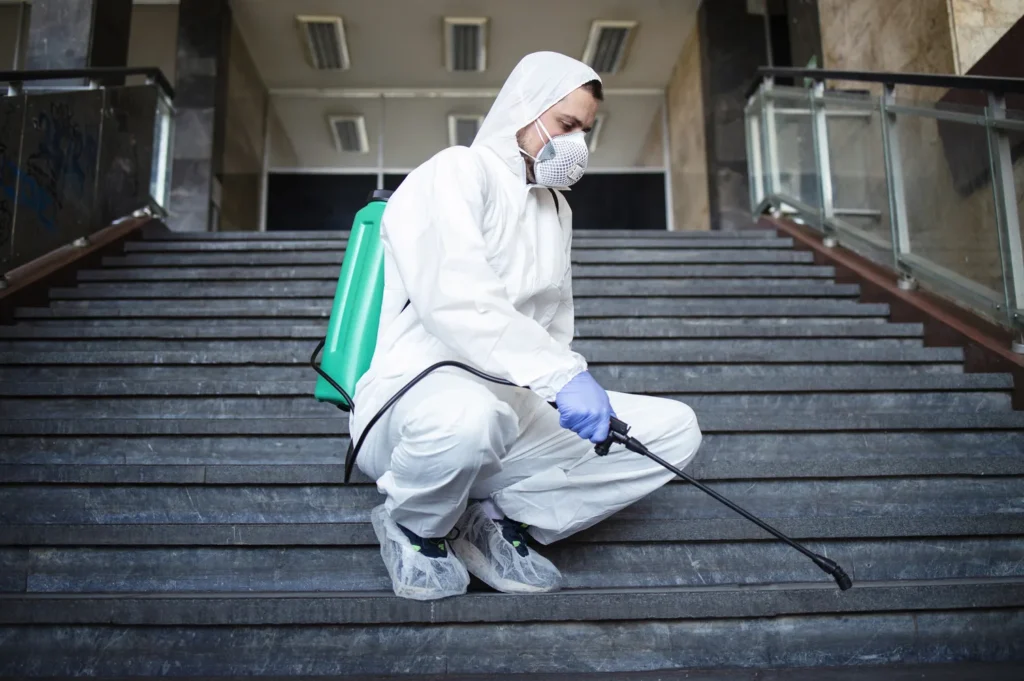
Mold abatement is the process of completely removing mold contamination from a space. And it is done following strict safety and containment procedures.
Unlike mold remediation, abatement is not just about cleaning visible mold. Instead, it involves:
- Removing contaminated materials
- Preventing mold spores from spreading
- Safely disposing of affected items
- And restoring the space to a safe condition
You see, mold doesn’t just sit on the surface. It can grow deep inside materials like drywall, insulation, and wood.
So abatement focuses on eliminating the source of contamination, not just treating what you see.
This is why mold abatement is often used in:
- Severe mold situations
- Health-sensitive environments
- Insurance or regulated cleanup projects
In simple terms, mold abatement is a more controlled and safety-focused approach to handling mold compared to remediation.


Contact us to improve your indoor air
quality with our expert cleaning services in NJ.
What does mold remediation mean?
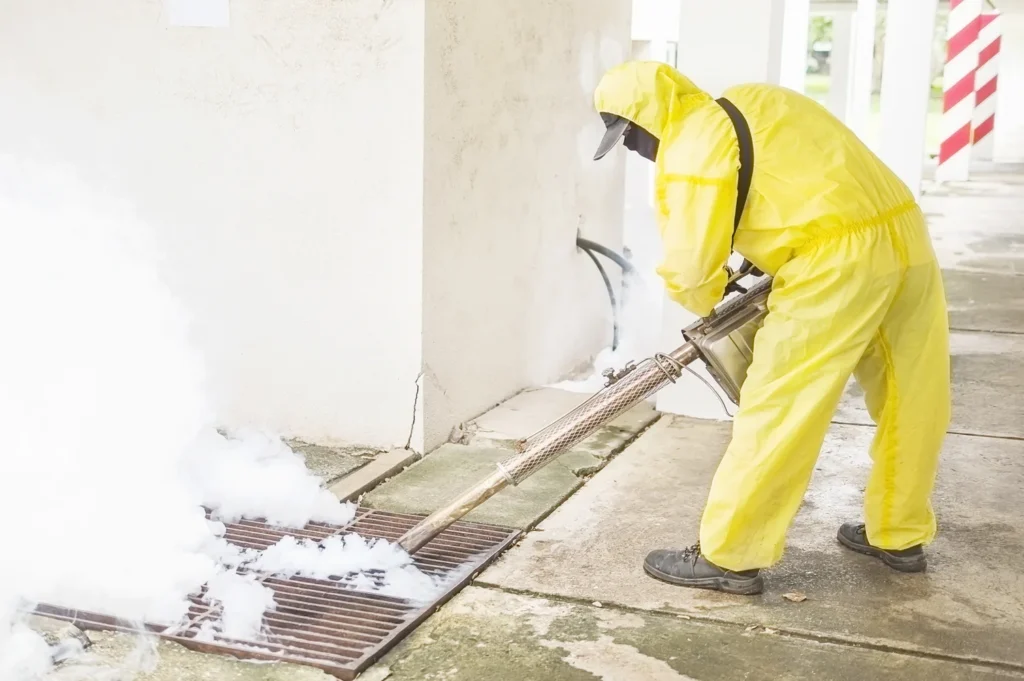
Now let’s talk about mold remediation.
Mold remediation is the process of cleaning, controlling, and preventing mold growth in a home.
It includes:
- Identifying the moisture source
- Containing the affected area
- Removing or cleaning mold
- Drying and restoring the space
The goal here is not necessarily to remove every single spore (which is almost impossible), but to bring mold levels back to normal and prevent future growth.
So, while remediation handles the problem effectively, it focuses more on long-term control and prevention, rather than strict removal protocols.
Mold abatement vs mold remediation: What’s the difference?
At first, mold abatement and mold remediation can seem like the same thing. After all, both are used to deal with mold inside a home.
But the difference really comes down to how both handle the problem.
Mold remediation is focused on controlling the situation. The goal is to clean up the mold, fix the moisture issue behind it, and make sure it doesn’t come back.
Think of it as a practical and effective approach, just like air duct mold removal, that works for most residential mold problems.
Mold abatement, on the other hand, takes things a step further. It is a more strict and controlled process where contaminated materials are removed, handled carefully, and disposed of safely, especially in more serious or regulated situations.
Here’s a simple way to understand it:
- Remediation fixes and manages the problem
- Abatement removes it under tighter safety controls
In most homes, remediation is enough. But if the mold is widespread, affecting sensitive areas, or tied to insurance or health concerns, abatement is the better option.
In short, here are the differences between mold abatement and remediation:
| Factor | Mold Remediation | Mold Abatement |
| Main Goal | Control and prevent mold growth | Fully remove contaminated materials |
| Approach | Clean, treat, and fix moisture issues | Strict removal under controlled conditions |
| Scope | Common in residential homes | Used in severe or regulated cases |
| Process Style | Focus on cleanup and prevention | Focus on containment and disposal |
| When Used | Most everyday mold problems | Heavy, widespread, or high-risk mold cases |
Here’s the complete mold abatement process followed by professionals:
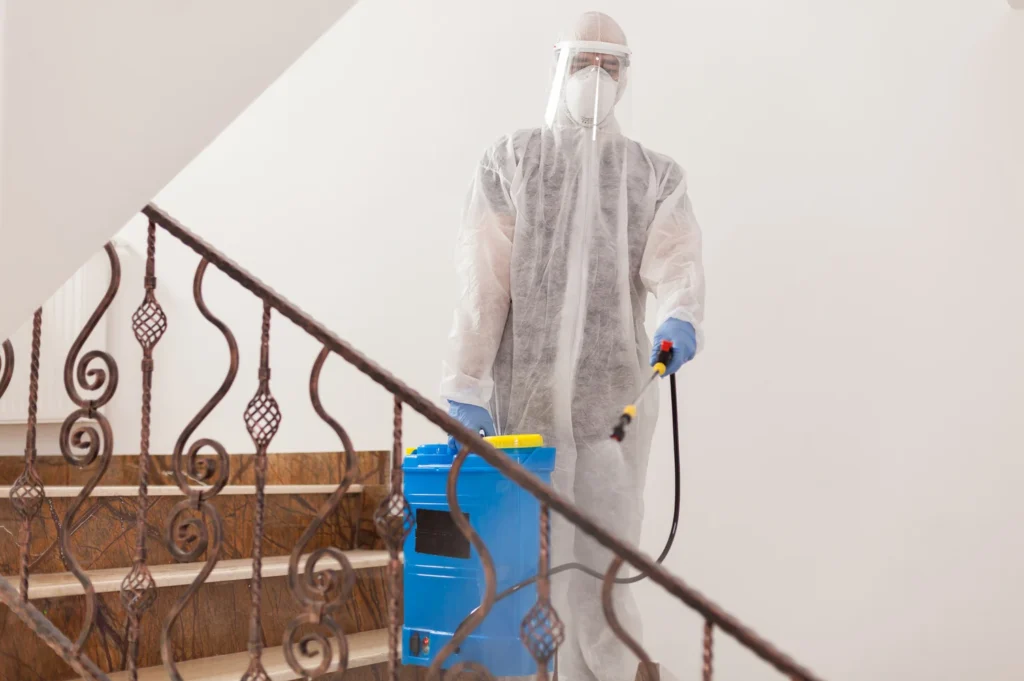
Step 1. Inspection and contamination assessment
Mold abatement begins with professionals taking a close look at the affected area to understand how serious the problem really is.
You see, what looks like a small patch of mold is often just the visible part. And mold can hide deep behind walls, under flooring, and inside insulation.
So, the goal here is to find the full extent of the contamination.
Also, professionals check moisture levels to understand what’s feeding the mold in the first place.
This step helps plan the entire process correctly.
Step 2. Fixing the moisture source
Before any mold removal begins, the moisture problem has to be fixed. That’s because if moisture stays, mold will keep coming back no matter how much you clean.
This step includes repairing leaks, improving ventilation, or reducing high indoor humidity.
The idea is simple: Stop the water source first, then deal with the mold. Without this step, the whole process becomes temporary.
Step 3. Setting up containment
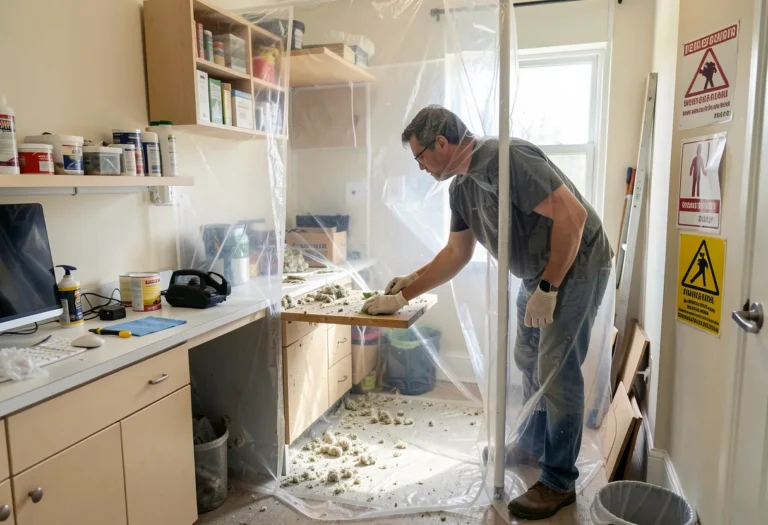
Once the source is under control, professionals isolate the affected area. This is done using plastic barriers and sealed entry points.
The reason is that mold releases spores when disturbed, and those spores can easily travel through air.
Mold containment ensures the problem stays in one place and doesn’t spread to clean areas of the home.
Think of it like putting the mold inside a controlled work zone so the rest of your house stays protected.
Step 4. Air filtration and control
After containment is set, the air inside that sealed area is continuously cleaned.
Professionals use HEPA filtration machines that are designed to trap extremely tiny mold spores. These machines keep running during the entire process to make sure airborne particles don’t escape.
It is almost like constantly vacuuming the air while work is happening.
This step is important because it protects both the workers and the rest of your home from cross-contamination.
Step 5. Removing contaminated materials
At this stage, any materials that are too damaged to clean are removed. Things like drywall, insulation, carpet padding, and soft wood usually fall into this category because mold grows deep inside them.
These materials are carefully cut out, sealed in bags, and taken away safely. It might look like a big step, but it’s necessary because surface cleaning won’t solve embedded mold.
Removing the source is the only way to fully stop the problem.
Step 6. Deep cleaning and surface treatment
Once damaged materials are gone, the remaining structure is thoroughly cleaned. This includes exposed wood, framing, and other solid surfaces.
Professionals use HEPA vacuums to remove fine particles and then scrub surfaces using specialized cleaning solutions.
In some cases, antimicrobial treatments are also applied to reduce the chance of regrowth.
This step is very detailed and takes time because even tiny leftover spores can cause issues later if ignored.
Step 7. Drying and dehumidification
Now everything is brought back to a dry condition.
You see, even if surfaces look dry, moisture can still be trapped inside walls or wood. That’s why commercial dehumidifiers and air movers are used to pull out hidden moisture.
Also, professionals monitor humidity levels to make sure they return to normal.
This step is very important because mold only grows where moisture exists. And if drying is incomplete, the problem can easily return in the future.
Step 8. Final cleaning and clearance check
Once everything is fully dry, the area is cleaned one last time. Any remaining dust or particles are removed, and then containment is carefully taken down.
After that, professionals do a final check to make sure the space is safe. They confirm that there is no visible mold, moisture levels are stable, and the area is ready for use again.
In some cases, additional testing is done just to give extra peace of mind before rebuilding begins.
Here are all the mold abatement steps in short:
| Step | What Happens | Why It Matters |
| Inspection | Contamination and moisture sources are identified | Defines the full problem |
| Fix Moisture | Leaks and humidity issues are repaired | Prevents mold from returning |
| Containment | Affected area is sealed off | Stops spores from spreading |
| Air Control | HEPA filtration is used | Keeps air clean and safe |
| Removal | Contaminated materials are removed | Eliminates mold source |
| Cleaning | Surfaces are deep cleaned | Removes leftover spores |
| Drying | Area is dehumidified and monitored | Prevents regrowth |
| Final Check | Professionals inspect and confirm safety | Ensures problem is resolved |
Will mold go away on its own?
The honest answer is no, mold will not go away on its own.
In fact, it usually gets worse over time.
That’s because moisture is present, mold will continue to grow and spread. Even if the surface dries out temporarily, spores remain and can become active again when moisture returns.
So ignoring mold or hoping it disappears is never a good idea. The sooner you deal with it, the easier and less expensive it is to fix.
When do you need mold abatement?
Not every mold problem needs full abatement, but some situations do.
For instance, you should consider mold abatement if:
- Mold has spread across large areas
- Materials like drywall or insulation are heavily affected
- There are strong odors or visible damage
- Someone in the home has allergies or respiratory issues
- The cleanup is part of an insurance claim
In these cases, a more controlled and thorough approach is necessary.
Note: You should never DIY mold abatement
It might be tempting to handle mold yourself, especially if it looks small.
But here’s the risk.
Disturbing mold without proper containment can spread spores throughout your home. And what starts as a small issue can quickly turn into a much bigger problem.
Also, without fixing the moisture source, mold will come back. And without proper protective equipment, you may expose yourself to health risks.
That’s why professional handling is always the safer option.
Contact us to improve your indoor air
quality with our expert cleaning services in NJ.
Final words
I am sure that, by now, you have a clear understanding of what is mold abatement and how it differs from mold remediation.
Both are effective ways to get rid of mold, but the right approach for your home depends on how severe the problem is.
The most important thing is this: Mold is not something to ignore or delay. It spreads quietly and can lead to bigger issues if left untreated, so the sooner you deal with it the better.
Got more questions or want to make sure your HVAC system isn’t contributing to mold growth?
You can get in touch with us!
At Clean Air Technologies, we provide NADCA-certified air duct cleaning in New Jersey. Our professionals bring decades of experience helping homeowners improve indoor air quality and HVAC system efficiency.
FAQs about mold abatement
What is the difference between mold abatement and mold remediation?
Mold abatement focuses on complete removal under controlled conditions, while mold remediation focuses on controlling and preventing mold growth.
Is mold abatement more expensive than remediation?
In some cases, yes.
Mold abatement can involve stricter containment and removal processes, which might increase cost depending on the severity.
Can I do mold abatement myself?
DIY is not recommended for anything beyond very small surface mold. That’s because improper handling can spread spores and worsen the problem.
How long does mold abatement take?
It depends on the size of the affected area. Most mold abatement projects take 1-2 days, on average, while larger ones can take several days.
Does mold always come back after removal?
No, mold only comes back if moisture issues are not fixed. Proper drying and prevention stop it from returning.
Is mold in HVAC systems dangerous?
Yes. Mold in HVAC systems can spread spores throughout your home, affecting air quality and health. That’s why regular HVAC system cleaning is essential.