
If you’re setting up a new laundry space or moving your dryer to a different spot, one question that pops up is: Do I even need a vent?
At first look, it seems like a simple yes-or-no question.
But here’s the catch:
Most electric dryers do need a vent. However, there are some new dryer models that are designed to run without one.
This makes things very confusing. So much so that people confuse vented dryers for ventless ones, and this causes moisture problems, musty smells, and longer drying times.
Worse, in some cases, you end up with a dryer smelling like burning.
In this blog, I will clear up the confusion once and for all. You’ll know when do electric dryers need a vent and when they don’t.
Also, I will talk you through the dangers of not using a vent on a vented dryer.
So, let’s get started.
Key takeaways
- Most electric dryers need a vent to remove moisture and lint.
- Only ventless dryers (condenser or heat-pump) run safely without a vent.
- Running a dryer without a vent causes moisture, mold, and longer drying times.
- Indoor vent kits do not remove moisture, only some lint.
- Never vent a dryer into a garage, attic, or crawl space.
- Always check your dryer type, vent path, and vent condition before installation.
- Proper venting protects your dryer, your home, and your indoor air quality.
Do electric dryers need a vent or not?
The short answer is: It depends on the type of dryer you have.
You see, most electric dryers you’ll find in homes today are vented dryers. And these absolutely need a vent that goes to the outside.
They’re built to work with a 4-inch exhaust duct that carries hot, moist air safely out of your home.
Without this vent, the dryer might turn on, but it won’t dry your clothes efficiently. Also, over time, it can even create moisture problems and safety issues.
The only exception is a ventless dryer, also called a condenser dryer or a heat-pump dryer.
Here, you can go about using a dryer without a vent as these dryers are designed to remove moisture internally, and they don’t need an outside vent at all.
Note: People think that an electric dryer automatically means vent-free, but that’s not true. Only dryers specifically made to be ventless can safely run without a vent.
Why do people think electric dryers don’t need a vent?
A lot of people get confused about vents because of one simple assumption: Gas dryers need vents, so maybe electric ones don’t.
The logic seems to make sense as gas dryers burn fuel, creating exhaust that must go outside. And since electric dryers don’t burn anything, people think there’s no vent needed.
But, here’s the catch: The need for a vent has nothing to do with gas or electricity. It’s all actually about moisture, heat, and lint.
When your dryer runs, it pulls water out of your clothes, heats it up, and blows it out with air.
Now, this hot, damp air needs a way to leave your home. And without a vent, all that moisture just hangs around inside, making rooms feel damp, causing condensation on walls and windows, and leaving lint floating in the air.
Why do dryers need vents?
Dryer vents have a very important job. Every dryer, be it gas or electric, does three main things:
- It heats the air
- Blows it through your clothes
- pulls moisture out of the fabric.
Now, that hot, wet air has to go somewhere.
And the dryer vent is what safely carries all of that humid air, tiny lint particles, and heat out of your home.
Meaning without a proper vent, the moisture stays inside. This leaves your laundry room damp, clothes taking longer to dry, and lint settling on shelves, floors, and even inside your HVAC system.
Over time, this can cause musty smells, mold, and even safety hazards.
So, a dryer vent is not just an accessory, it’s the part that keeps your dryer working properly and your home safe and dry.
Now, whether or not do you need to vent an electric dryer depends on the dryer?
Instead of thinking whether or not do electric dryers need a vent, you should actually ask if your dryer is vented or ventless. This is what truly matters when it comes to moisture, lint, and proper drying.
Here’s how the two dryers differ:
1. Vented electric dryers
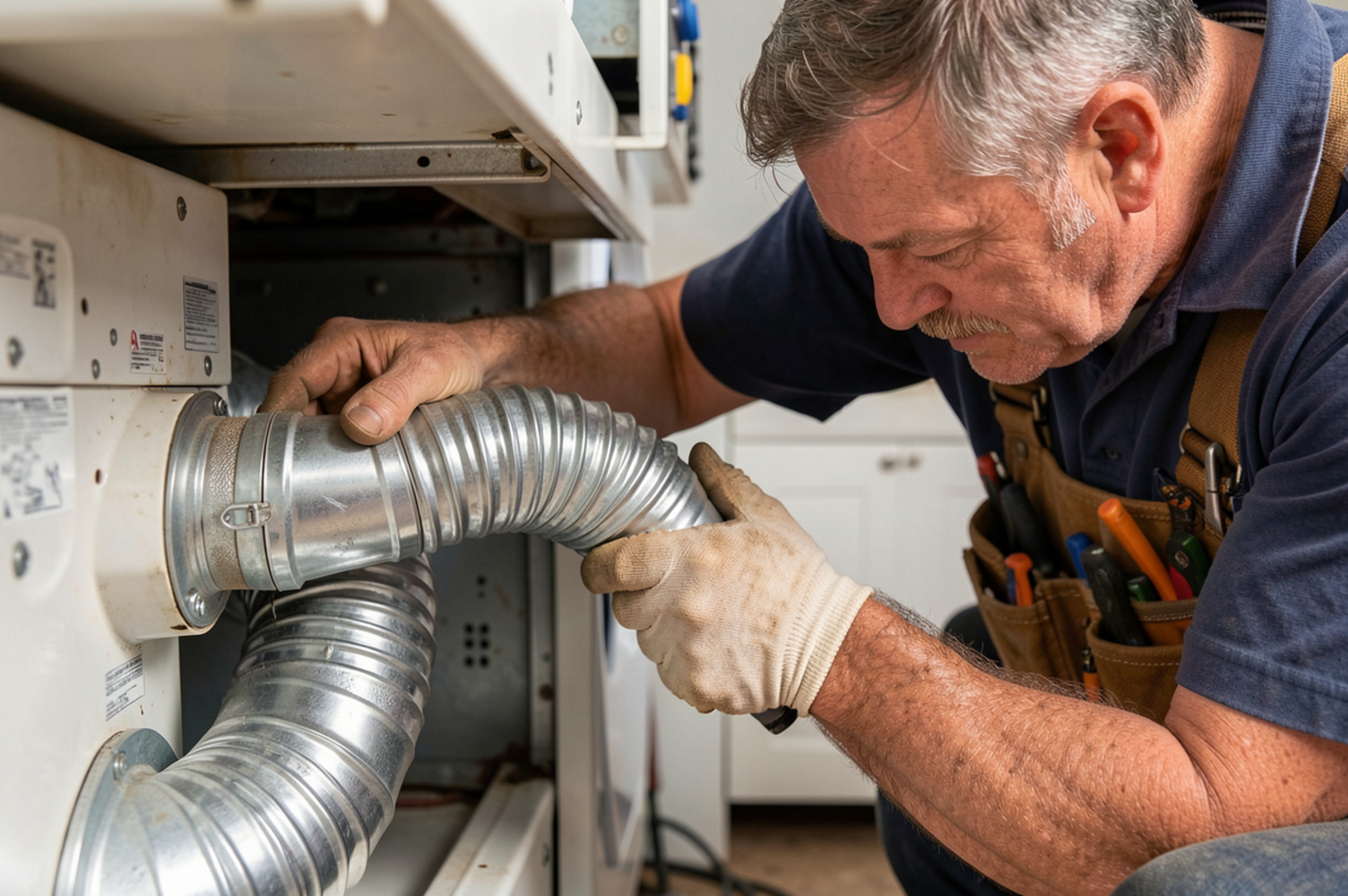
Vented dryers are what most homes already have. And they need a duct that leads to the outside because they blow hot, moist air out of your home.
They rely on this airflow to dry your clothes efficiently. Without a vent, your dryer struggles, clothes take longer to dry, and all that moisture and lint stay inside.
A simple way to tell if you have a vented dryer is to look at the back. If there’s a large round exhaust outlet, that’s your vent connection.
2. Ventless electric dryers
Ventless dryers work differently. They don’t need an outside vent because they remove moisture inside the machine.
Here, some models collect water in a tank you empty, while others send it to a drain.
Yes, there are many pros and cons of ventless dryers, especially when compared to vented ones. But they let you use a dryer without a vent.
Note: You cannot convert a vented dryer into a ventless one. Only dryers designed to be ventless can safely run without a vent. And trying to bypass this can lead to moisture problems, long drying times, and even safety risks.
Here’s how vented and ventless dryers work, in short:
| Type | How It Works | Notes |
| Vented | Pushes hot, moist air outside | Most common; requires ducting |
| Ventless | Removes moisture inside using tank or drain | Works with condenser or heat-pump; no duct needed |
Here’s what happens if you are using a dryer without a vent
A lot of homeowners who are doing renovations, temporary installs, or basement projects ask me what happens if they use a dryer without a vent.
And this is a valid question as you often need to temporarily remove the vents during renovation projects. But even if it is temporary, I suggest you not use a dryer without a vent.
Here’s what really happens if you don’t vent your dryer:
1. Moisture builds up inside your home
Your dryer pulls gallons of water out of your wet laundry every week.
Normally, that moisture is carried outside through the vent. But if you run a dryer without a vent, all that damp air goes straight into your home instead.
This can make your laundry room feel humid, nearby rooms sticky and uncomfortable, and even push moisture into your basement or walls over time.
2. Mold and condensation risk increases
When moist air lingers inside, it can settle on walls, windows, and ceilings, leaving condensation or water streaks.
This creates the perfect environment for mold and mildew to grow, especially in hidden areas like behind cabinets or inside wall cavities. You might notice a musty smell, damp spots, or a sudden spike in indoor humidity.
Many homeowners don’t realize the dryer itself can be a hidden moisture source, and ignoring it can lead to serious problems that are expensive to fix later.
3. Dryer performance becomes terrible
Without a vent, your dryer struggles to push the hot, moist air out. This means clothes take much longer to dry, and you may find yourself running extra cycles just to get them fully dry.
Also, heat builds up inside the room, making your laundry space uncomfortably warm.
4. Lint spreads into your home
The vent isn’t just for moisture, it’s also a lint removal system. And when a dryer isn’t vented properly, fine lint doesn’t leave the house.
Instead, it settles on shelves, floors, and furniture, and can even get sucked into your HVAC system.
This is also true for dirty dryer vents, which is why I suggest homeowners get dryer vent cleaning regularly.
Over time, this reduces indoor air quality, increases dust buildup, and can trigger allergies or respiratory irritation. Also, lint is flammable, which makes proper venting even more important.
5. Fire risk can increase
If you don’t use a dryer vent, lint can accumulate in hidden spots all across your home. And since dryer heat has nowhere to go, all that lint becomes a real fire hazard.
In fact, with nearly 3,000 residential dryer fires per year (as per the U.S. Fire Administration), dryer fires are more common than many homeowners think.
Here are all the risks of using a dryer without a vent, in short:
| Problem | What Happens |
| Moisture buildup | Damp laundry room, nearby rooms, and walls |
| Mold & condensation | Musty smells, visible mold, window condensation |
| Poor drying performance | Longer cycles, wasted energy, heat buildup |
| Lint spread | Dust on surfaces and in HVAC, allergy risk |
| Fire hazard | Lint accumulation and heat increase risk |
Can you use a dryer without a vent for a short time?
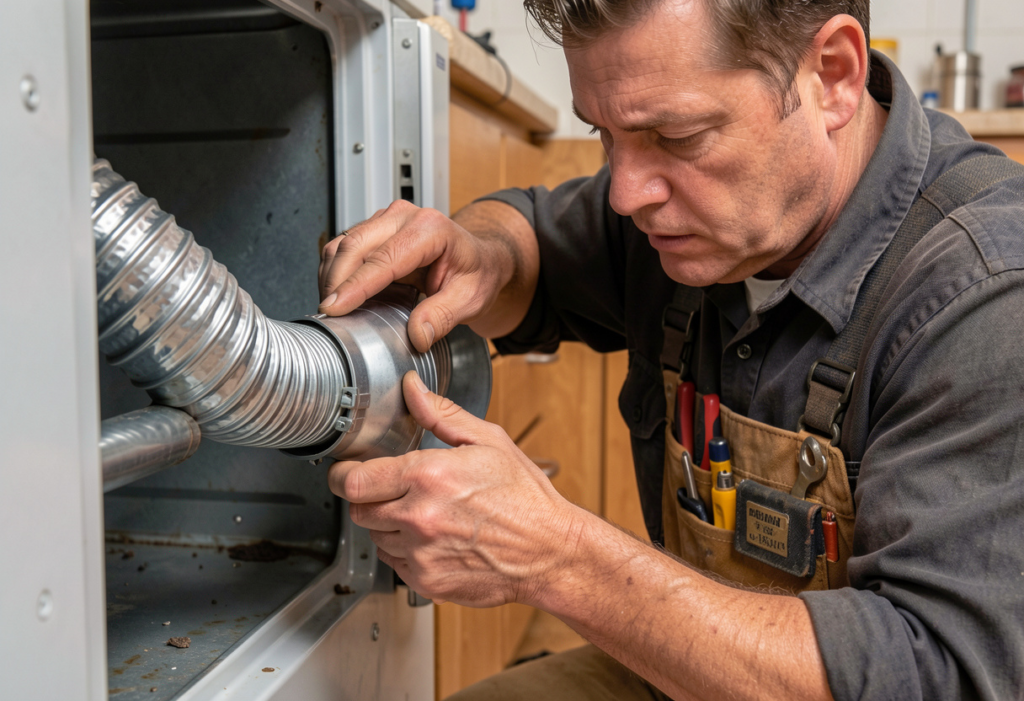
This is one of the most common questions homeowners ask, especially during renovations or temporary setups.
Technically speaking, yes, a dryer will still turn on without a vent.
But even a short-term run can dump gallons of moisture into your home, cause condensation on walls and windows, and quickly spike indoor humidity.
In fact, in small spaces like basements, laundry closets, or condos, these effects can become noticeable in just a few days, not weeks or months.
This is why I never recommend using a dryer without a vent, not even temporarily.
What about indoor dryer vent kits?
You might have seen indoor vent kits advertised at Walmart, and other stores. These kits attach to the dryer hose, filter some lint, and release air into the room.
They sound convenient, but here’s the reality: While they catch a little lint, they don’t remove moisture.
Meaning that hot, humid air still stays inside your home. That can lead to damp walls, musty smells, and higher humidity, especially in small laundry rooms or basements.
When can you run dryer without vent?
The only time it’s safe to run a dryer without an outside vent is if it’s a true ventless model.
As we saw, ventless dryers work completely differently. Instead of blowing hot, wet air outside, they pull air through the drum, remove moisture internally, and either collect water in a tank or send it down a drain.
This same air is reused inside the machine, so no moisture escapes into your home.
Final words
By now, I am sure you’ve got clear answers to when do electric dryers need a vent and when they can work without a vent.
Most electric dryers require a vent to the outside. The only exception is a true ventless dryer, built to remove moisture internally.
So, if your dryer was made to be vented, it must be vented. That’s because skipping proper venting can lead to hidden moisture problems, mold growth, poor indoor air quality, and slower drying times.
Got more questions or want to get your dryer vent cleaned?
You can get in touch with us!
At Clean Air Technologies, we are seasoned New Jersey dryer vent cleaning professionals with 3+ decades of hands-on expertise. And we’ve got all your dryer vent cleaning needs covered on a budget.
Frequently asked questions
Do electric dryers need a vent?
Most electric dryers do need a vent because they are designed to push hot, wet air outside. These are called vented electric dryers.
If you install one without a proper vent, moisture and lint stay inside your home and drying times get much longer.
The only time an electric dryer does not need a vent is when it is a true ventless model, such as a condenser dryer or heat-pump dryer that removes moisture internally.
What is the difference between a vented and a ventless electric dryer?
A vented electric dryer sends hot, damp air through a duct and outside your home.
A ventless electric dryer works very differently. It pulls moisture out of the air inside the machine and stores it in a tank or sends it to a drain. This means no exterior vent is needed.
Can you use a dryer without a vent hose briefly?
Technically, the dryer will still turn on, but it is not a good idea. Even short-term use can release a lot of moisture into your laundry room.
Are indoor dryer vent kits a safe replacement for a real vent?
Indoor dryer vent kits only catch some lint. They do not remove the moisture from the air.
All of that humid air is released back into your home. This can quickly raise indoor humidity and increase the risk of mold and odors, especially in small laundry rooms or basements.
Can I vent my electric dryer into a garage, attic, or crawl space?
No.
Dryer exhaust must go outside the building.
Venting into a garage, attic, or crawl space still traps moisture and lint inside the structure. Over time, this can lead to wet insulation, mold growth, and hidden damage to wood and drywall.
How can I tell if my electric dryer is vented or ventless?
The easiest way is to look at the back of the dryer. If you see a round, four-inch exhaust outlet, it is a vented dryer and must be connected to a duct.
You can also check the model description. If it does not clearly say “ventless,” “condenser,” or “heat pump,” it is almost always a standard vented dryer that requires a vent.
Do ventless electric dryers have any downsides?
Yes, and homeowners should be aware of them before choosing one.
Ventless dryers usually cost more upfront and often take longer to dry clothes. Many models also require regular cleaning of filters and emptying a water tank, unless they are connected to a drain.
They work very well when venting is impossible, but for large families or heavy laundry use, the longer drying times and added maintenance can be a real drawback.