

Got a portable air conditioner only to realize there’s no convenient window to vent it out of?
Well, you’re not alone.
This is one of the most common headaches for renters, condo owners, and homeowners with interior bedrooms or unusual layouts.
After all, you’ve got to vent the hot exhaust somewhere. Otherwise the unit just moves heat and humidity around your home and can cause moisture problems.
The good part is there are several ways you can get that hot air outside without a standard window sash; plus you can easily do vent cleaning too.
Some of the options are temporary and renter-friendly; others are semi-permanent or permanent and work great for homeowners.
In this blog, I will walk you through 7 ways you can vent a portable air conditioner. These are all DIY-friendly and suited for typical New Jersey homes.
So, let’s get started.
Key takeaways:
- A portable AC should vent outside, or it won’t cool the room.
- You can vent it through a sliding door, a DIY door panel, or a small wall hole depending on your home and budget.
- The best vent performance comes from a permanent wall vent with an exterior hood.
- Renters should use easy no-damage options like sliding-door kits.
- Never vent into attics, crawlspaces, or shared vents because it causes moisture, mold, and safety issues.
- If you truly can’t vent outside, hoseless or evaporative coolers work, but only in dry climates. They are not ideal for New Jersey climate.
7 DIY-friendly ways to vent a portable air conditioner
1. Sliding-door vent kit (fast and renter-friendly option)
If you’re renting, or if you want a quick, easy, and non-permanent solution to vent your portable air conditioner, the sliding-door vent kit is one of the best choices.
It is super simple to install and can be taken down without leaving any marks or damage. This is perfect for renters or those who need something temporary.
The kit works best particularly for homes with sliding glass doors or patio doors, which are common in apartments or homes with access to outdoor spaces.
How does this kit work?
The sliding-door vent kit is designed to fit into the gap between your sliding door and the fixed panel (or in the track of the door).
This creates a sealed space for your AC exhaust hose to safely vent the hot air outside, keeping your indoor environment cooler and drier.
How to vent a portable air conditioner using this kit?
- Measure your door: Start by measuring the height and width of the gap between the sliding door and the fixed panel. This ensures you buy a kit that’s the right size, and you might need to trim the kit for a perfect fit.
- Clean the track: Before you start, clean the track and surrounding surfaces. This helps ensure a good seal later.
- Install the adjustable panel: Insert the adjustable panel into the track as per the kit instructions. Make sure the door can still close securely against it.
- Attach the AC exhaust hose: The kit will come with a round hole where you’ll attach your AC’s exhaust hose. Clamp it into place and secure it to the adapter.
- Seal the gaps: Use weatherstripping tape around the panel and door to prevent any drafts, air leaks, or pests from sneaking in. You can even add a locking bar for extra security if you’re worried about safety.
- Position your AC: Place your portable air conditioner near the vent panel, and keep the exhaust hose as short and straight as possible to avoid any loss in performance.


Schedule Your Free Estimate Today
Contact us to improve your indoor air
quality with our expert cleaning services in NJ.
What are the pros and cons of using this kit?
Pros:
- There are no permanent changes to your door, which makes it a renter-friendly option.
- The kit is affordable with prices ranging from $20 to $120, depending on quality.
- Quick and easy installation, as it takes only 10-30 minutes.
- Ideal for temporary fixes and quick setups.
Cons:
- There is slight energy leakage compared to a sealed wall vent, but this is fine for temporary use.
- Security concerns as sliding doors can be less secure than walls, so consider adding a lock bar.
- Hose should be kept short and straight for best performance; uneven hose placement can lead to your AC blowing out smoke.
What’s the installation cost and time?
- The kit costs between $20 and $120
- Installation takes between 10-30 minutes
2. Door panel/pet-door style cutout (most affordable option)
For those of you who’ve got a solid door (like a standard wooden door) rather than a sliding door, creating a door panel is an affordable and low-tech solution.
This is perfect if you’re looking for a simple way to vent your AC without having to buy a full kit.
Plus, this method is temporary and reversible if you don’t want to make any permanent changes to your door.
How does it work?
This method involves cutting a hole in a piece of plywood or acrylic to fit the AC hose. You’ll then fit that panel into your door, creating a seal that prevents air leaks.
It’s a simple DIY-friendly solution that gets the job done.
How to vent portable AC using this method?
- Measure the door: Measure the door opening to cut the panel to size. It should fit snugly inside.
- Cut the hole: Use a circular hole saw (typically 5-6 inches) to cut a hole in the panel that matches the diameter of your AC exhaust hose.
- Seal the panel: Once you’ve cut the panel, insert it into the door. Use weatherstripping or foam tape to seal around the edges, ensuring no air escapes.
- Attach the hose: Clamp the exhaust hose to the hole in the panel. You can add extra protection or a removable hood on the outside if desired to shield it from the elements.
What are the pros and cons of using this kit?
Pros:
- Low-cost option that’s cheaper than buying a full vent kit.
- It is reversible, so If you don’t screw into the door, you can easily remove the panel when needed.
- It is better than leaving the door open and it seals out more air and pests.
Cons:
- Not as tidy as an installed wall vent.
- There’s a security trade-off and you’ve got to make sure the door is securely fastened to prevent any break-ins.
What’s the installation cost and time?
- Installation materials cost anywhere between $10 and $60
- Installation takes anywhere between 30 and 90 minutes
3. Wall penetration and exterior Hood (permanent solution)
For homeowners who are looking for a permanent, clean, and efficient solution, a wall penetration with an exterior hood is the way to go.
This option gives you the most efficient and quietest airflow, with the least risk of condensation buildup.
It’s a great choice if you want your portable AC to function at its best without worrying about frequent maintenance or efficiency drops.
How does this method work?
This method involves creating a hole in the wall and installing a vent sleeve with an exterior hood.
The hose from your portable AC will connect directly to this sleeve, venting the hot air outside.
Also, the exterior hood will prevent pests and debris from getting into the system.
How to vent your AC using this method?
- Choose a location: Pick a spot that’s clear of wiring and plumbing. You should ideally place the vent higher than ground level to avoid water splash and moisture buildup.
- Locate studs and utilities: Use a stud finder and a wire detector to ensure you don’t cut into any important utilities. If you’re unsure, hire a professional.
- Cut the hole: Drill a pilot hole first, then use a hole saw or reciprocating saw to cut the wall to size.
- Install the sleeve and hood: Insert the sleeve through the wall from the inside, then fit the exterior hood and grille on the outside. Make sure it’s level and sealed tightly.
- Seal and insulate: Use silicone caulk outside and HVAC tape inside to seal any gaps. You can also fill the space around the sleeve with low-expansion foam for extra insulation.
- Connect the hose and test: Attach the AC exhaust hose to the sleeve, check for leaks, and make sure everything is sealed correctly.
This the best of all venting options, here’s why:
- The hose path is shortest, which ensures better efficiency and airflow.
- It prevents pests and weather entry with the exterior hood.
- It has a clean look as there’s no bulky vent kits or door panels.
- It operates quietly since the AC has direct access to the outside air.
What’s the installation cost and time?
- DIY installation costs between $80 and $250
- Professional installation costs between $300-$900
- Install takes between 2 and 6 hours (or longer if you’re repairing drywall or siding)
4. Drop ceiling plenum routing (great for offices and retrofits)
If you’re working in an office with a suspended drop ceiling, or in a home with an existing plenum that allows for venting, this can be an effective option.
This method routes the AC exhaust hose into the plenum above the ceiling tiles, which then leads the hot air to the outside. It’s mostly used in office spaces or retrofits, and it is very efficient when done right.
However, if you’re using this method to vent a portable AC, there are two things you should be aware of:
- Local codes: Many local codes forbid venting into plenums unless specifically designed for exhaust, so be sure to check your local codes.
- Moisture risks: Any condensation in the plenum can damage ceiling tiles, insulation, and other components.
How to vent your AC using this method?
- Check local code and talk to your building management: Before you proceed, confirm that venting into the plenum is allowed by local codes or building management.
- Install a ceiling lit: If venting into the plenum is allowed, use a ceiling kit designed to fit the tile opening and support the hose. Also,ensure the hose is short and doesn’t have any upward slopes.
- Consider condensate traps: To prevent moisture buildup, you might want to install a condensate trap or route the hose slightly downward.
What are the pros and cons of this method?
Pros:
- It offers a clean, hidden installation as hoses stay above the ceiling and out of sight.
- Great for offices where cutting walls and installing exterior vents is not allowed.
- It is a quick and reversible method as there are no structural changes to the unit or the building.
- Allows temporary or short-term AC installations without exterior modifications.
Cons:
- Might violate local building codes as many areas forbid dumping AC exhaust into a return plenum.
- Risk of moisture damage to tiles, wires, or insulation if condensation forms.
- Improper plenum venting can disrupt building airflow balance.
- Not suitable for residential attics as these are rarely designed to accept exhaust airflow.
- There will be reduced efficiency if plenum airflow is stagnant or improperly vented.
What’s the installation cost and time?
- Ceiling vent tile kit costs between $30-$120, while hose extensions and insulation costs another $10-$40
- Installation takes 20-60 minutes, depending on ceiling height and accessibility
5. Existing exterior vents (don’t use this unless you’ve no other option left)
A lot of homeowners ask me if they can use existing vents, like the ones for their dryer or bathroom fan, to vent their portable air conditioner.
Now, while it might seem like an easy shortcut, this is something I don’t recommend.
You see, these systems are designed for very specific types of airflow and venting, which don’t align with the exhaust requirements of a portable AC unit.
In fact, trying to share a vent between appliances can lead to serious issues.
Why should you not use this method?
- Backflow and blockages: Connecting your AC hose to a dryer vent or bathroom fan can cause backflow. Here, exhaust gases (including hot air) flow back into your home, which is dangerous and inefficient. Plus, lint from your dryer or moisture from a bathroom fan can build up in the hose, causing blockages.
- Code Violations: Many local building codes forbid mixing exhaust systems because it can cause hazardous conditions. More so when there’s a chance of contaminating the air with carbon monoxide, dryer lint, or moisture.
When can this method really work?
If you really need to consider this option, I suggest you consult a professional first.
A licensed contractor or HVAC specialist can tell you if it’s possible to use an existing vent. Also, they will tell you whether any modifications can be made to ensure it’s safe and compliant with local building codes.
In most cases, the best option will still be creating a dedicated vent for your portable AC.
6. Short exterior runs to sidewalls with custom grille (semi-permanent option)
For homeowners looking for a semi-permanent solution, this method creates a short vent route to the outside of your home through a soffit, side wall, or another accessible area.
This is an affordable and effective way to route the exhaust outside while keeping the setup tidy and neat.
How does it work?
This option is similar to the wall penetration method but is typically simpler and involves installing a small custom grille or louver on the outside of the building. And it works well if you want to avoid cutting a larger hole or making a major modification to your home.
How to vent a portable air conditioner without a window using this method?
- Choose the location: Look for a spot on your exterior wall that’s close to your portable AC unit. Ideally, it should be a place that’s easy to access and not prone to getting blocked by plants, debris, or heavy rainfall.
- Drill a hole: Depending on where you’re venting, you’ll need to drill a small hole through your wall to fit the exhaust hose. This hole should be just big enough for the hose to pass through comfortably but small enough that it can be sealed properly.
- Install the grille or louver: Once the hole is made, you can install a custom grille or louver on the exterior of the building. The grille will protect the opening from debris and animals, while the louver will help to keep out rain and pests.
- Attach the hose: Connect the exhaust hose to the opening. You might need to use a short adapter to ensure a tight and secure fit. Also, use HVAC tape to seal the connection for extra security and to avoid air leaks.
- Seal and insulate: Seal any gaps between the hose and the opening using weatherstripping or foam insulation. This helps keep the hot air contained and prevents drafts from sneaking back into your home.
What are the pros and cons of this method?
Pros:
- It is less intrusive than cutting a large hole for a full wall vent.
- It is customizable as you can install a small grille or louver that blends well with your home’s exterior.
- It is a long-term solution, but it’s still easy to undo if needed.
Cons:
- You have to make sure that the hole you cut is properly sealed to prevent moisture from entering the home.
- Weatherproofing is crucial. Without a good seal, water can easily enter the wall, causing potential damage and mold growth.
- Vent length matters a lot here and you’ve to try to keep the hose short. Also, you’ve to avoid any unnecessary bends or curves to maintain efficiency.
What’s the installation cost and time?
- Installation materials cost between $20 and $80, depending on grille and hose fittings
- Installation takes 1-2 hours for a quick DIY job, but you need more time if you’re installing a custom grille
7. Use evaporative coolers or hoseless AC units (no venting needed)
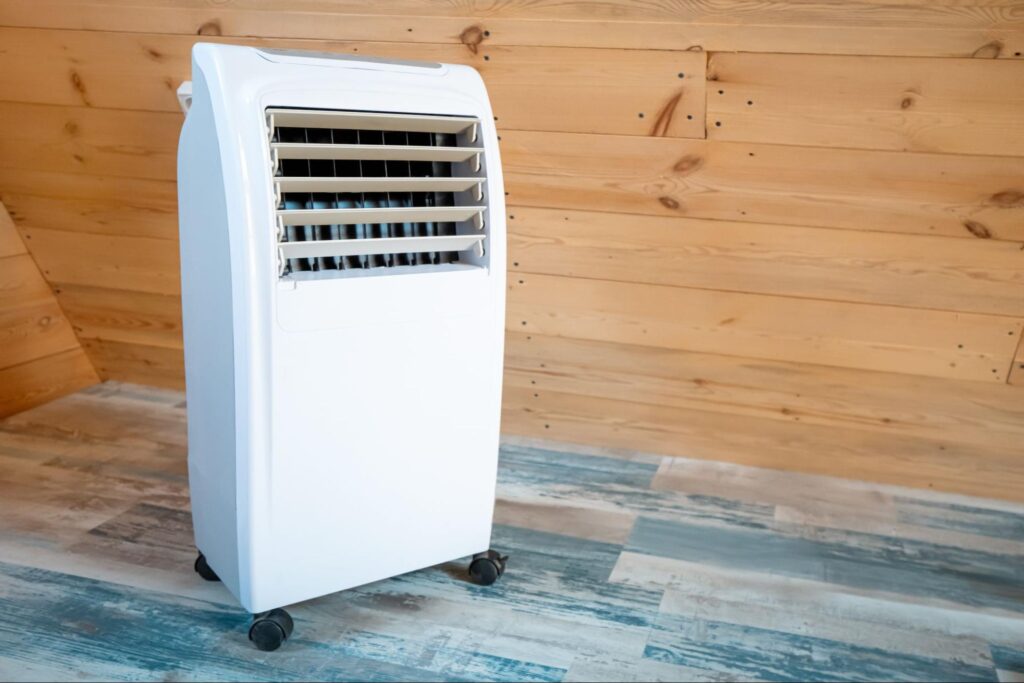
If you live somewhere with a low-humidity climate or if you absolutely cannot vent your portable AC to the outside, there are alternative cooling systems available.
These options, however, come with some important caveats that you should know about before deciding.
Here are the cooling systems I am talking about and things you should know about these:
A. Evaporative coolers
Evaporative coolers, commonly known as swamp coolers, are an option for those who live in dry areas where humidity is low.
These coolers work by evaporating water into the air, which helps cool the environment.
However, they require low humidity to function effectively, which means they’re not ideal for places like New Jersey, where the humidity can be very high during the summer months.
But, If you live in places like the south west, where humidity levels are lower, evaporative coolers can be a very energy-efficient and environmentally-friendly cooling solution.
B. Hoseless portable AC units
Some manufacturers claim to offer hoseless portable air conditioners that don’t require any venting at all.
These units use advanced evaporation or thermoelectric technology to cool the air, but their effectiveness is limited.
How do they work?
These units draw in air, cool it, and then circulate it within the room. However, they don’t vent the heat outside, so the cooling is usually not as efficient.
What are their limitations?
These units are not true air conditioners in the sense that they don’t remove heat from the room. Instead. They simply recirculate the air, and often don’t cool the room effectively in warm and humid conditions.
You can expect them to work poorly in more humid environments like New Jersey.
TL;DR, here’s how to vent a portable air conditioner without a window:
| Method | Type | Difficulty | Permanent? | Best For | Cost | Install Time |
| 1. Sliding-door vent kit | Door-based kit | Easy | No | Renters, quick setups | $20-$120 | 10-30 min |
| 2. Door panel cutout | DIY panel | Moderate | No | Low-budget setups | $10-$60 | 30-90 min |
| 3. Wall penetration + exterior hood | Wall vent | Hard | Yes | Homeowners wanting best performance | DIY: $80-$250 / Pro: $300–$900 | 2-6 hrs |
| 4. Drop ceiling plenum | Ceiling routing | Moderate | No | Offices, retrofits | $40-$160 | 20-60 min |
| 5. Existing exterior vents | Shared vent | Risky | No | Only last-resort cases | Varies | Varies |
| 6. Short exterior run + custom grille | Small wall vent | Moderate | Semi | Homeowners wanting lighter install | $20-$80 | 1-2 hrs |
| 7. Hoseless options | Alternative cooling | Easy | N/A | No-vent scenarios | Varies | None |
Bonus: Follow this safety checklist before venting a portable air conditioner
- Never vent into an attic or crawlspace as moisture can cause mold and rot.
- Check for hidden utilities before cutting walls/ceilings. You can use a detector or call in a professional.
- Don’t block dryer vents or bathroom vents with AC exhaust.
- Secure sliding door/seal wall penetrations to prevent pests and drafts.
- Consider permits too as some towns require permits for new exterior penetrations.
- Watch for condensation, and if you see water stains near vents, pause and reevaluate the routing.
You might also want to read: How Much Does HVAC UV Light Installation Cost In New Jersey?
Schedule Your Free Estimate Today
Contact us to improve your indoor air
quality with our expert cleaning services in NJ.
Final thoughts
As you can see, there are plenty of ways you can vent a portable air conditioner without a window.
If you want perfect AC performance and you own the space, go for the wall penetration method.
But, if you’re renting or want a quick fix, the sliding-door kit is a smart inexpensive choice.
Plus, there are no vent options too if you’ve got absolutely nowhere to vent.
Got more questions or need assistance with HVAC upkeep?
You can get in touch with us!
At Clean Air Technologies we’re seasoned HVAC professionals with three decades of expertise in New Jersey. And we’ve got all your HVAC needs covered on a budget.
Frequently asked questions about venting portable AC
Can I vent the portable AC into the attic?
No, don’t vent your portable AC into the attic.
Attics aren’t designed to handle the hot, humid exhaust air that portable ACs produce. When that moisture gets trapped up there, it can soak into insulation, create mold, and even weaken wood or drywall over time.
Plus, the heat you’re dumping into the attic can radiate right back into your home, making your AC work harder.
It might seem like a quick solution, but it can quickly turn into a very expensive repair job.
Always vent your AC directly outdoors, and never into a closed space.
Will a sliding-door kit reduce efficiency?
Yes, slightly, but not enough to worry about for most people.
Sliding-door vent kits aren’t as airtight or insulated as a permanent wall vent, so you might get a bit of warm air sneaking in around the edges.
That said, if you apply weatherstripping and seal it well, these kits work surprisingly well for apartments and temporary setups. They’re renter-friendly, easy to install, and good for everyday use during the summer.
If you want maximum efficiency, a wall penetration is the top option, but a well-installed sliding-door kit is absolutely fine for most situations.
My hose keeps dripping, what’s wrong?
If your portable AC hose is dripping, it almost always means condensation is pooling inside the hose.
This usually happens when the hose has a sag, dip, or upward curve that traps moisture instead of letting it flow out.
To fix it, reroute your hose so it runs in a smooth, gentle downward slope toward the vent with no low points.
You might need to support the hose with hooks or zip ties. Also, check that the hose is tightly connected and sealed.
Moisture should drain or evaporate properly once the airflow path is corrected.
Are hoseless portable ACs real?
Yes, they exist, but they don’t work the way most people hope.
Hoseless portable AC units typically rely on water evaporation or thermoelectric cooling, which means they don’t actually remove heat from the room like a real air conditioner does.
Instead, they cool a small amount of air while still releasing heat back into the space.
In dry climates they can help a bit, but in humid places they can make the room feel muggier.
Think of them more like improved evaporative coolers, not actual AC replacements. They’re fine in specific conditions, but not a full substitute.