
Your HVAC company or maintenance professional might have suggested installing a UV light in your HVAC system. They would have claimed it will improve indoor air quality, reduce mold growth, and keep the HVAC system cleaner.
But is it actually worth your investment or just another add-on that HVAC companies try to sell.
Well, a UV light for HVAC can actually help prevent mold and bacteria from growing inside, improve HVAC efficiency, and even extend its lifespan.
Yes, they are not a magic fix. And like all things, they have both advantages and disadvantages.
However, for a small investment, UV lamp installation can ensure cleaner air, less energy bills, and less maintenance costs.
In this blog, I have explained everything. Read on to know:
- What an HVAC UV light is
- How an HVAC UV light works
- The pros and cons of UV light in HVAC systems
- Whether an HVAC UV light is worth your money in New Jersey
Table of Contents
Key takeaways
- An HVAC UV light uses ultraviolet-C (UV-C) light to help reduce mold, bacteria, and other microorganisms inside your HVAC system.
- There are two main types of HVAC UV lights: Coil sanitizing lights and air sanitizing lights.
- UV lights can improve indoor air quality, help keep the evaporator coil cleaner, and support better HVAC efficiency.
- They do not replace your HVAC air filter or regular system maintenance.
- Most UV bulbs need to be replaced every 1-2 years to remain effective.
- For many homeowners, a UV light for HVAC is a worthwhile investment, especially if mold, humidity, or indoor air quality are ongoing concerns.
What is a UV light for HVAC?
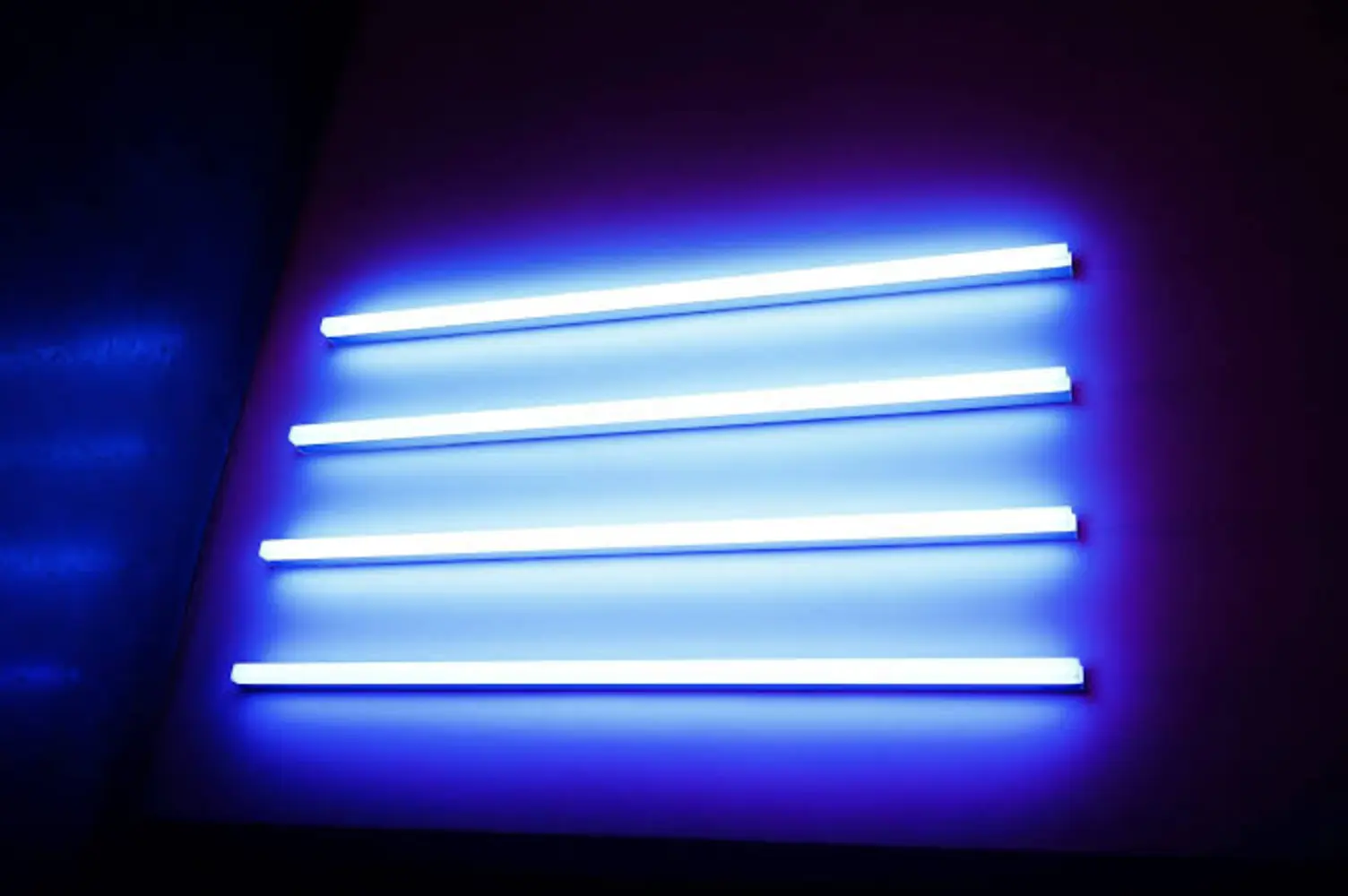
A UV light for HVAC is a small device that’s installed inside your HVAC system to reduce the growth of mold, bacteria, and other microorganisms. It uses ultraviolet-C (UV-C) light, a type of ultraviolet light that’s commonly used to disinfect air, water, and surfaces in hospitals, laboratories, and commercial buildings.
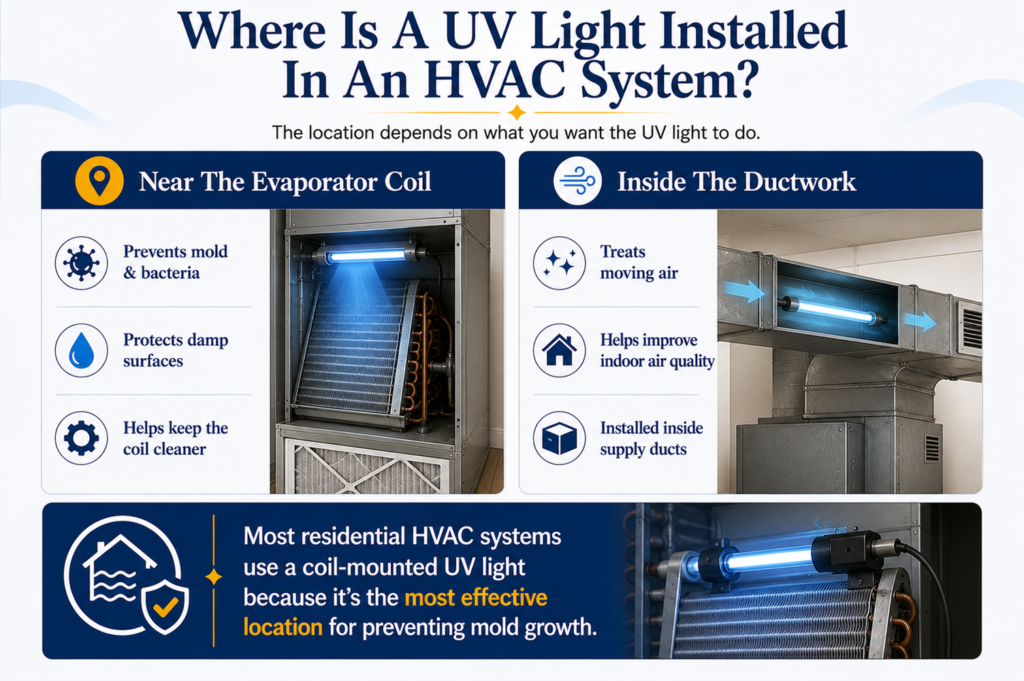
In an HVAC system, the UV light is installed near the evaporator coil or inside the ductwork.
That’s because the evaporator coil naturally collects moisture as your air conditioner removes humidity from your home. And since moisture creates the perfect environment for mold and bacteria to grow, the coil can become a breeding ground for microbial buildup over time.
A properly installed HVAC UV light continuously shines on these damp surfaces, helping prevent mold and other microorganisms from growing inside your system.


Contact us to improve your indoor air
quality with our expert cleaning services in NJ.
How does an HVAC UV light work?
Unlike your HVAC air filter, which captures dust, pollen, and other airborne particles, a UV light doesn’t trap anything. Instead, it works by exposing microorganisms to UV-C light.
You see, when mold spores, bacteria, and viruses are exposed to UV-C light for long enough, their DNA is damaged. This prevents them from growing and reproducing.
Depending on where the UV light is installed, it can work in two different ways.
For instance, if it is installed near the evaporator coil, it continuously shines on the coil to help keep it free from mold and microbial growth.
Similarly, if it is installed inside the ductwork, it treats the air as it passes through the system, helping reduce airborne microorganisms before the conditioned air is circulated throughout your home.
Also, UV lights work automatically. Once installed, they operate whenever the HVAC system is running, and require very little attention apart from routine bulb replacement.
What are the different types of UV lights for HVAC?
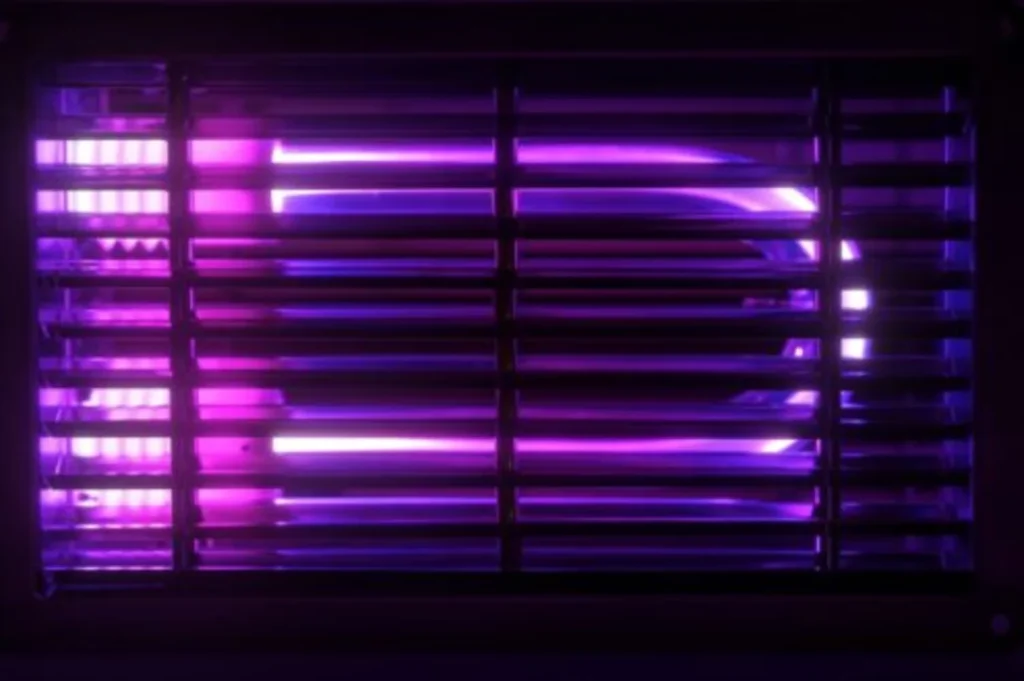
There are two main types of HVAC UV lights, with each serving a different purpose. This includes:
1. Coil sanitizing UV lights
This is the most common type of UV light for HVAC systems. And as the name suggests, it is installed near the evaporator coil and shines directly on it.
Remember I mentioned that the evaporator coil stays damp during normal operation?
Well, that moisture creates the perfect environment for mold, mildew, and bacteria to grow.
A coil sanitizing UV light continuously disinfects the surface of the coil, helping prevent microbial growth before it becomes a problem.
This is also the UV light most HVAC professionals recommend because it works around the clock in one of the areas most prone to mold growth.
2. Air sanitizing UV lights
Unlike coil sanitizing lights, air sanitizing UV lights are installed inside your home’s ductwork. Their job is to expose the moving air to UV-C light as it passes through the HVAC system.
This helps reduce airborne microorganisms before the air is distributed throughout your home.
However, since the air moves quickly through the ducts, it’s exposed to the UV light for a much shorter period than a stationary evaporator coil. That’s why air sanitizing UV lights are installed alongside coil sanitizing lights instead of replacing them.
Pros and cons of UV light in HVAC
Pros
1. Helps prevent mold growth inside your HVAC system
One of the biggest advantages of installing a UV light is its ability to help control mold growth.
Your evaporator coil is constantly exposed to moisture, making it one of the most common places for mold to develop. Over time, that mold can spread across the coil, drain pan, and other nearby components.
A UV light continuously shines on these damp surfaces, making it much harder for mold and other microorganisms to grow. This helps keep your HVAC system cleaner throughout the year.
2. Improves indoor air quality
When mold and bacteria are allowed to grow inside your HVAC system, they can affect the quality of the air circulating through your home.
A UV light helps create healthier indoor air by helping reduce microbial growth inside the system. This can be especially beneficial for homes where indoor air assessment has found poor air quality.
3. Helps your HVAC system run more efficiently
When mold and other buildup collect on the evaporator coil, they create a barrier that makes it harder for the coil to absorb heat. As a result, your air conditioner has to work harder to cool your home.
Now, a UV light allows your HVAC system to run more efficiently by keeping the coil cleaner, which helps your HVAC system perform better.
4. Can help lower HVAC maintenance needs
No HVAC system is completely maintenance-free.
However, reducing mold and biological buildup inside the system means you need fewer cleaning.
While you’ll still need routine HVAC maintenance and air filter replacement, a UV light can help keep one of your system’s most important components cleaner between service visits.
5. Can help extend the life of your HVAC system
A cleaner system generally experiences less unnecessary strain. That’s because when components like the evaporator coil stay cleaner, your HVAC system doesn’t have to work as hard to deliver the same level of comfort.
In the long run, this contributes to improved HVAC performance and extends the lifespan of your equipment.
In short, here are HVAC UV light benefits:
| Benefit | Why It Matters |
| Reduces mold growth | Helps keep the evaporator coil cleaner |
| Improves indoor air quality | Reduces microbial growth inside the HVAC system |
| Supports better efficiency | Helps the evaporator coil transfer heat more effectively |
| Reduces biological buildup | Keeps key HVAC components cleaner |
| Protects your HVAC system | May reduce strain and support longer equipment life |
Cons
1. There’s an upfront installation cost
The average HVAC UV light installation cost can be up-to $1500 in New Jersey, depending on the type of UV light you purchase.
Also, on top of this, you need professional installation to ensure it’s placed correctly inside your HVAC system.
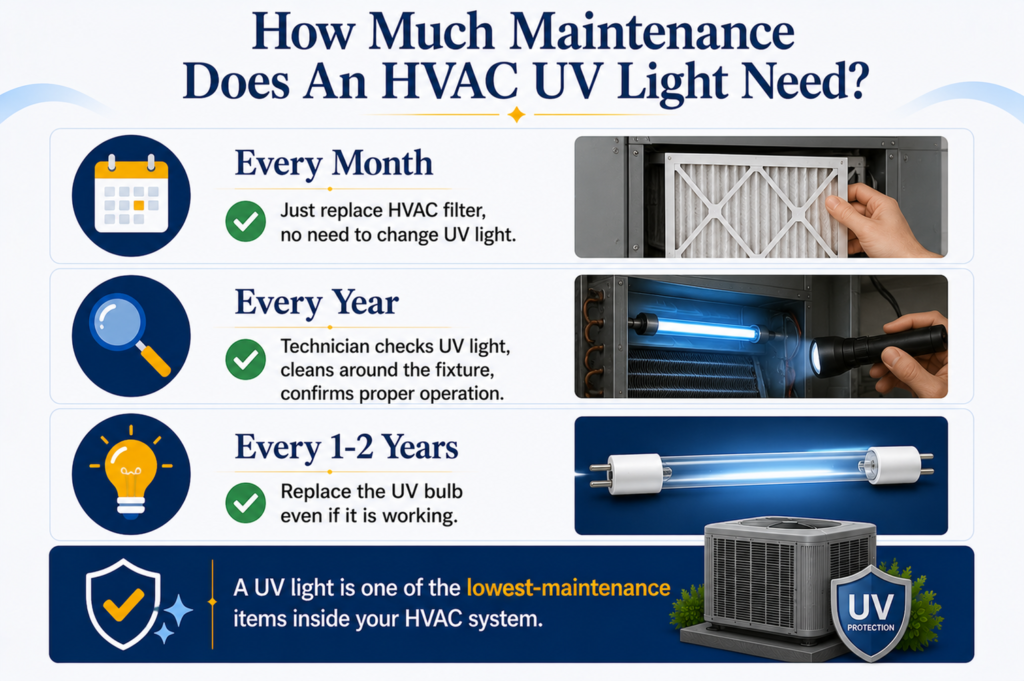
2. The UV bulb needs to be replaced periodically
Even if a UV-C bulb appears to be glowing, its germ-killing effectiveness gradually decreases over time.
That’s why most manufacturers recommend replacing the bulb every 1-2 years, depending on the model.
3. It doesn’t replace your HVAC air filter
A UV light helps control mold, bacteria, and other microorganisms. But it doesn’t remove dust, pollen, pet dander, or other airborne particles.
4. It still requires routine HVAC maintenance
Installing a UV light doesn’t mean you can skip annual HVAC maintenance.
Your system will still need routine inspections, evaporator coil cleaning when necessary, refrigerant checks, and regular air filter replacements.
In short, here are HVAC UV light disadvantages:
| Disadvantage | What It Means |
| Upfront installation cost | Requires an initial investment |
| Bulb replacement | Most UV bulbs need replacing every 1-2 years |
| Doesn’t replace your air filter | You still need regular filter changes |
| Maintenance is still required | Annual HVAC service remains important |
Is a UV light for HVAC worth your money?
For many homeowners, the answer is yes.
Here’s why.
A UV light is one of the few HVAC upgrades that benefits both your system and your home’s indoor environment.
On one hand, it helps keep the evaporator coil cleaner by reducing mold and microbial buildup. On the other hand, it helps create cleaner indoor air and help your HVAC system operate more efficiently.
In the long run, these benefits add up. Your HVAC system stays cleaner, the evaporator coil is better able to transfer heat, and the air conditioner doesn’t have to work as hard.
Of course, a UV light isn’t a magic solution. You’ll still need to replace your air filter regularly and schedule routine HVAC maintenance.
But when used alongside these maintenance practices, a UV light can be an excellent investment that helps improve your system’s performance and supports healthier indoor air.
Who should consider installing UV light in HVAC?
While almost any homeowner can benefit from an HVAC UV light, it’s especially worth considering if:
- Your HVAC system has experienced mold or mildew growth in the past.
- You want to improve your home’s indoor air quality.
- Someone in your household suffers from allergies or respiratory sensitivities.
- You live in a humid area where mold is more likely to grow.
- You want to help keep your evaporator coil cleaner and your HVAC system running efficiently.
- You’re looking for a simple upgrade that can help protect your HVAC investment over the long term.
Contact us to improve your indoor air
quality with our expert cleaning services in NJ.
Final words
If you’ve been wondering whether a UV light for HVAC is worth the investment, I hope you now have a much clearer answer.
As you can see, HVAC UV lights offer several valuable benefits, including:
- Helping prevent mold and bacteria from growing inside your HVAC system
- Improving indoor air quality
- Keeping the evaporator coil cleaner
- Supporting better HVAC efficiency
- Helping protect your heating and cooling system over the long term
While there are a few drawbacks, like the upfront installation cost and periodic bulb replacement, for many homeowners, the benefits far outweigh them.
Got more questions or thinking about installing a UV light in your HVAC system?
You can get in touch with us!
At Clean Air Technologies, we’ve been helping New Jersey homeowners improve their indoor air quality and HVAC performance for over 30 years.
Whether you want to install HVAC UV light, test your home’s air quality, or get air duct cleaning in New Jersey, our experienced technicians are here to help.
FAQs about UV light for HVAC
Does UV light kill mold in HVAC?
Yes.
One of the biggest benefits of an HVAC UV light is that it helps prevent mold and other microorganisms from growing on damp components like the evaporator coil.
While it won’t remove existing mold throughout your entire HVAC system, it can significantly reduce new microbial growth when properly installed.
Is UV lighting safe?
Yes.
When installed inside your HVAC system by a qualified professional, UV-C lights are designed to operate safely inside the equipment.
Since they’re enclosed within the system, homeowners aren’t normally exposed to the UV light during everyday use.
Is ozone from UV light harmful?
It can be.
However, most modern HVAC UV lights are designed to be ozone-free or produce little to no ozone.
That’s why it’s important to choose a high-quality UV light and have it professionally installed. If you’re considering adding one to your HVAC system, ask your HVAC contractor whether the model they’re recommending is ozone-free.
What is the disadvantage of UV light in HVAC?
The biggest disadvantages are the upfront installation cost and the need to replace the UV bulb every 1-2 years.
Also, while UV lights help control mold and bacteria, they don’t remove dust, pollen, or pet dander. You’ll still need a quality HVAC air filter and regular system maintenance.
Is an HVAC UV light worth it?
For many homeowners, yes.
If you’re looking to improve indoor air quality, reduce mold growth inside your HVAC system, and help keep your equipment running efficiently, a UV light can be a worthwhile investment. When combined with regular HVAC maintenance and proper filtration, it provides an extra layer of protection for both your HVAC system and your home.