
If you’ve ever scheduled an HVAC tune-up, or even thought about it, you’ve probably asked one question: What does HVAC maintenance include?
And this is an important question.
That’s because when you hire a professional or sign up for an annual HVAC maintenance plan, you want to know exactly what you’re paying for.
After all, HVAC maintenance isn’t just a quick inspection. It is a detailed process that involves checking, cleaning, testing, and fine-tuning different parts of your system to keep it running efficiently.
In this blog, I’ll break down all things HVAC maintenance so you know exactly what to expect. You’ll learn:
- What is HVAC maintenance
- What is done during HVAC maintenance visits
- How often you should service your system
- And why is HVAC maintenance important
So, let’s get started.
Table of Contents
Key takeaways
- HVAC maintenance includes inspection, cleaning, testing, and minor repairs of your system.
- The most important tasks include filter replacement, coil cleaning, and checking refrigerant levels.
- Annual HVAC maintenance helps prevent breakdowns and improves efficiency.
- Most systems should be serviced once or twice a year depending on usage.
- Some basic HVAC maintenance tasks can be done by homeowners.
- Professional servicing is still necessary for deeper inspection and safety checks.
What is HVAC maintenance?
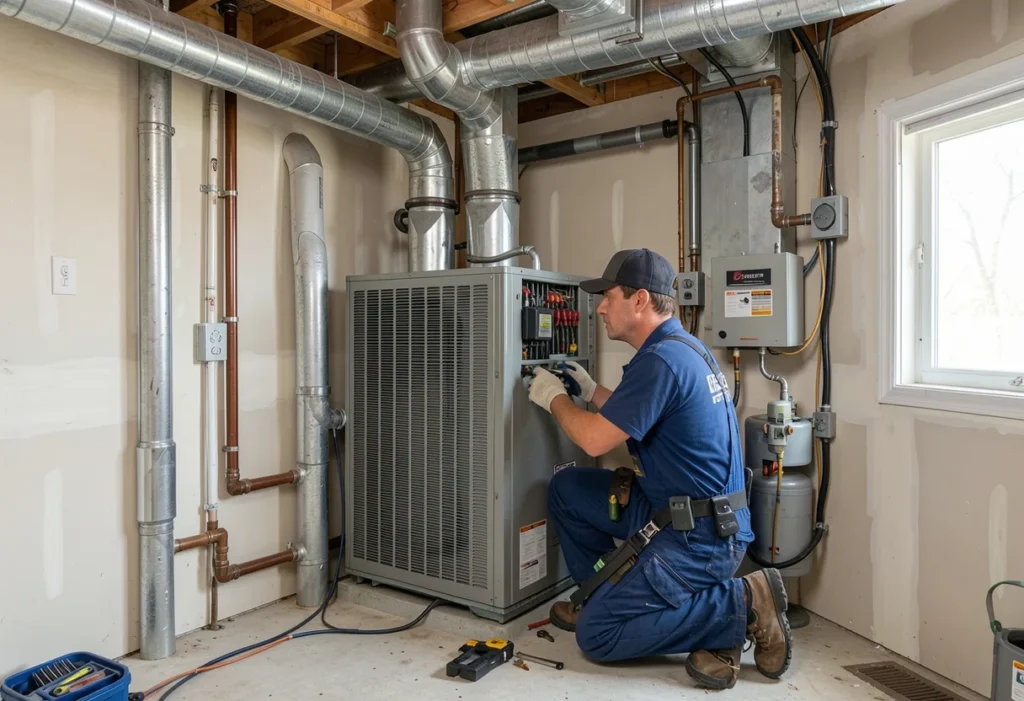
For starters, HVAC maintenance is a routine inspection and servicing of your heating and cooling system to make sure everything is working properly.
In most cases, it includes:
- Inspecting system components
- Cleaning internal and external parts
- Testing performance
- Fixing minor issues
Think of it like a routine check-up for an HVAC system.
Your HVAC system needs regular care to maintain performance and efficiency. And to that end, maintenance helps catch small problems early before they become costly repairs.


Schedule Your Free Estimate Today
Contact us to improve your indoor air
quality with our expert cleaning services in NJ.
What does HVAC maintenance include?
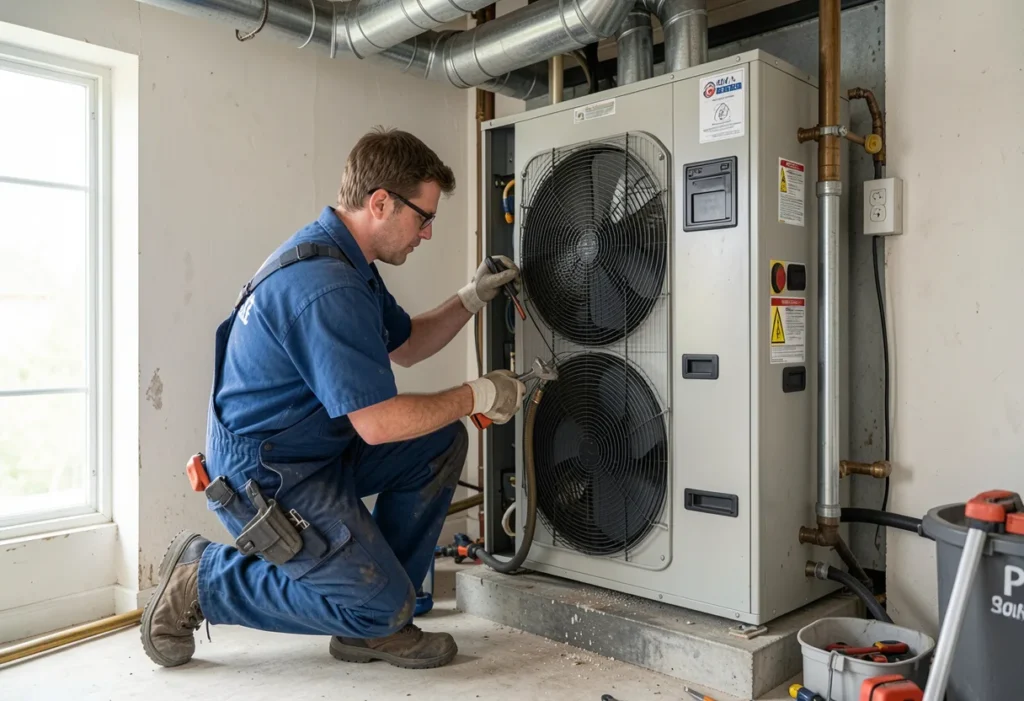
Now let’s get into the main question, i.e., what is done during HVAC maintenance.
To begin with, HVAC maintenance isn’t just a quick check. It is a step-by-step process where technicians inspect, clean, and test different parts of your system to make sure everything is working the way it should.
And although the exact checklist can vary slightly depending on the system and company, most professional HVAC maintenance visits include the following:
1. Air filter inspection and replacement
This is one of the most important parts of HVAC maintenance.
You see, your air filter is the first line of defense against dust, dirt, and airborne particles. But over time, it gets clogged, especially if you have pets or live in a dusty area.
And when that happens, airflow gets restricted, and your system has to work much harder than it should.
So, during maintenance, technicians inspect the filter and clean it. Also, they might recommend an air filter replacement if needed.
2. Cleaning evaporator and condenser coils
Your HVAC system relies heavily on coils to transfer heat, and they clean surfaces to work efficiently.
However, both the indoor evaporator coil and outdoor condenser coil collect dust, dirt, and debris over time.
And when that buildup increases, it blocks proper heat transfer. This means your system struggles to cool or heat your home, even if it’s running constantly.
That’s why during HVAC system cleaning, technicians carefully clean both coils to restore efficiency and reduce unnecessary strain on the system.
3. Checking refrigerant levels
Refrigerant is what actually makes your air conditioner cool the air.
So if the refrigerant level is low, your AC won’t be able to remove heat effectively.
You might notice signs like the air isn’t as cool as it should be, or the system runs longer without reaching the desired temperature.
While servicing HVAC system, technicians measure refrigerant levels, check for leaks, and recharge if needed.
4. Inspecting and cleaning the condensate drain line
When your AC runs, it removes moisture from the air.
But that moisture needs somewhere to go. And that’s where the condensate drain line comes in.
Over time, this line can get clogged with dirt, algae, or debris. And when that happens, water can back up into the system, leading to leaks, mold growth, or even system shutdown.
So during maintenance, technicians clean and flush the drain line to keep water flowing properly and prevent moisture-related problems.
5. Thermostat testing and calibration
Your thermostat is what tells your HVAC system when to turn on and off.
But if it’s not working correctly, your system won’t maintain the temperature you set. Sometimes it’s a simple issue like incorrect calibration or weak batteries, but it can still affect comfort.
You might even see AUX heat on thermostat even if the HVAC is working just fine.
Technicians check the thermostat settings, verify calibration, and replace batteries if needed. Even small adjustments here can make a noticeable difference in how your system performs.
6. Electrical component inspection
Your HVAC system depends on several electrical components to function properly.
But with time, connections can loosen, wires can wear out, and components like capacitors or relays can weaken.
And if these issues go unnoticed, they can lead to system failure or even safety risks.
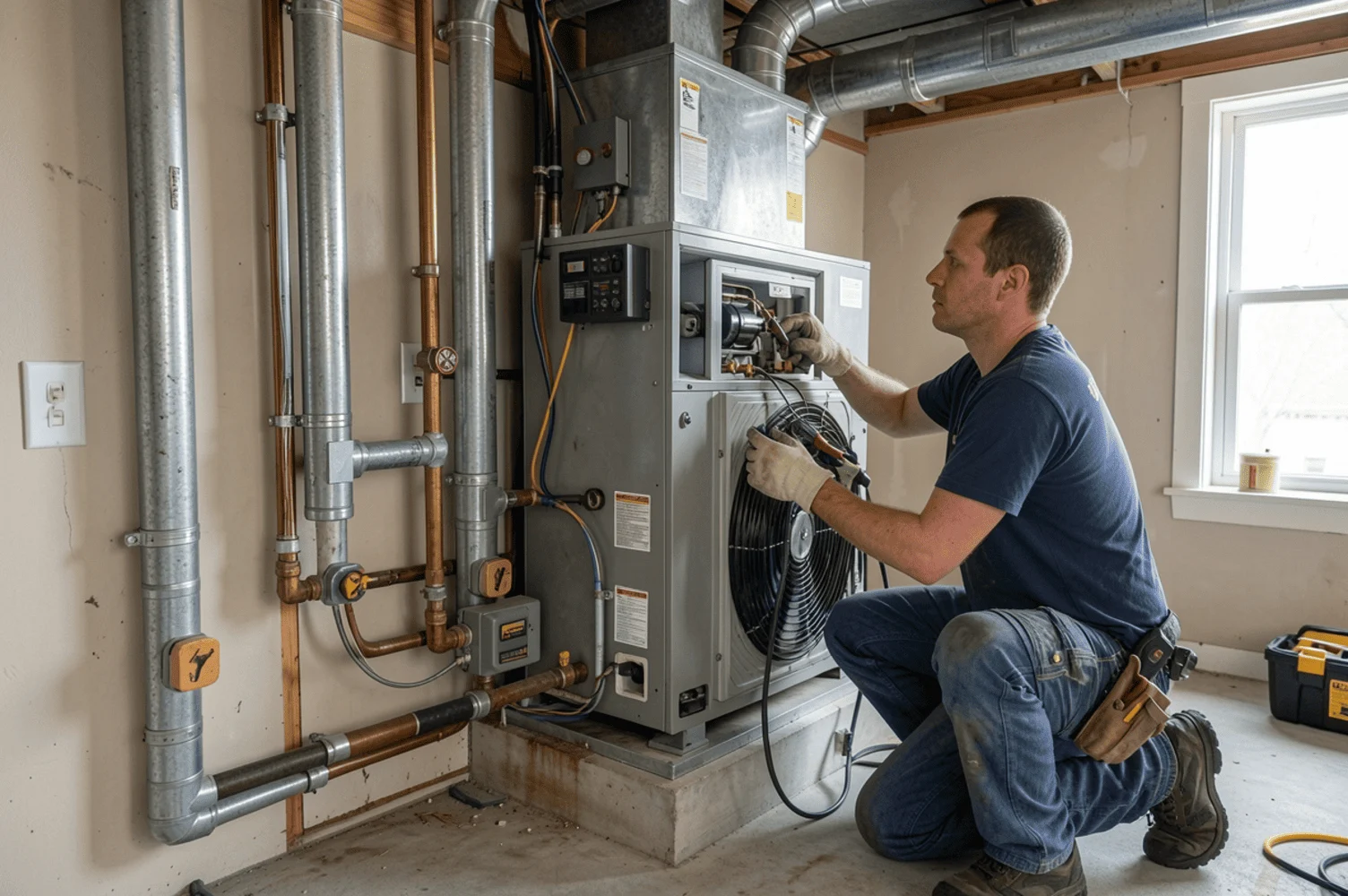
That’s why technicians inspect all electrical connections, tighten loose parts, and test key components. This step helps ensure your system runs safely and reliably.
7. Lubricating moving parts
There are several moving parts inside your HVAC system, like motors and fans that run every time the system is on.
Without proper lubrication, these parts can create friction, which leads to wear and tear over time. And eventually, that can cause components to fail sooner than expected.
So, you should expect your technician to lubricate bearings and moving parts to reduce friction. This simple step helps improve efficiency and extend the life of your system.
8. Inspecting ductwork and airflow
Airflow is one of the most important factors in how well your HVAC system performs.
Even if your system is working perfectly, damaged or leaking ducts can prevent air from reaching your rooms properly. This can lead to uneven temperatures and higher energy bills.
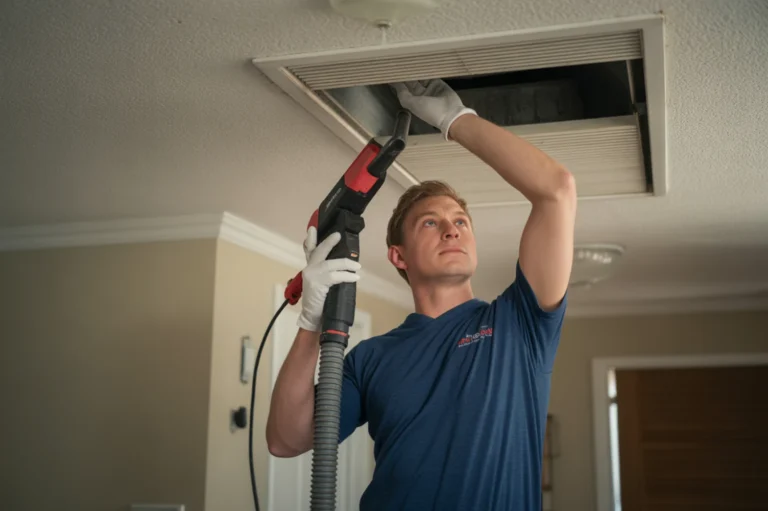
This is why professionals inspect ductwork for leaks or blockages and check airflow levels.
9. Checking blower motor and fan
The blower motor is responsible for pushing air through your duct system and into your home.
And if it’s not working properly, you’ll notice weak airflow or inconsistent temperatures. Also, in many cases, dirt buildup on fan blades can reduce performance.
Your technician should inspect the blower motor, clean the fan, and test airflow output. This is essential to ensure your system is circulating air properly throughout your home.
10. Safety checks (especially for heating systems)
When it comes to heating systems, safety checks are super important.
Components like the heat exchanger and gas connections need to be inspected carefully to make sure everything is operating safely.
Even a small issue here can lead to serious risks like gas leaks or carbon monoxide exposure.
In short, here’s what does HVAC service include:
| Task | What It Involves |
| Filter replacement | Improves airflow and air quality |
| Coil cleaning | Restores heat transfer efficiency |
| Refrigerant check | Ensures proper cooling |
| Drain line cleaning | Prevents water leaks and mold |
| Thermostat testing | Maintains accurate temperature |
| Electrical inspection | Improves safety and performance |
| Lubrication | Reduces wear and tear |
| Duct inspection | Improves airflow |
| Blower check | Ensures proper air circulation |
| Safety checks | Prevents hazards |
What does annual HVAC maintenance include?
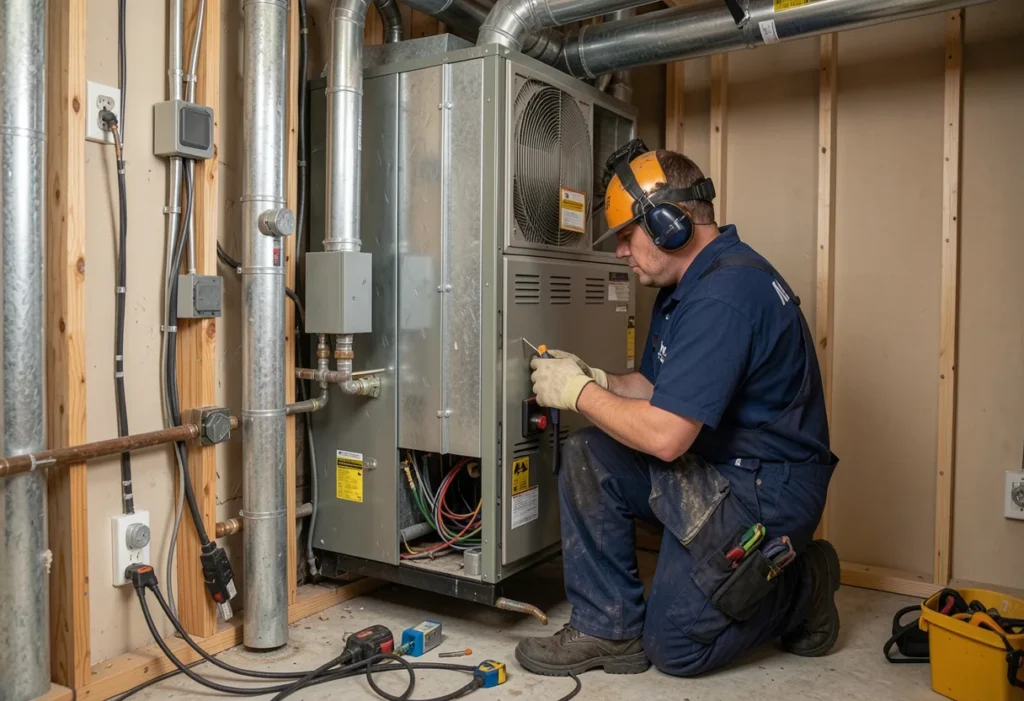
Annual HVAC maintenance is all about getting your system ready before the heavy usage seasons begin.
Your HVAC system works the hardest during extreme weather conditions. So instead of waiting for something to go wrong, technicians service it ahead of time to make sure everything runs smoothly.
In most homes, this means two maintenance visits a year, including:
- A spring service focused on your AC, to make sure it cools properly during summer.
- A fall service focused on your heating system, to check safety and performance before winter.
This helps keep your system reliable, efficient, and ready when you need it most.
How often should HVAC system be serviced?
The answer to this depends on how your system is used throughout the year.
You see, HVAC systems go through the most wear during peak seasons. So timing your maintenance before that really makes a difference.
Here’s how I suggest you schedule HVAC maintenance:
- If you have a cooling-only system, service it once a year in spring
- If you have a heating-only system, service it once a year in fall
- If your system handles both heating and cooling, it’s best to service it twice a year
Why is HVAC maintenance so important?
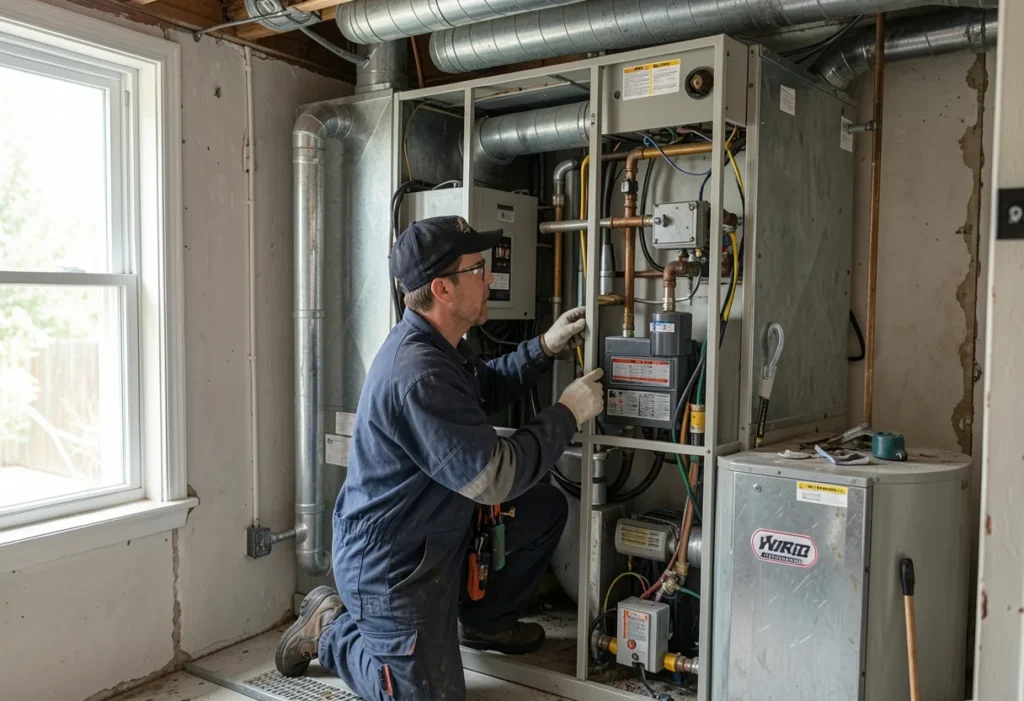
You might be thinking, is HVAC maintenance really worth it?
The short answer is yes, absolutely.
Your HVAC system runs almost every day, and over time, small issues start building up.
Now, regular maintenance helps catch these issues early before they turn into bigger problems. This helps keep your system efficient, reliable, and running the way it should, especially when you need it the most.
Overall, here’s why servicing HVAC system is important:
1. It prevents expensive repairs
Small issues like loose parts, clogged filters, or minor leaks can turn into major repairs if ignored.
Regular maintenance helps catch these problems early, before they get worse. .
2. It improves energy efficiency
When your HVAC system is clean and well-maintained, it doesn’t have to work as hard to heat or cool your home. That means it uses less energy to do the same job.
Over time, this can make a noticeable difference in your monthly energy bills.
3. It extends system lifespan
HVAC systems are a big investment, so you want them to last as long as possible.
Maintenance reduces wear and tear on important components. This helps your system run smoothly for years and delays the need for an expensive replacement.
4. It improves indoor air quality
Your HVAC system plays a big role in the air you breathe indoors.
Dirty air filters and other HVAC components can circulate dust, allergens, and other pollutants.
Maintenance keeps everything clean, which helps improve the overall air quality inside your home.
5. It keeps your home comfortable
At the end of the day, your HVAC system is all about comfort. And to that end, maintenance ensures consistent temperatures, proper airflow, and reliable performance.
So whether it’s hot or cold outside, your home stays comfortable without unexpected issues.
Schedule Your Free Estimate Today
Contact us to improve your indoor air
quality with our expert cleaning services in NJ.
Final words
By now, I am sure you have a good idea about what does HVAC maintenance include.
To put it simply, HVAC maintenance is a complete check-up of your system that ensures everything is clean, safe, and working efficiently.
And in most homes, this includes:
- Cleaning components
- Checking refrigerant and airflow
- Inspecting electrical and safety systems
- Replacing filters
- Testing performance
Regular maintenance can prevent most HVAC problems before they even start.
Got more questions or want to schedule a professional HVAC or air duct cleaning in NJ?
You can get in touch with us!
At Clean Air Technologies, we are seasoned air duct and HVAC system cleaning experts with 3+ decades of hands-on experience. Our technicians are NADCA-certified and we complete every job with care and precision.
FAQs about HVAC maintenance
What does HVAC maintenance include?
HVAC maintenance includes inspecting, cleaning, and testing system components like filters, coils, refrigerant levels, electrical connections, and airflow to ensure efficient operation.
What is done during HVAC maintenance?
During HVAC maintenance, technicians clean components, check refrigerant, inspect electrical parts, test thermostat settings, and ensure the system is running properly.
How often should HVAC system be serviced?
Most HVAC systems should be serviced once or twice a year, depending on whether they are used for heating, cooling, or both.
What does HVAC service include for AC units?
AC service includes cleaning coils, checking refrigerant levels, inspecting the compressor, clearing drain lines, and testing cooling performance.
Can I do HVAC maintenance myself?
You can handle basic tasks like replacing filters and cleaning around the unit. However, professional servicing is needed for deeper inspection and repairs.